Dive Brief:
- Intermodal shippers have been able to lock in lower rates as the trucking market faces rate and capacity pressure, according to Uber Freight’s Q1 Market Update Report.
- Fueled primarily by stricter federal industry oversight, capacity has tightened for over-the-road and long-haul trucking, while intermodal capacity is plentiful, an Uber Freight representative told Supply Chain Dive in an email. Meanwhile, trucking spot rates are up 25% year over year, per the report.
- “Intermodal rates tend to lag OTR rates by 6-12 months, but they will start to increase as well. So now would be a good time to secure Intermodal capacity at the lower rates,” the representative said. In its report, Uber Freight said it expects intermodal pricing to rise between 3% and 5% by the end of the year.
Dive Insight:
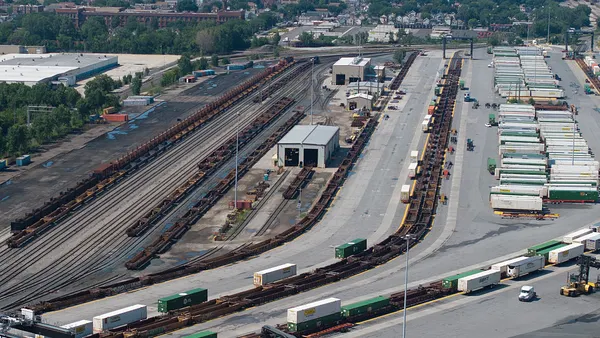
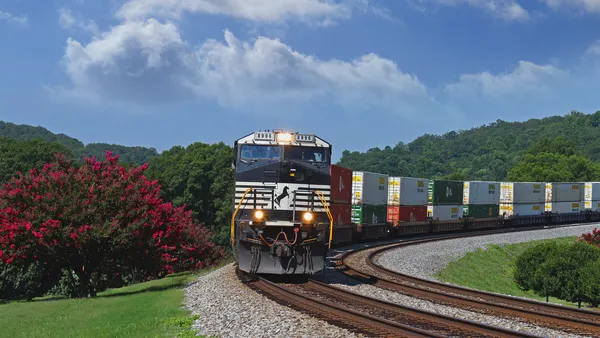
Current market conditions are creating opportunities for shippers to lean toward intermodal transport instead of trucking.
Both less-than-truckload and full truckload services are seeing squeezed capacity due to the ongoing federal crackdown on nondomiciled commercial driver licenses and CDL mills.
The shift to intermodal also comes as shippers grapple with yet another freight disruption: the closure of the Strait of Hormuz. The closure of the key oil corridor has led to higher fuel prices, putting financial pressure on smaller carriers and owner-operators because they lack the ability to protect themselves with fuel surcharges, per Uber Freight.
“Sustained high diesel prices often lead to an increase in carrier exits and bankruptcies, further tightening market capacity,” the company said.
Against this backdrop, more shippers are seeking intermodal services that are between 550 and 1,500 miles, according to a March intermodal market update from C.H. Robinson. Previously, intermodal volumes had shifted toward truckload shipping due to lower rates during a prolonged freight downturn.
The 3PL offered a different perspective on the current shift toward intermodal, saying it is too early to determine if the uptick is a temporary response to winter weather disruptions or the beginning of a sustained mode shift, per the update.
Outbound intermodal rates for the West Coast have stabilized for the most part, with new contracts starting in April or later, C.H. Robinson reported. Other regions are seeing modest year-over-year increases and rail spot rates are expected to remain stable through Q2.
C.H. Robinson is advising shippers to prioritize providers with strong rail relationships to build savings and network resiliency.
“Intermodal should be positioned as a strategic component of transportation planning rather than solely a contingency option,” C.H. Robinson said.
Editor's note: This story was first published in our Logistics Weekly newsletter. Sign up here.