Dive Brief:
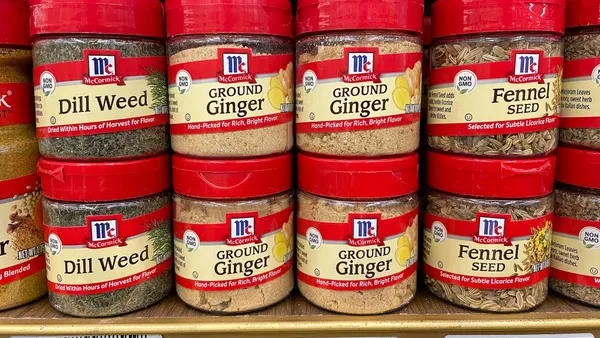
- McCormick & Co., which fought tariff-related costs throughout last year, expects the gross tariff impact to be roughly $50 million in 2026, executives told investors in a Jan. 22 earnings call.
- The branded spice and seasoning maker expects to offset nearly all of the tariff impact in 2026 using the same strategy it employed in 2025, EVP and CFO Marcos Gabriel told investors.
- “We plan to mitigate the vast majority of this impact with productivity savings across the P&L, alternative sourcing, supply chain initiatives and, of course, leverage our revenue management capabilities, including surgical pricing,” Gabriel said.
Dive Insight:
McCormick has wrestled with higher costs imposed by tariffs since last April, when President Donald Trump announced levies on nearly every country. Executives have said that lowering the impact of duties is difficult because some raw materials are not commercially available in the U.S. The company sources 17,000 ingredients from 80 countries, according to Gabriel.
In 2025, McCormick reduced the impact of tariffs from $70 million to $20 million by cutting expenses, sourcing alternatives and raising prices, Gabriel said. Tariffs, combined with commodity costs, drove mid-single-digit inflation for the company, which expects a similar rate this year.
"It could improve, but if it does improve, we will be later in the year," Gabriel said.
He added that tariff rates lowered in 2025 are not expected to benefit McCormick's bottom line this year because the company has already adjusted some supply chain mitigation efforts to the new rates. Also, the company has chosen to continue investing in its business.
"Lastly, as you know, this is an evolving situation, and we'll continue to monitor how policies impact tariff rates and, therefore, our costs," Gabriel told investors.
Tariff mitigation was an ongoing effort among brand manufacturers in 2025. J.M. Smucker chose to absorb $75 million in tariff-related costs rather than a third price hike on coffee, and Monster Beverage expected a "modest" impact from tariffs, given the high duty on imported aluminum for cans.
Editor’s note: This story was first published in our Procurement Weekly newsletter. Sign up here.