Dive Brief:
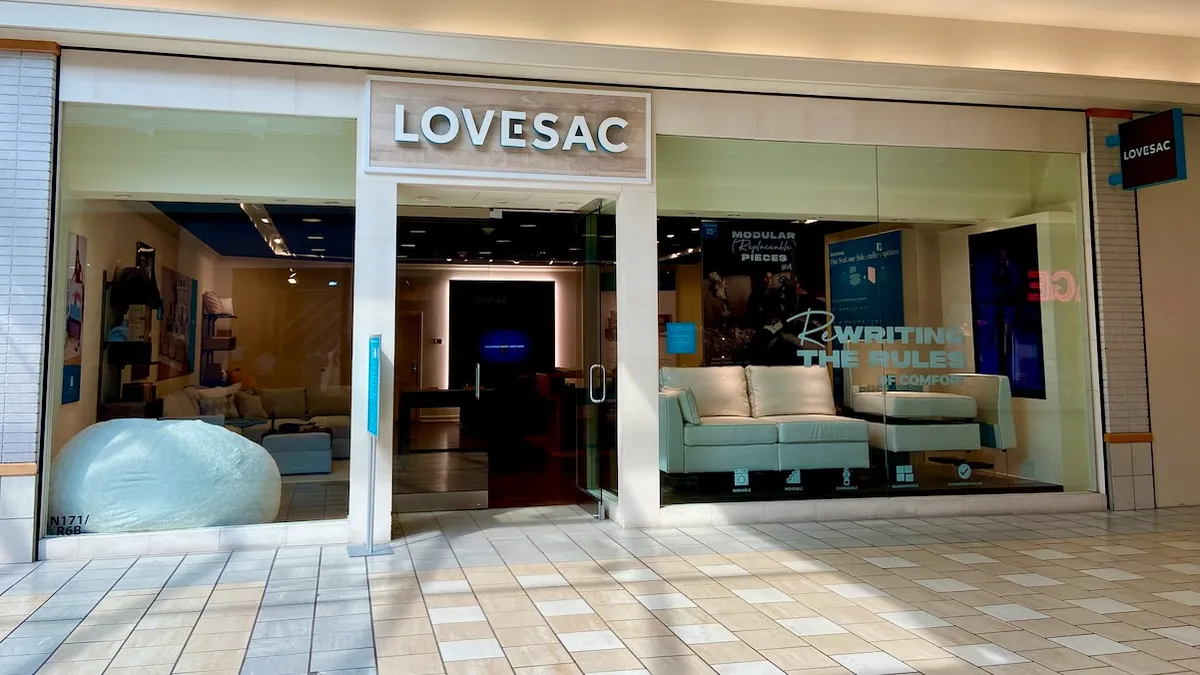
- The Lovesac Company is doing a full redesign of the core inserts in its Sactionals line of modular sofas — its primary revenue driver — to enable U.S. manufacturing, CEO and Director Shawn Nelson said in a Dec. 11 earnings call.
- The direct-to-consumer furniture retailer plans to start domestic production with the core Sactionals SKUs in summer 2026, Nelson said.
- "This is a really big deal, and it represents significant work by our talented in-house and some external partners," Nelson said. "This has been underway for a while now, but was accelerated given all the tariff noise this year."
Dive Insight:
Diversifying its supply base and reducing production in China were part of Lovesac's four-pronged tariff strategy launched in April. The revamped Sactionals line serves as the basis for a new made-in-the-U.S.A. product development approach aimed at being better and less expensive, Nelson said.
Rising costs remain a challenge for Lovesac. The company's gross margin fell in the third fiscal quarter primarily due to increased costs in inbound and outbound transportation, tariffs and warehousing, EVP and CFO Keith Siegner said. The margin pressure was partially eased by price increases, cost-reduction initiatives and supplier concessions in response to tariffs.
The company felt more pressure in its smaller and mid-range setups following recent price increases to offset tariffs, President Mary Fox said. The configurations tend to track more closely with middle-income consumers.
"What we saw was consistent with broader category behaviors of less trading up and some trading down," Fox said.
To try to boost overall sales, Lovesac is expanding delivery options for customers. By the start of Q1 in fiscal 2027, the company plans to beta test a "white glove" delivery and assembly service, Nelson said. The company launched a service in November that delivers sofas to the customer's chosen room.
"We plan to reduce friction for our customers by removing the single biggest reason for not purchasing Lovesac, according to their feedback: lack of tiered delivery and setup options," Nelson said.
Nelson promised investors more initiatives in the coming fiscal year to drive secular growth.
"You'll hear more from us in the coming quarters," the CEO said.
Upholstered furniture maker La-Z-Boy’s tariff strategy also included adjusting production to align with the Trump administration’s trade policies as well as raising prices in the single digits in 2025. Company executives said La-Z-Boy was well-positioned regarding tariffs because 90% of its products were made in the U.S.
Editor’s note: This story was first published in our Procurement Weekly newsletter. Sign up here.