Dive Brief:
- Hugo Boss plans to reduce its reliance on air freight to reignite gross margin growth, among other benefits, CFO and COO Yves Müller said on the fashion brand's Q4 earnings call on March 10.
- The company currently leans on air freight for a high-single digit percentage of its transportation needs, down from a "mid-teens number" in 2024, Müller said. In the mid-to-long term, Hugo Boss is looking "to have an air freight share of zero" and only use it as an exception rather than a regular mode of transport.
- Beyond adjusting its transportation approach, Hugo Boss aims to improve gross margin — which fell 20 basis points from 2024 to 2025 — in part through sourcing efficiencies. Müller said the effort will be aided through a streamlining of Hugo Boss' product assortment "to sharpen brand positioning and strengthen brand relevance."
Dive Insight:
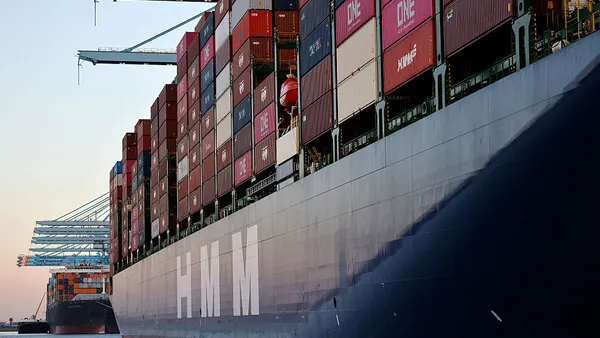
Hugo Boss aims to maintain "a sea-freight first approach" in its logistics network and minimize its use of air freight, according to its 2025 annual report. Beyond cost savings, a reduced reliance on air transport can help the company reduce its transport-related greenhouse gas emissions, per the report.
Executives in the earnings call didn't detail how Hugo Boss would be able to avoid situations in which air cargo is necessary. However, in a December presentation, Müller emphasized the company's flexible supply chain, digital twin capabilities and increased focus on nearshoring as tools it can use to address evolving business needs.
Making a deeper commitment to ocean shipping introduces its own risks. Hugo Boss' report acknowledged that attacks on cargo ships in the Red Sea have forced many ocean carriers to reroute vessels, spurring longer transit times and elevated logistics costs.
"Looking ahead to 2026, renewed escalation of geopolitical conflicts in the Middle East could again disrupt key maritime trade routes, further straining global logistics capacity and increasing transportation costs," the report said.
New conflicts have since emerged in the Middle East following the U.S. and Israel's military strikes against Iran on Feb. 28, spurring service suspensions and other hurdles for ocean shippers. The conflict also introduced uncertainty for the air freight market this year, including the possibility of spikes in rates.
On the earnings call, Hugo Boss CEO and managing board chairman Daniel Grieder said it is too early to determine what the impact of the situation in the Middle East will be for the business.