Dive Brief:
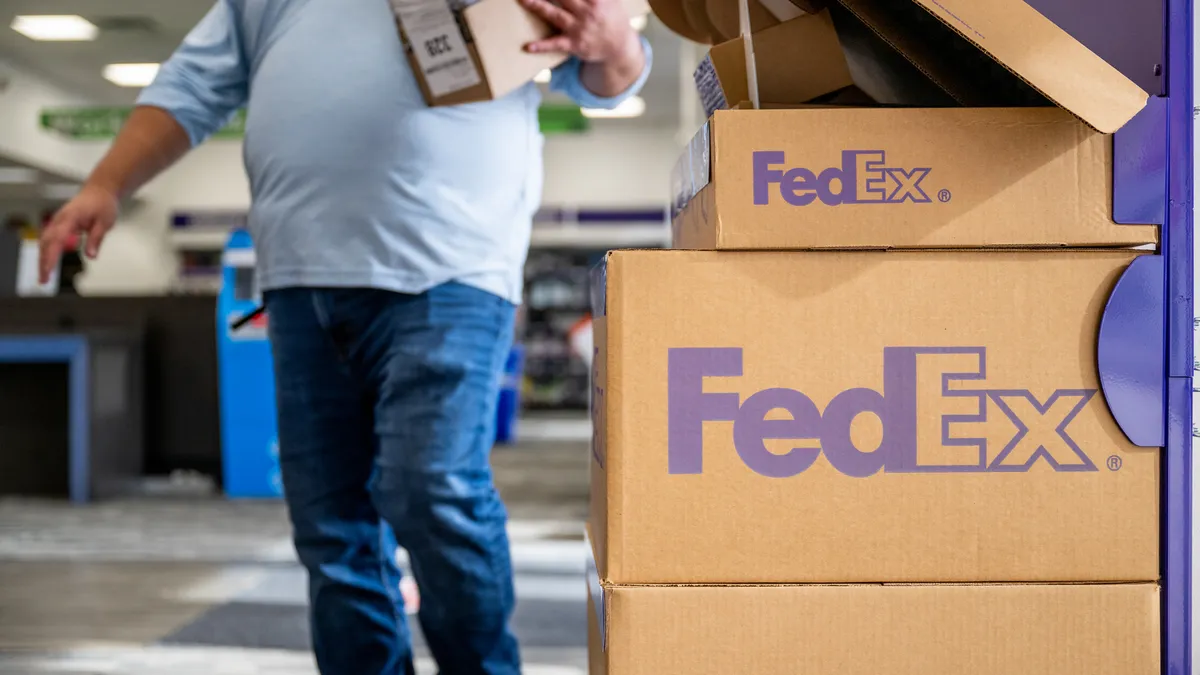
- FedEx One Rate pricing will increase on April 20, introducing another rate hike for shippers to navigate this year.
- The increase versus current prices varies based on a One Rate shipment's packaging size, destination and delivery speed chosen. However, most published rates face an increase of around 7%, with the dollar impact being larger on premium and longer-distance shipments, David Sullivan, director of professional services at ShipScience, said in a LinkedIn post.
- One Rate is a flat-rate pricing option available for certain U.S. shipments delivered in FedEx packaging. Listed prices for the program are inclusive of surcharges tied to fuel, deliveries to homes and shipments to particular ZIP codes. One Rate is often tapped by small businesses and online retailers to avoid surprises around pricing, according to FedEx.
Dive Insight:
The price hike comes as One Rate customers flag increased resistance from FedEx in pricing negotiations, according to Brandon Staton, founder and CEO of ShipMint, a parcel intelligence platform. The development is "likely connected to historically high fuel costs," he said in a post on ShipMint's website.
FedEx is one of several carriers levying higher fuel surcharges amid surging costs tied to the Iran war, resulting in heightened fees for shippers. Fuel is already baked into One Rate pricing, meaning FedEx has to take a different approach to raise prices within that program, Staton noted.
"So when fuel costs rise, FedEx is absorbing that increase on paper — but then recovering it through base cost increases like this one," he said. "The customer ends up paying for the fuel increase anyway, just through a different line item."
To mitigate higher rates, One Rate users should update their internal delivery cost models, review customer-facing fees and assess the increase's margin impact by package type and service, among other measures, according to ShipScience's Sullivan.
"Larger package types, overnight products, and longer-zone shipments see the largest dollar jumps," Sullivan said. "If your One Rate profile skews toward those categories, your spend increase will outpace what a simple 'about 7%' headline might suggest."