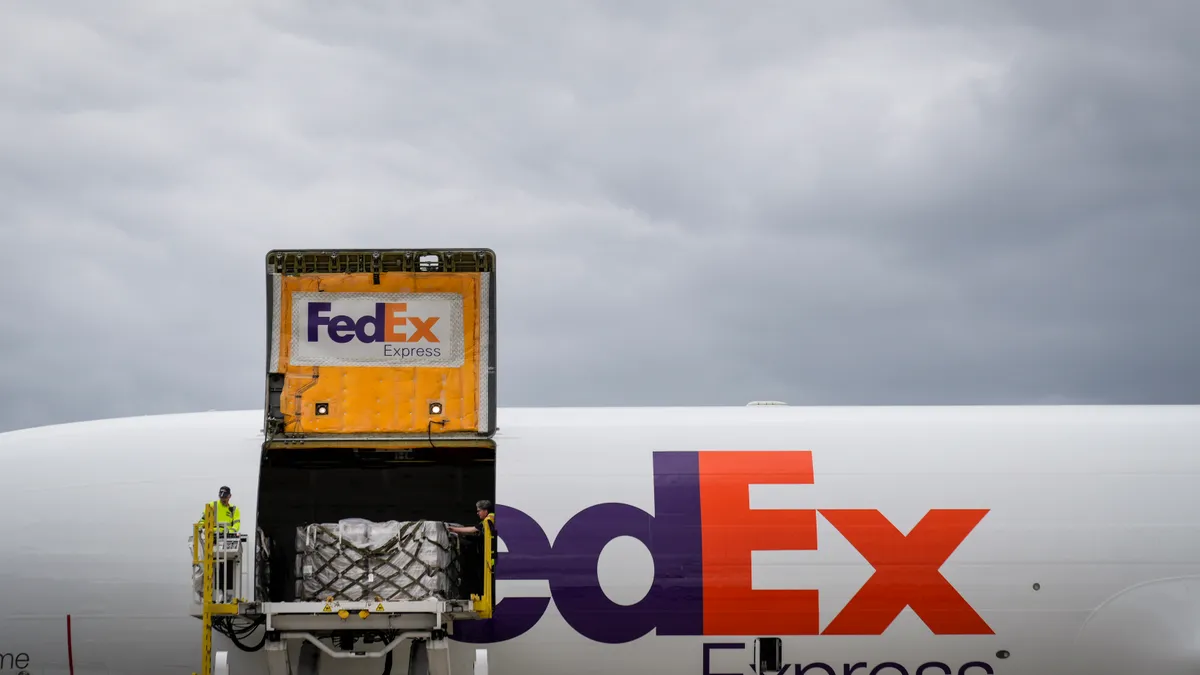
FedEx is easing its pursuit of general e-commerce volume, focusing its commercial strategy instead on "specialized" segments in the business-to-consumer space along with premium business-to-business shipping, the carrier announced Thursday at its 2026 Investor Day.
As a result, FedEx expects to see "low single-digit growth" in B2C volume through 2029 as it pursues more sustainable and profitable business, EVP and Chief Customer Officer Brie Carere said during the investor event. The company’s pace in e-commerce is intentionally slower than the overall market, as FedEx isn't prioritizing volume gains in the fast-growing sub-pound package space, according to Carere.
Deliveries destined for home addresses have been a key growth driver in the delivery industry over the past several years, especially since the COVID-19 pandemic accelerated online shopping trends. But FedEx executives expressed confidence that the company doesn't need to lean on B2C shipping to fill its delivery vehicles and achieve its financial goals, for two key reasons.
One reason is that FedEx's U.S. network is already at high volume levels relative to overall capacity, with further improvements en route due to the carrier's Network 2.0 consolidation efforts, according to Carere.
"Our network utilization is at a very, very good place," Carere said. "We have not seen this utilization since the pandemic."
The carrier expects U.S. capacity to tighten even further. However, Carere added that FedEx can flex its network capacity to make room for B2B volume, such as bumping e-commerce shipments down to later sortation shifts.
The second reason is FedEx sees an opening to grab share in verticals such as healthcare, automotive, aerospace and data centers, which are generally more profitable than deliveries to consumers. Carere said priority verticals for the company represent a combined $130 billion market opportunity.
"We will concentrate our commercial energy where customers value speed, precision, visibility and reliability over the lowest price," President and CEO Raj Subramaniam said during the presentation.
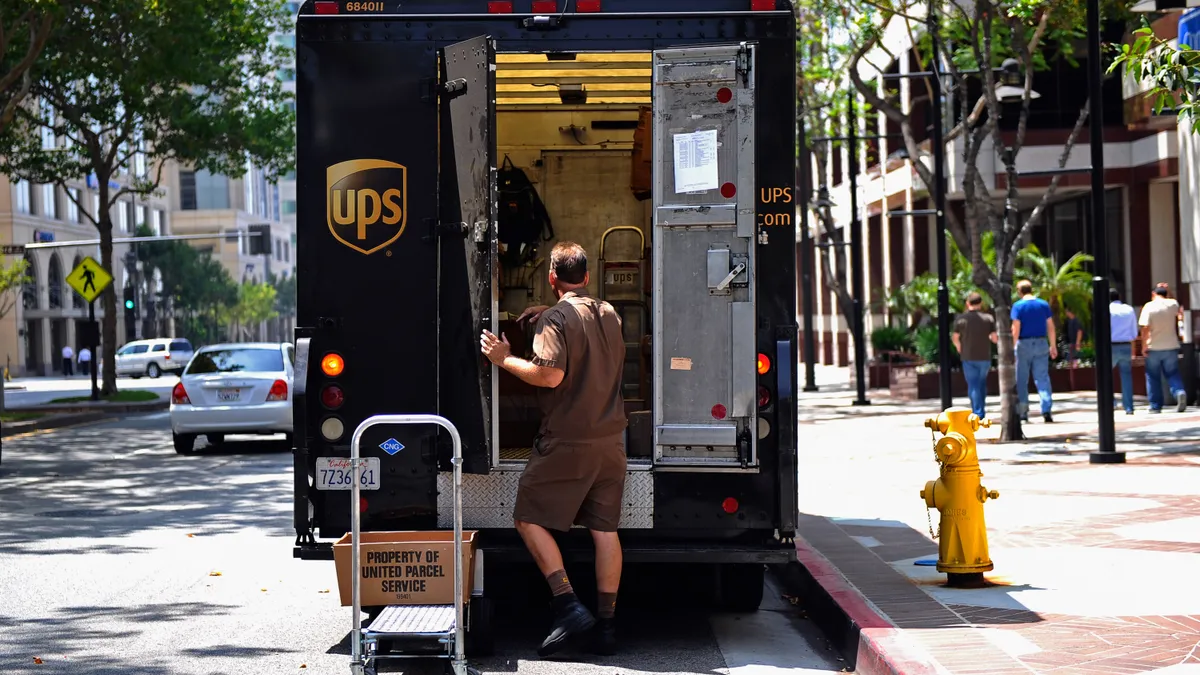
Rival UPS is also chasing growth in high-value segments like healthcare as it cuts back on the amount of volume delivered for e-commerce giant Amazon.
FedEx isn’t distancing itself from the consumer delivery space entirely, however. The company recently announced it was aiming to acquire a 37% stake in Poland's InPost and tap into the operator's parcel locker network in Europe, which will provide "an innovative platform for profitable B2C growth," per Subramaniam.
Additionally, FedEx is still targeting specialized B2C volume, such as longer-distance shipments needed by smaller businesses lacking a robust fulfillment center footprint, according to Carere. Specialized shipments can also include heavier goods and higher-value products.
"If you're shipping T-shirts, FedEx might not be for you, but if you were shipping Oura Rings, FedEx is for you," Carere said, referring to the smart ring product that tracks personal health metrics.
A good portion of FedEx's B2C volume already fits within its priority areas. Carere said 70% of FedEx's ground shipping service revenue comes from shipments traveling more than 300 miles.
Shorter-distance e-commerce shipping is a competitive market with many parcel carriers outside of FedEx and UPS looking to gain a stronger foothold in the space. Experts have noted in the past that this trend has led to the major delivery providers being more cautious on price increases for those types of shipments, compared to longer-distance deliveries.