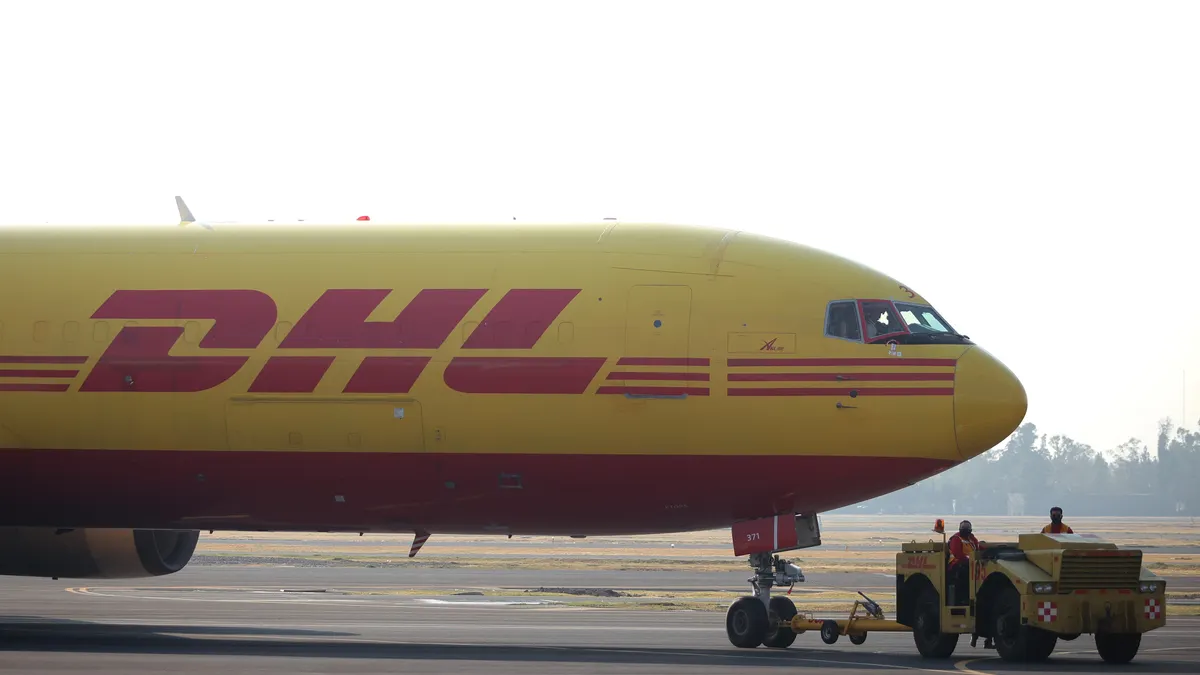
Dive Brief:
- Jet fuel supply challenges amid the Iran war are complicating air cargo operations in Asia, DHL Group CEO Tobias Meyer said in a Q1 earnings call Thursday.
- At large hubs where DHL has dedicated infrastructure, such as its Leipzig hub in Germany, the carrier has more visibility and certainty around sufficient fuel supply to support its operations, according to Meyer. In locations without that level of company infrastructure, particularly in Asia, DHL is dependent on the availability of fuel via local suppliers.
- DHL has seen constraints at some Asia-based airports, such as no fuel being available for additional flights, Meyer said. The company can still fuel up regional and short-haul flights "to a sufficient level" in those instances, but that option isn't possible for intercontinental trips, he added. "We had a couple of situations where that was the case."
Dive Insight:
Conflict in the Middle East has disrupted transit in the Strait of Hormuz, a critical passageway for oil, straining fuel supply and spiking prices in the process. Nearly 34% of crude oil trade passed through the strait in 2025, with the bulk of those exports destined for Asia, per the International Energy Agency.
Amid the turmoil, securing adequate fuel supply is challenging airlines, impacting schedules and reliability for customers. Some flight cancellations due to a lack of jet fuel are already occurring in parts of Asia, and cancellations in Europe could start by the end of May, Willie Walsh, director general of the International Air Transport Association, said in an April 17 statement.
As tight supply persists, DHL said in a quarterly statement that its Express division "is closely monitoring developments and actively managing fuel supply risks," adding that the company has secured jet fuel uplift at major locations. Meyer didn’t specify on the earnings call which of “the more bespoke locations” DHL is encountering fuel supply challenges in.
"I think relative to other airlines, I see ourselves in a good position," Meyer said. "But I think we all recognize that if there's a continued shortfall of 10 million, 12 million barrels of crude every day, something has to give at some point."
Higher prices are a logical outcome of crude oil shortages, Meyer said, with available fuel being distributed to "areas where there is the biggest demand and the highest willingness to pay." Carriers like DHL blunt the direct impact of fuel price increases by passing on elevated costs to shippers.
Higher prices will eventually impact demand, Meyer said. But for now, the CEO doesn't see short-term pricing pressures being a significant discussion point yet with most customers, save for those shipping more price-sensitive consumer goods.
"The industrial value chain is quite inelastic to those short-term and mid-term developments in price," he added.