Editor’s note: This story is the third in a three-part series about how parcel delivery providers are using AI to strengthen their operations and service performance. Read the previous installment here.
Alternative parcel carriers are embracing artificial intelligence to streamline operations, improve the customer experience and enable more service offerings to stand out in a competitive market.
AI use has been gaining momentum in the industry for years, with FedEx and UPS among the leaders in adopting the technology to improve operational execution and enhance customer visibility.
But AI-powered applications are advancing quickly and don't have a hefty price barrier for access, which is helping alternative parcel carriers in their efforts to close the gap with national carriers, Jeremy Tancredi, a partner in West Monroe's operations excellence practice, told Supply Chain Dive. These companies have grown quickly in recent years as FedEx and UPS shift away from lower-yielding delivery volume.
Alan Amling, UPS' former VP of corporate strategy, agreed that AI can be advantageous for emerging delivery providers in their race to gain market share, at least in terms of technology.
"AI is going to help close the advantage that UPS and FedEx have had, where they're able to outspend on technology and create a technology advantage around decision making and customer service," said Amling, who is now an assistant professor of practice at the University of Tennessee, Knoxville.
SpeedX deploys AI chatbot, delivery photo verification
Some parcel carriers are leaning on in-house AI tools to strengthen customer service. SpeedX built its own AI chatbot for consumer inquiries after not finding a good fit among third-party providers, said Anthony Pizza, VP of growth and innovation at the carrier.
SpeedX's chatbot has helped handle over 80% of inquiries initially directed to the company's customer service team, according to Pizza. The chatbot is tied to other company systems, which feeds the bot information it can use to help a consumer resolve the issue.
"The North Star for AI in last mile is around minimizing delivery failures," he said.
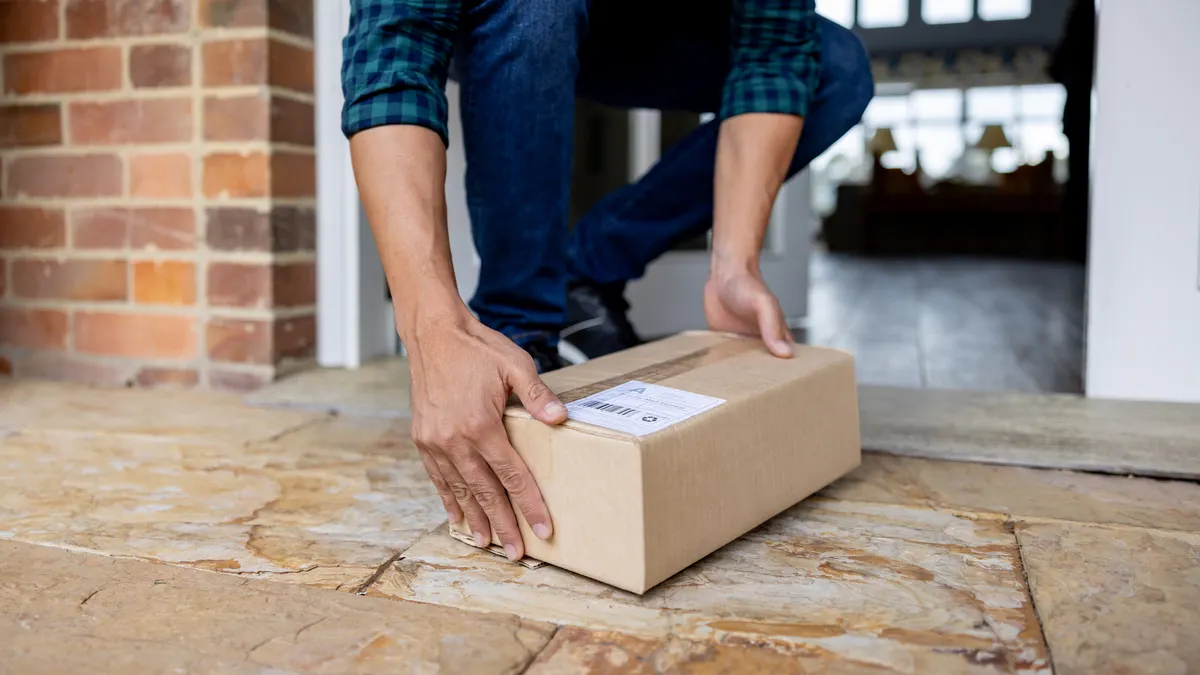
Validating drivers' proof of delivery photos is another way SpeedX is using AI. The company leverages a machine learning model it created to verify proof-of-delivery photos submitted by drivers, ensuring each package was delivered to the right location and in the proper spot at that location, Pizza said.
"The North Star for AI in last mile is around minimizing delivery failures."

Anthony Pizza
SpeedX VP of growth and innovation
"When a [proof of delivery photo] is actually uploaded into the system or actually taken, we're able to put it on a map and say, 'Hey, this was taken within X amount of meters from the GPS coordinates of the location,'" he said.
The tool is particularly helpful given the wide range of location types SpeedX delivers to, from apartment buildings and condo complexes to business-to-business addresses, Pizza added.
UniUni also uses AI to validate drivers' proof of delivery photos, helping ensure they bring each package to the proper location, Sheila Berry, UniUni chief revenue officer, said during a panel at Home Delivery World 2026 in Nashville last month. The carrier is incorporating AI in its pricing practices as well, enabling quicker turnarounds of rate proposals to customers.
AI boosts Veho's delivery flexibility
For alternative carrier Veho, AI is a pathway to increase options for shippers. In February, Veho announced the launch of FlexSave, which offers shippers cost savings in exchange for broader delivery windows.
FlexSave is powered by MaestroAI, a Veho platform optimizing fulfillment, batching and routing decisions, per the announcement. MaestroAI can also factor in each package's specific service requirements to determine whether to speed up or slow down a delivery within its network for improved efficiency.
The internally developed platform helps Veho find the most cost-effective method to accomplish a delivery while still achieving particular service requirements, Veho President and co-founder Fred Cook said. He noted the complexity of handling multiple packages from retailers, with service requirements varying by package, as a challenge simplified by MaestroAI.
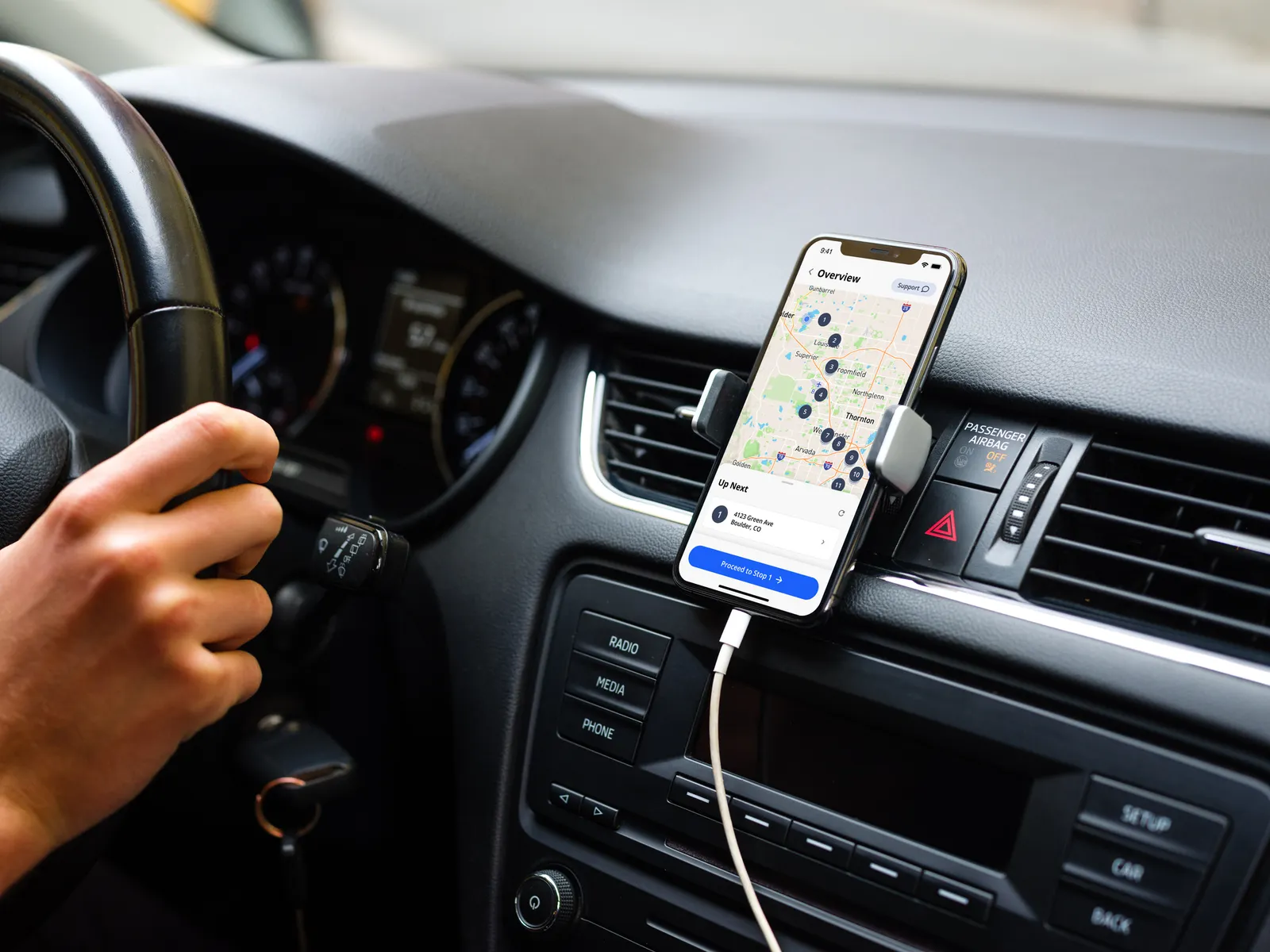
Veho's goal with MaestroAI is to unlock more optionality for shippers, enabling them to test and deploy different speeds for different customers as Veho enables more features on its platform, Cook said. For example, a merchant could launch a customer loyalty club in which members get faster package deliveries from Veho by default, aided by MaestroAI's capabilities.
"Allowing retailers to personalize the speed that they're going to go with is a huge goal of what we're rolling out here," Cook said.
As alternative carriers continue to make AI-driven leaps — from chatbots to flexible delivery services — improving the human-driven aspect of operations still remains critical, experts said.
"Unless you're running robotics and drones at scale, which nobody is, there's still a human making that delivery," Pizza of SpeedX said. "So how can we as a company leverage AI to make that person's life and experience delivering that parcel as simple and seamless as possible? That's really what it comes down to for us."