Dive Brief:
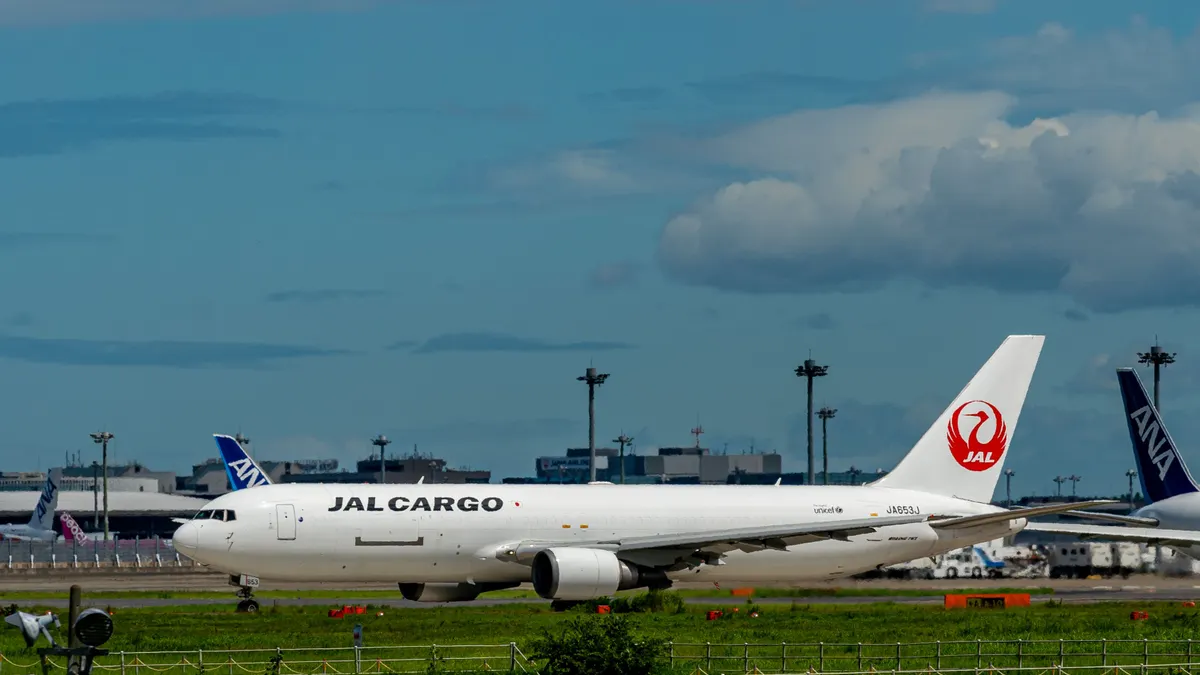
- Nippon Express Holdings and Japan Airlines launched a freighter service connecting North America and Asia to meet growing demand for artificial intelligence- and semiconductor-related cargo, according to an Oct. 1 press release.
- The weekly circuit starts in Los Angeles (LAX) and routes to Narita (NRT), Taiwan (TPE) and Singapore (SIN), per the press release. The JAL-operated service uses a Boeing 747F with a maximum payload capacity of 100 tons.
- The first flight departed LAX on Oct. 3 and will continue to operate weekly throughout the rest of 2026, per the release. The release didn't specify the service's 2027 schedule, but "both companies will continue to pursue further network expansion going forward.”
Dive Insight:
Volumes tied to AI- and semiconductor-related hardware remains one of air cargo’s strongest growth engines, particularly on the Transpacific tradelane. In June, for instance, AI and semiconductor volumes helped push global air cargo demand up 7% year over year, according to a July Xeneta report.
Meanwhile, global semiconductor sales in August were up 8% month over month to $159.7 billion, rising for the 18th consecutive month, World Semiconductor Trade Statistics reported. Regionally, sales in the Americas were up more than 180% in August, and 143% in Asia Pacific.
Nippon Express and JAL's service aims to provide stable and flexible air transport capacity for oversized and heavy cargo, such as server racks and data center-related equipment, according to the press release. The 100-ton freighter aircraft also intends to meet demand for other high-value-added cargo which continues to increase due to the spread of generative AI and digital infrastructure investments.
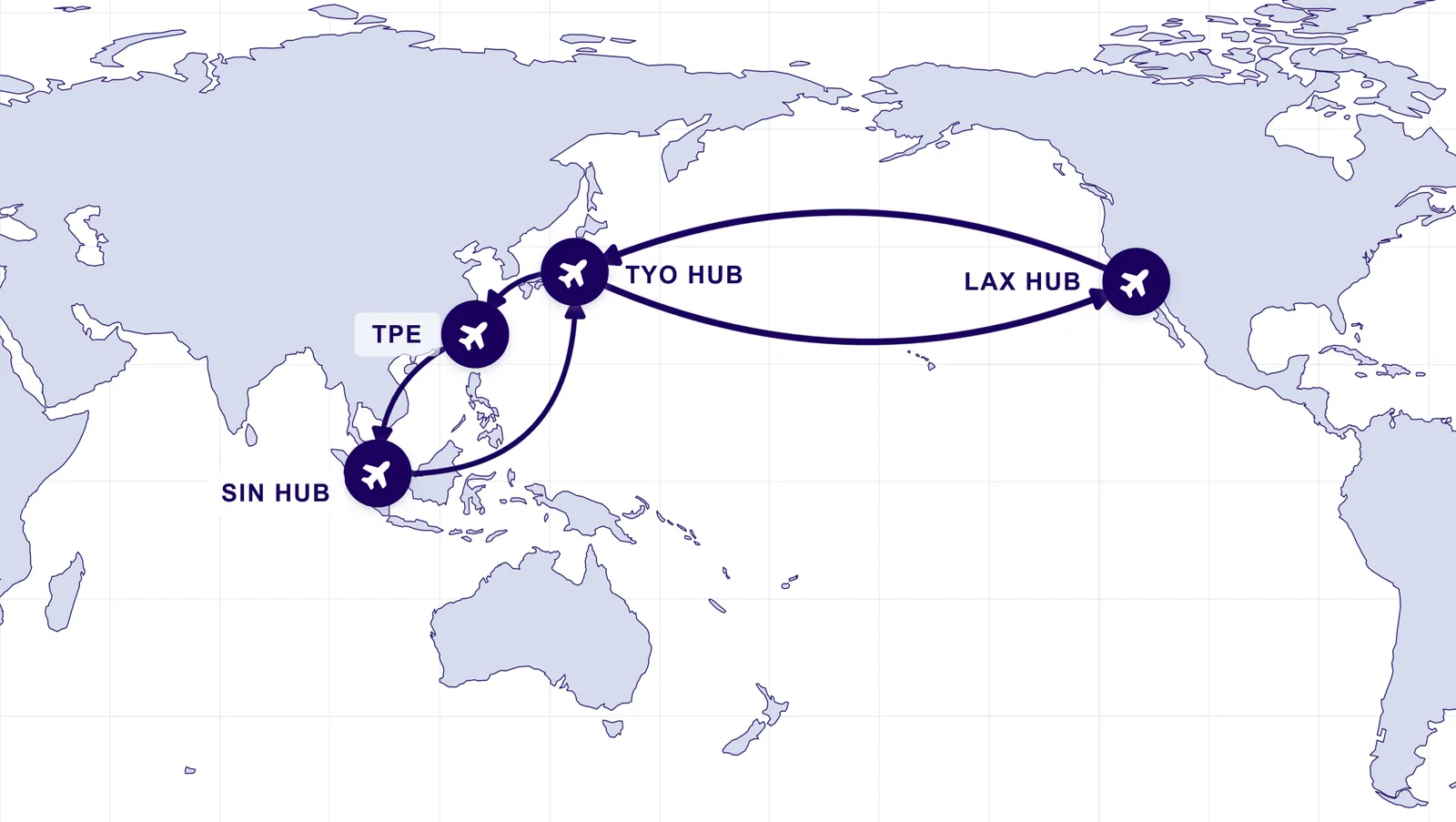
Besides Asia-North America connectivity, the air cargo service also targets intra-Asia demand for AI- and semiconductor-related volume, with Nippon Express noting that few airlines operate large freighters within the region.
“Because cargo can be loaded and unloaded at each port of call on the circuit route, the service enables the design of diverse transport routes and efficient transport operations, flexibly meeting cargo transport needs between North America (including Latin America beyond) and Asia,” according to the press release.
Xeneta reported that AI-related cargo accounts for less than 10% of air cargo volumes, per its July report. However, the impact is influencing air cargo providers to adapt to accommodate demand on specific corridors. DHL Global Forwarding, for example, launched a thrice-weekly Transpacific service between Bangkok (BKK) and Cincinnati (CVG) earlier this year, with the technology sector noted as a major demand driver for the route.