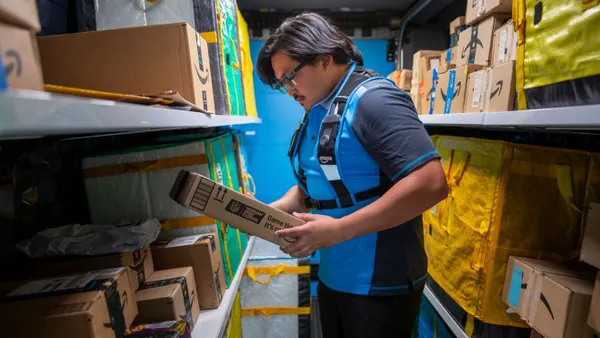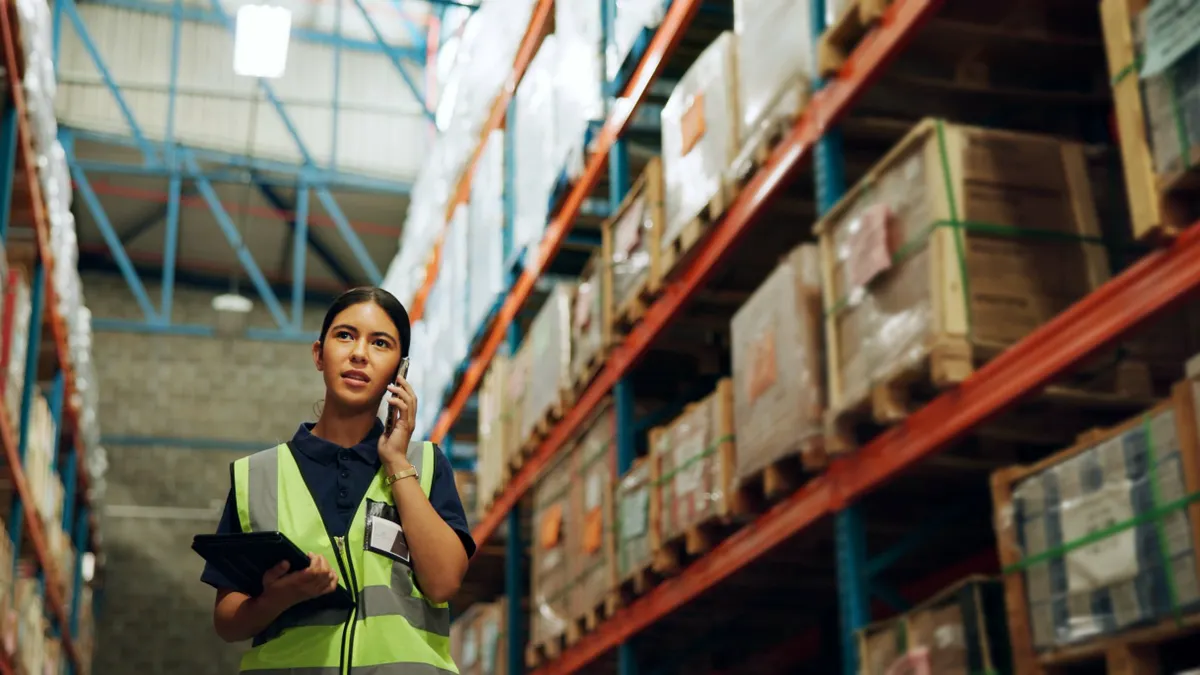

Until recently, the overnight shift at Kuehne+Nagel’s Healthcare HyperCare control tower in Costa Rica spent much of the night on the phone. Staff called carriers one by one to confirm temperature readings on pharmaceutical shipments and chase down statuses across time zones, in five different languages.
Today, AI agents make those calls. In the first deployment, the agents completed more than 10,000 status checks, processed over 6,000 emails and handled 78% of connected calls end to end. The team’s capacity rose 47%.
“The goal was simple: stop having skilled people spend their days and nights dialling carriers one by one just to confirm a temperature reading or track down a shipment status,” said Pablo Palafox, CEO of HappyRobot. “Once you remove that repetitive outbound burden, teams can focus on what really matters.”
Kuehne+Nagel isn’t alone. CMA CGM has AI agents opening sales conversations with shippers. DHL has them collecting customs duties. Encompass has AI agents handling customer support calls for price, availability and order status. Each began with one repetitive, high-volume workflow that needed headcount and created bottlenecks. All four companies have since expanded the use of agents. Here’s how each got there, and what their results say about where AI agents belong in supply chain operations today and what they’ll take on next.
Kuehne+Nagel: Monitoring healthcare freight through the night
Kuehne+Nagel, one of the world’s largest freight forwarders, runs its Healthcare HyperCare team as a dedicated control tower for temperature-controlled shipments. Every excursion alert or missed milestone meant another carrier call, and volume never fit team capacity.
The agents were built and deployed within weeks. They handle outbound carrier calls, exception escalation and coordination in English, French, German, Spanish and Mandarin through voice and email.
“By integrating AI agents to manage high-volume, repetitive tasks, we empower our people to focus on the customer experience, ensure reliable service worldwide, and enhance monitoring and service quality around the clock,” said Yngve Ruud, EVP of Air Logistics at Kuehne+Nagel.
The pilot results led to approval for a rollout across the forwarder’s global air operations, with more than 10 use cases on the roadmap, including milestone tracking, spot quoting and invoice reconciliation.
Encompass: Resolving customer support calls
Encompass, North America’s largest supplier of OEM replacement parts, had tracked its inbound calls for years and knew most were transactional: price and availability, order status, backorder ETAs. Hiring to match a growing brand portfolio wasn’t sustainable.
The company started with a single brand, Midea, and set one metric. “We determined success and failure by the amount of handoffs being made as escalations to live agents,” said Brian Ecenarro, who leads customer service operations for the Parts Town Home Division.
Getting there meant solving a hard problem: long alphanumeric model numbers where one misheard character returns the wrong part. After iterating with the Encompass team, the agent now resolves roughly 64% of calls without a human, with 93% non-negative customer sentiment, according to the company. It has since expanded to LG, handling about 1,700 calls a week, with the rest of the portfolio to follow.
CMA CGM: Putting an agent on sales calls
The world’s third largest container carrier handles more than 54 million customer interactions a year. Its AI sales agent, Eva, calls a segment that reps rarely reach: businesses that registered online, but never booked, and customers without a dedicated rep. Across UK and Senegal campaigns, Eva contacted more than 4,000 customers; about a third moved into active discussions about shipping routes.
A second agent handles the inbound cargo release inquiries in the US, resolving 46% end to end and triggering the system that emails customers their release numbers, CMA CGM says. First deployments reached production in four weeks.
“We are now expanding these applications internationally to improve customer experience and support our teams,” said Mathieu Friedberg, EVP of Transformation at CMA CGM Group. Eva is slated for more than 20 countries by year-end.
DHL & WWEX Group: Scheduling and tracking shipments
At DHL, agents handle inbound appointment scheduling, driver follow-up calls, transport status calls and high-priority warehouse coordination, working by phone and email to write updates back into DHL’s systems.
Since partnering with HappyRobot in 2025, deployments have grown to target hundreds of thousands of emails and millions of voice minutes a year. The program has grown to more than 10 live use cases across three divisions and multiple continents, including an outbound agent that calls recipients about outstanding customs duties so that held shipments are released faster.
The same pattern holds in brokerage. At WWEX Group, one of the largest freight brokers in the US, six agents now track about 25,000 loads a month end to end, from dispatch confirmation through proof of delivery. The company reports a 10x gain in task throughput over the prior team. “"Having a one-stop shop to see what's happening throughout the life cycle of every load, that's the difference between reactive and proactive," says Brian Andalman, VP of Truckload.
What these companies have in common
They started with a problem they could already measure. Encompass had tracked why customers called and knew most calls were about price, availability or order status. Kuehne+Nagel knew how many carrier calls its night shift made, and in how many languages. In each case, the first agent deployment went where the volume was.
They judged the agent on resolution, not activity. Encompass counted handoffs to a human. Kuehne+Nagel and CMA CGM counted calls completed end to end. None of them measured how many conversations the agent started, but rather how many it resolved.
They expanded only after the first workflow held. Each from a single pilot to a multi-function or multi-country program, with engineers embedded alongside operations teams throughout. Along the way, the agents accumulated context on the routine work. That context is what lets them take on more complex work over time.
The follow-up work in supply chains, the status calls, has always pulled skilled people away from harder problems. At these four companies, agents now take the volume. The exceptions, escalations, and important conversations that need judgement go to people.
“The goal was never to remove people,” said Brian Andalman, VP of Truckload at DHL. “It was to make them superhumans.”
Learn more about HappyRobot in logistics.