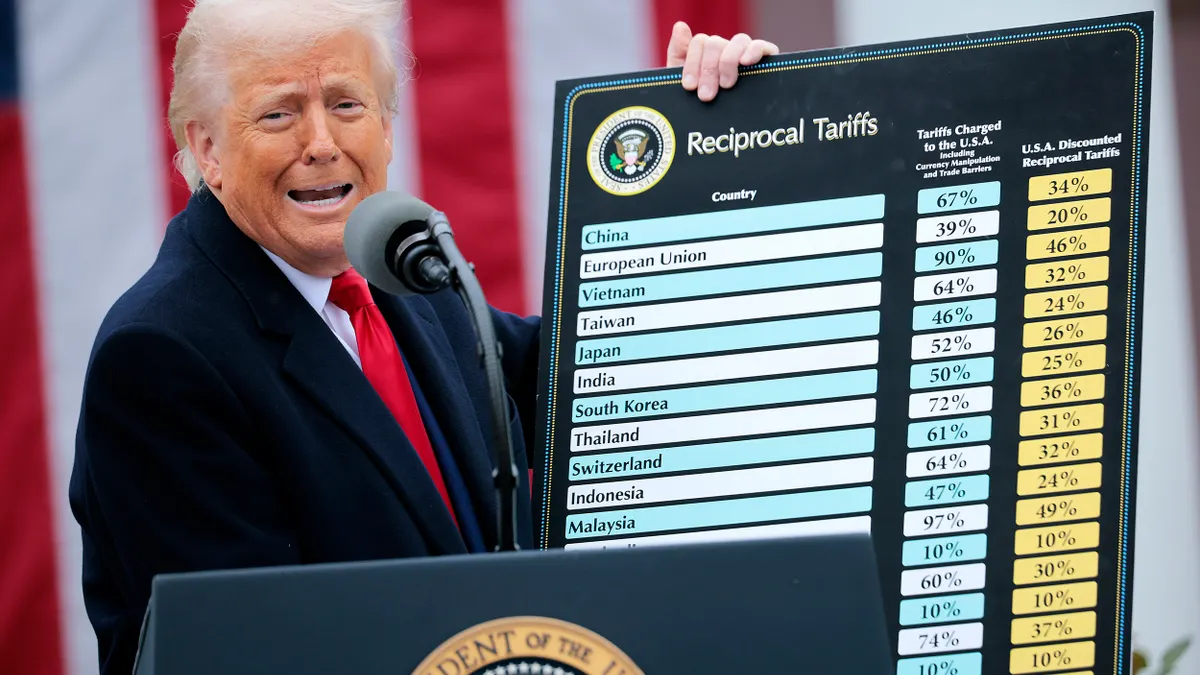
The U.S. Trade Representative is proposing additional tariffs of either 10% or 12.5% for 60 trading partners based on investigations that found a "failure to impose and effectively enforce" stopping goods made with forced labor entering the U.S., per a Tuesday news release.
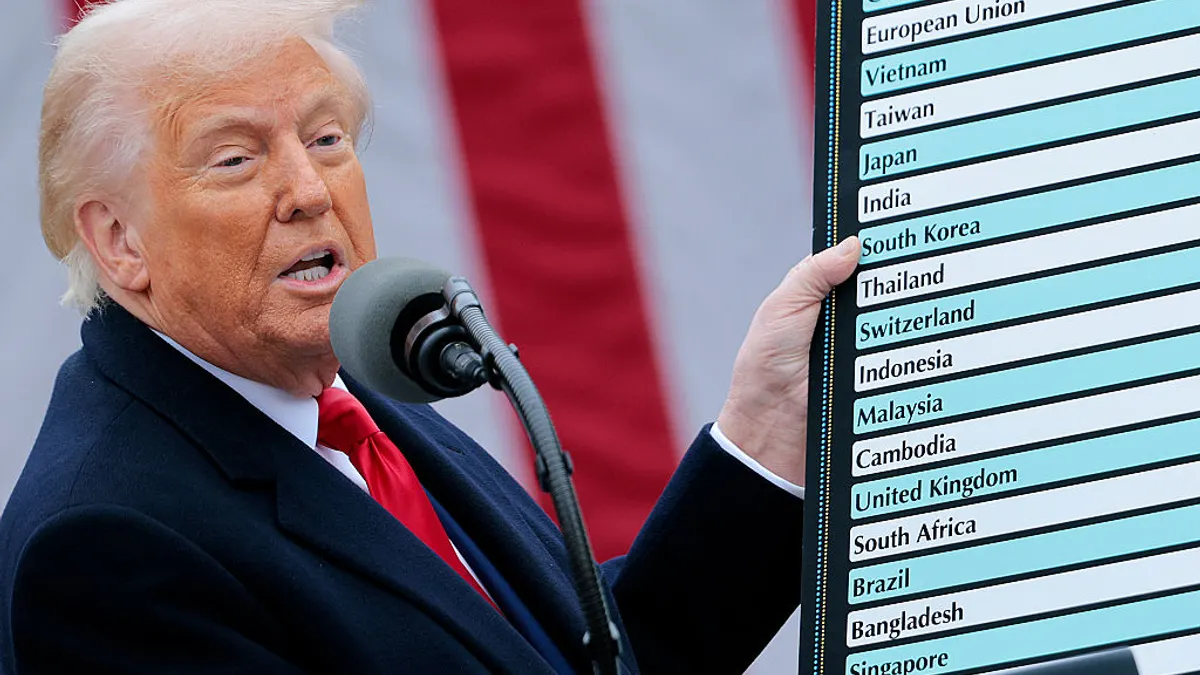
A proposed 10% tariff would apply to trading partners that impose a forced labor import prohibition, have committed to install such a measure through a reciprocal trade agreement, or "imposed a partial regime with the effect of preventing the importation of certain forced labor goods," per the press release. These partners include Canada, Mexico, the European Union, the United Kingdom and Taiwan, according to a Federal Register notice.
For all other investigated economies, including China, India, Brazil, Japan, South Korea and Vietnam, the additional tariff rate would be 12.5%, per the notice. Mao Ning, spokesperson for China's Foreign Ministry, said Wednesday that no one stands to benefit from a tariff war or trade war.
The USTR did not provide planned implementation dates of the proposed tariffs.
Exemptions apply to all parts subject to Section 232 tariffs and goods compliant with the United States-Mexico-Canada Agreement, per the notice. They also apply to raw materials that could result in domestic supply shortages if hit with the additional levies, and certain products that can't be grown or produced in sufficient amounts in the U.S. A full list of items proposed for exemption is available in the annex to the notice.
The proposed tariffs stem from Section 301 investigations initiated on March 12. The USTR said the failure of the 60 trading partners to block forced labor imports is enabling firms using such methods "to produce goods at lower cost and thereby distort market conditions for firms that do not use forced labor," per the release. The issue harms U.S. commerce by subjecting domestic producers to unfair competition, the release added.
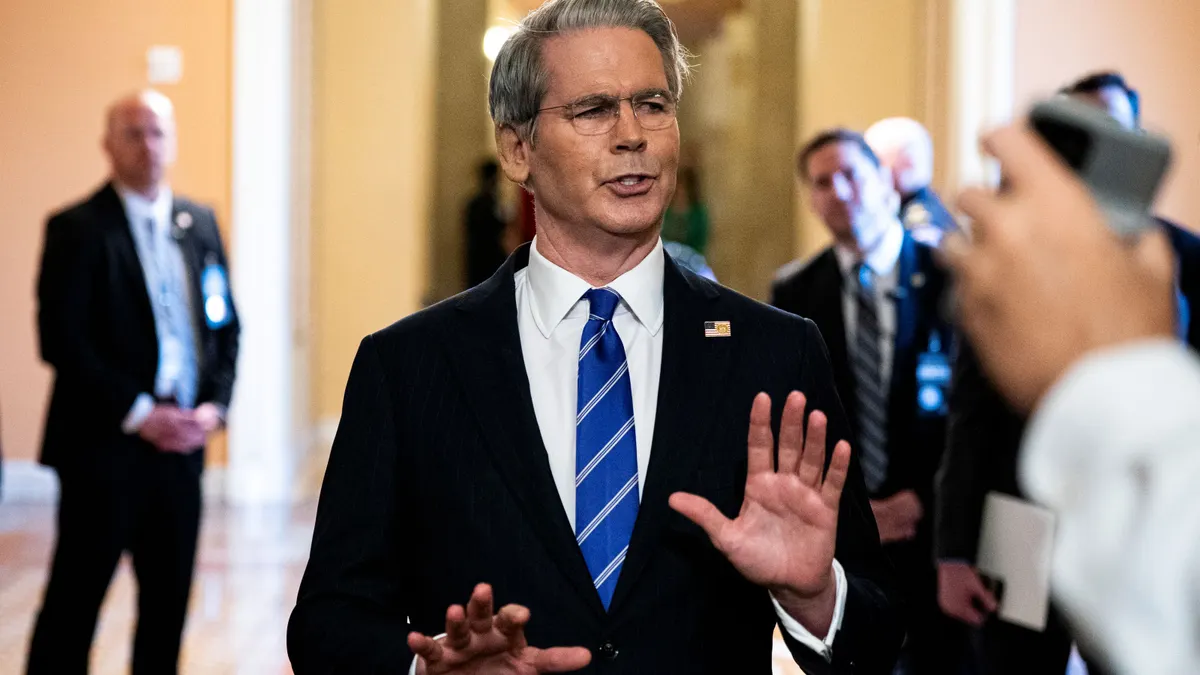
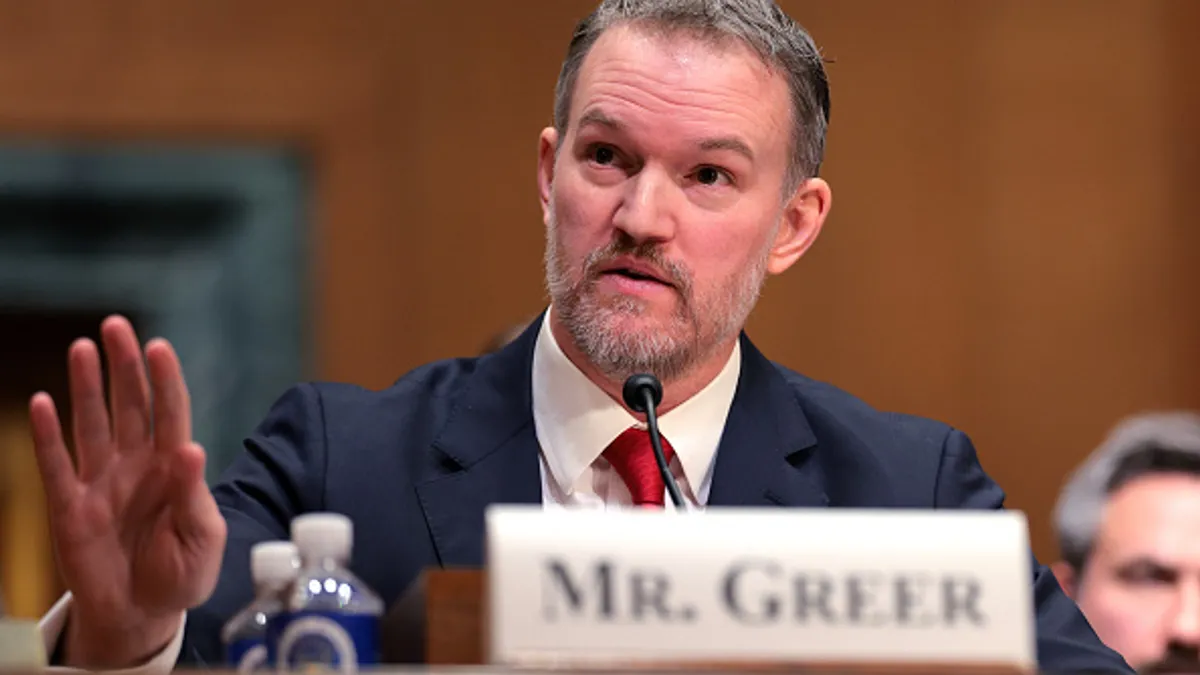
“The failure of our most important trading partners to address the importation of goods made with forced labor is unacceptable," USTR Jamieson Greer said in the release. "This creates a dynamic where American workers are forced to compete globally on an unlevel playing field. We will no longer tolerate this disparity."
While some trading partners have taken steps to block the importation of goods made with forced labor, they "must do more to ensure that trade does not perversely encourage and entrench forced labor globally," Greer added.
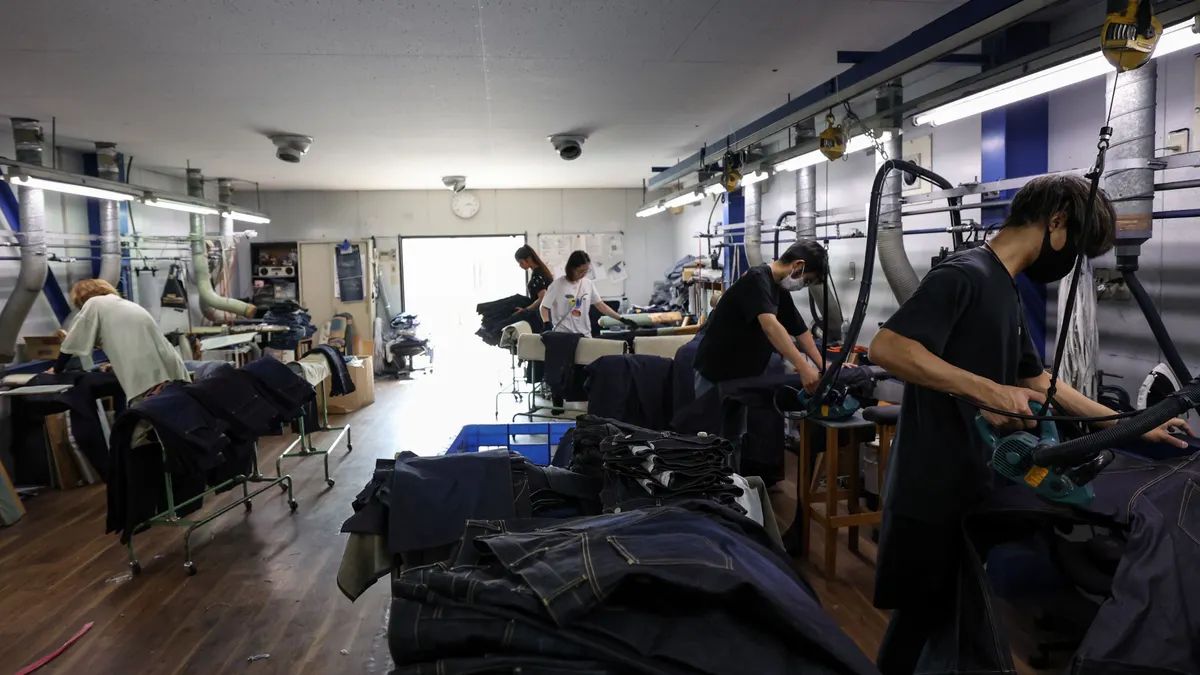
The USTR is also proposing a mechanism to allow a certain amount of apparel and textile imports from some economies at a reduced Section 301 tariff rate, according to the notice. Through this mechanism, the volume of reduced-duty imports from a trading partner would equal the quantity of textile exports from the U.S. to that partner.
"A certain volume of apparel and textile imports would also be allowed to enter the United States at the reduced Section 301 rate based on the volume of U.S. cotton and cotton products a trading partner imports from the United States during a certain period of time," the notice said.
Public comment submissions on the proposed actions are due by July 6, with the USTR set to hold hearings the following day.