Dive Brief:
- UPS now offers RFID labels for packages dropped off at all 5,500 The UPS Store locations to boost shipment visibility and reduce defects, CEO Carol Tomé said in an earnings call last week.
- RFID labeling at the point of origin "gives better transparency order-to-cash, something that customers are desperately seeking," Tomé said. UPS Store locations are currently processing 1.3 million packages with RFID labeling daily.
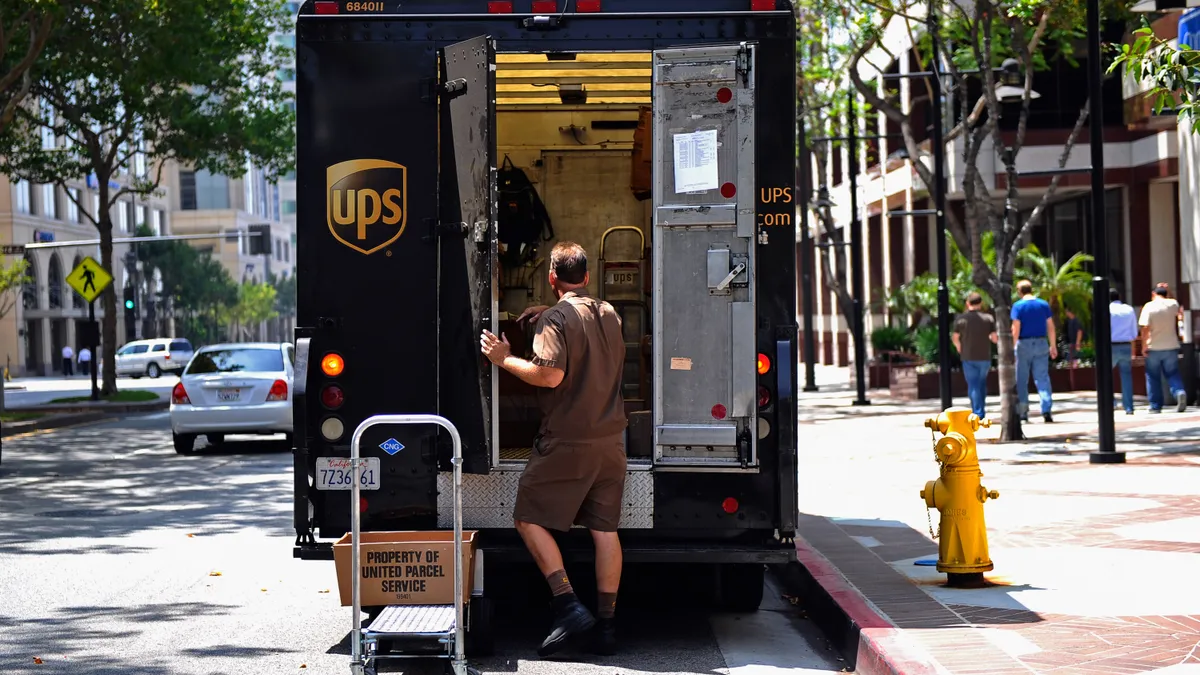
- The added capability will help UPS win more commercial business, according to Tomé. The company has also installed RFID tag readers in all its U.S. package cars, allowing the delivery vehicles to identify packages to increase efficiency.
Dive Insight:
UPS' RFID-centered moves, part of the carrier's ongoing "Smart Package Smart Facility" initiative, aim to advance two crucial goals for the parcel carrier amid its ongoing network overhaul.
One is to increase UPS' appeal among shippers. Large enterprise retailers in the U.S. embrace the company's RFID offerings "because they have inbound visibility to what's hitting their docks, and it allows them then to spread their workforce and how they inbound that volume," Matt Guffey, EVP and chief commercial and strategy officer, said during a January 2025 earnings call.
The initiative is among several capabilities UPS has been investing in to attract more customers. Another example is the company's Digital Access Platform, which connects to e-commerce platforms to offer rate discounts and other shipper services. The platform has seen its revenue grow from $139 million when Tomé joined UPS in 2020 to $4.1 billion by the end of 2025.
"That platform is something that small- and medium-sized businesses enjoy using for delivery as they're selling through partners like eBay and Shopify and others," Tomé said on last week's call. "So we're going to continue to invest in capabilities that allow us to win new business."
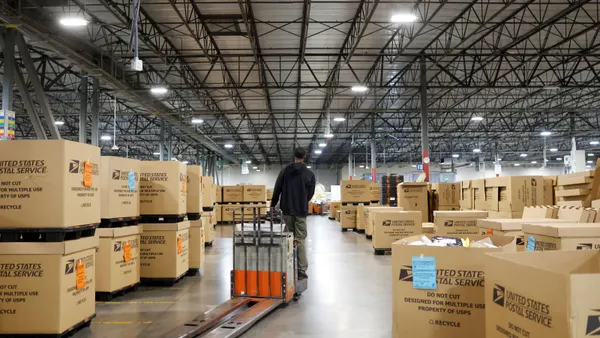
The RFID push also aims to boost the throughput of packages flowing through UPS' network while limiting labor-intensive tasks. UPS' installation of RFID sensors in its vehicles eliminated 12 million scans daily in 2024, when the company already equipped 66% of its package car fleet with the technology.
Increasing automation is a priority for UPS as it sees reduced volume originating from major customer Amazon and transitions its U.S. operations to what Tomé called "a smaller and nimbler network." UPS expects to increase U.S. volume processed through automated facilities from 66.5% in 2025 to 68% this year.
"We have 127 buildings that are automated," Tome said. "We are adding another 24 in 2026. The cost per piece in these automated buildings is 28% less than the cost per piece in our conventional buildings. So automation is one way that we will continue to drive productivity."