Editor's note: This story is the second in a three-part series about how parcel delivery providers are using AI to strengthen their operations and service performance. Read the previous installment here.
UPS' network isn't just powered by employees, trucks and planes. The company has spent years investing in its artificial intelligence and data analytics capabilities, helping the carrier anticipate and limit disruptions like customs and weather-related hangups.
"As we curate better data, AI can actually help us turn faster decision-making into better experiences for all those customers on the receiving and shipping end of the movements," Mallory Freeman, UPS president of global enterprise data analytics and generative AI, said in an interview with Supply Chain Dive.
UPS prioritizes collecting data that's "clean and accessible for our AI systems to remember," and uses that data to inform possible network adjustments during challenging periods like peak season or inclement weather, according to Freeman. UPS tests the impact of its planned routing adjustments via digital twin technology, simulating how the decision will affect package flows before the carrier implements it in the real world.
"So it's the right data, the right processes, and then the right ability to make decisions, simulate those decisions and make adjustments, especially as conditions change," Freeman said.
AI helped UPS adapt to post-de minimis era
AI has played a hand in how UPS navigates changes in global trade policies like new tariffs, helping the carrier move shipments across borders faster. For example, UPS uses AI and machine learning to ensure imports abide by the correct Harmonized System product classification codes, tariff rules and policies, Freeman said.
"It's extremely challenging to embark on these historic changes without compromising service. But that's really just what we do. We roll up sleeves and get after it."

Mallory Freeman
UPS president of global enterprise data analytics and generative AI
The company's capabilities came in handy particularly when the U.S. de minimis exemption was eliminated in August, which resulted in more formal customs clearance processes for low-cost packages. In March 2025, UPS cleared about 21% of 13,000 U.S.-bound packages without manual intervention on a daily basis, CEO Carol Tomé said on a Q3 earnings call last year. In September 2025, the carrier cleared 90% of 112,000 daily packages with no manual intervention.
"To manage the increased volume and complexity, we enhanced our customs brokerage capabilities by integrating Agentic AI," Tomé said. "This advanced technology streamlined formal entry processes."
Tapping AI to maintain reliable shipping flows will be critical for UPS as it navigates global trade upheaval and a U.S. network overhaul driven by reduced package volume from major customer Amazon. The carrier remains focused on how it can creatively leverage and synchronize its range of tools to ensure delivery reliability isn't compromised for its 10 million-plus customers, according to Freeman.
"It's extremely challenging to embark on these historic changes without compromising service," Freeman said. "But that's really just what we do. We roll up sleeves and get after it."
UPS leverages AI for pricing edge
One area UPS has leveraged AI and data analytics in for years is pricing, said Freeman, who described it as "both a science and art" involving the company's technology and sales team. For example, UPS salespeople use tools like Deal Manager, which provides real-time pricing guidance, to boost customer win rates and draw in more revenue.
Before leveraging AI, UPS' sales team relied on tribal knowledge and past experience to negotiate a deal, Tomé said during a conversation with the Digital Supply Chain Institute last year.
"Today, the deal is scored through generative AI," Tomé said. "And the salesperson can watch the score as they're negotiating the terms and conditions. And get this, our win rate is higher and our discounting is lower than it was."
Employee upskilling a UPS priority
UPS continues to explore ways technologies like AI can speed up processes or handle currently manual tasks for employees, Freeman said. At the same time, UPS is investing in upskilling its workforce globally through learning development programs, with the goal being for employees across the company to confidently use data analytics and AI as their role evolves, Freeman said.
"The right technology and the right people involved in that technology means that we can actually get to better customer service, better experiences for our customers, better outcomes," Freeman said.
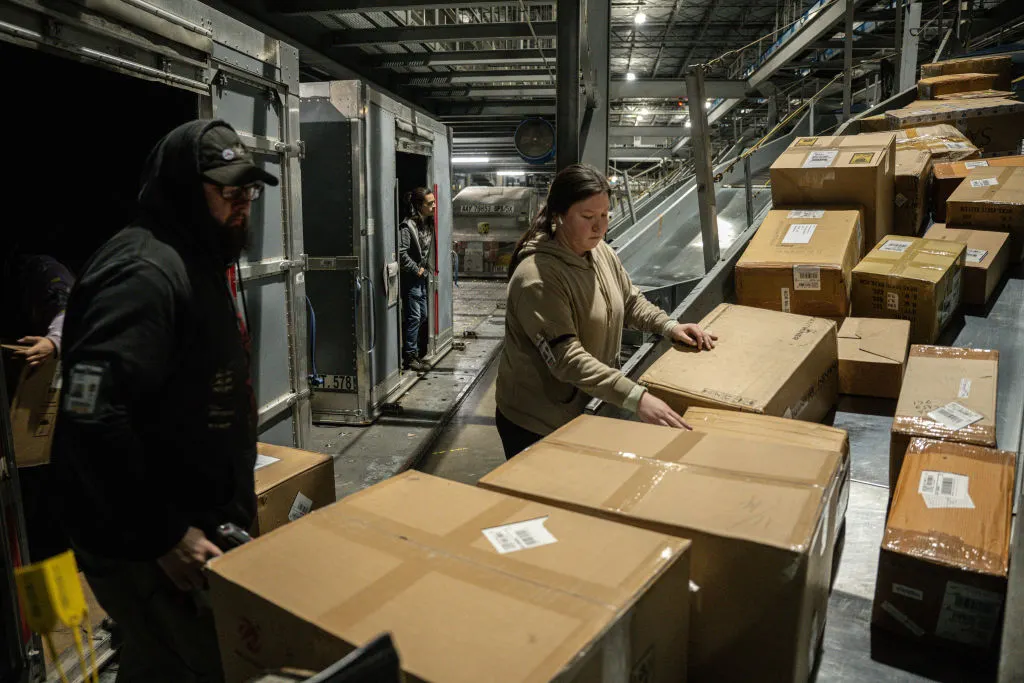
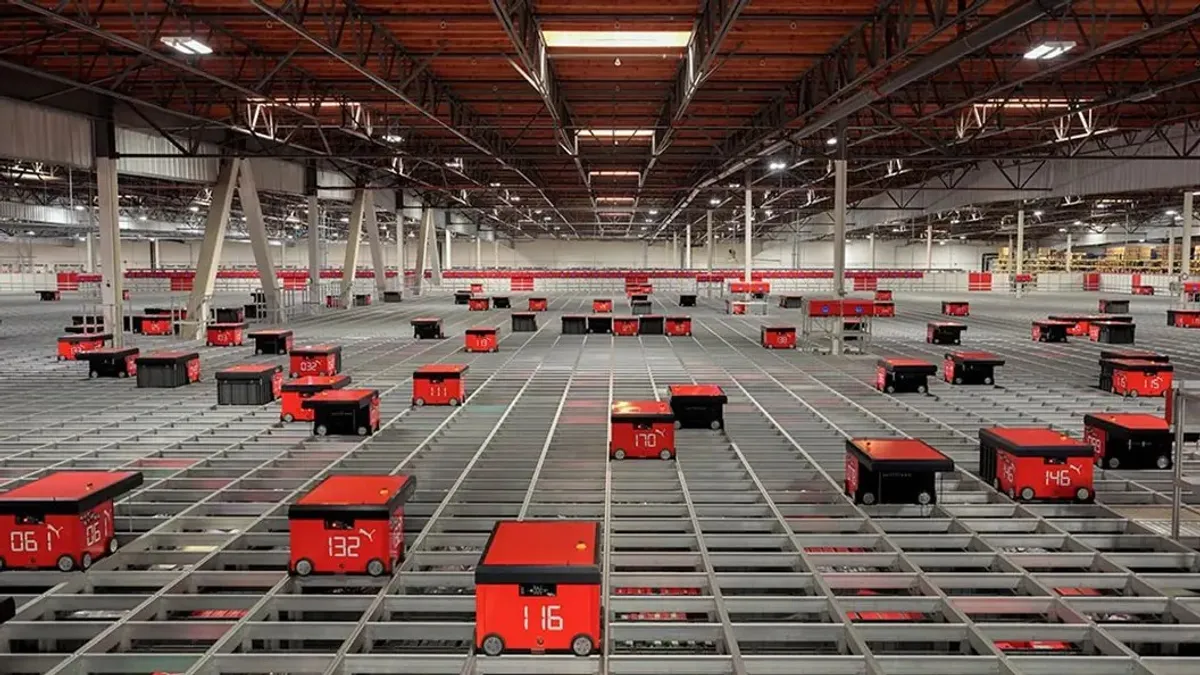
Upskilling has been on UPS' mind as the company overhauls its network and leans more on automated sortation processes. During the Digital Supply Chain Institute conversation, Tomé said UPS' vision is to have some of its sortation centers powered by robots and featuring automated sorting, bagging and label application capabilities.
"Coupled with that is the opportunity to upskill our people and create opportunities for them to do different kind of work," Tomé said. "And I'm excited about that, too, because someone's going to have to oversee the robots."
The carrier isn't alone in upskilling employees for the AI era. Rival FedEx has invested in an AI fluency program for 300,000 employees, including advanced training for all of its technology specialists, Vishal Talwar, FedEx EVP and chief digital and information officer, said at the company's 2026 Investor Day in February.
UPS and FedEx's push to improve workers' skillsets could help both carriers succeed in implementing AI at a wider scale. Investing in employee upskilling is critical for companies looking to drive operational improvements with AI, said Alan Amling, an assistant professor of practice at the University of Tennessee, Knoxville, in an interview. However, many organizations are focusing their investments on the AI systems themselves, rather than distributing money more evenly between the technology and training for employees to wield AI effectively.
"They're spending money on AI systems but not spending the money on change management, on upskilling employees, and that's probably where I see the biggest issue," said Amling, who formerly served as UPS' VP of corporate strategy.