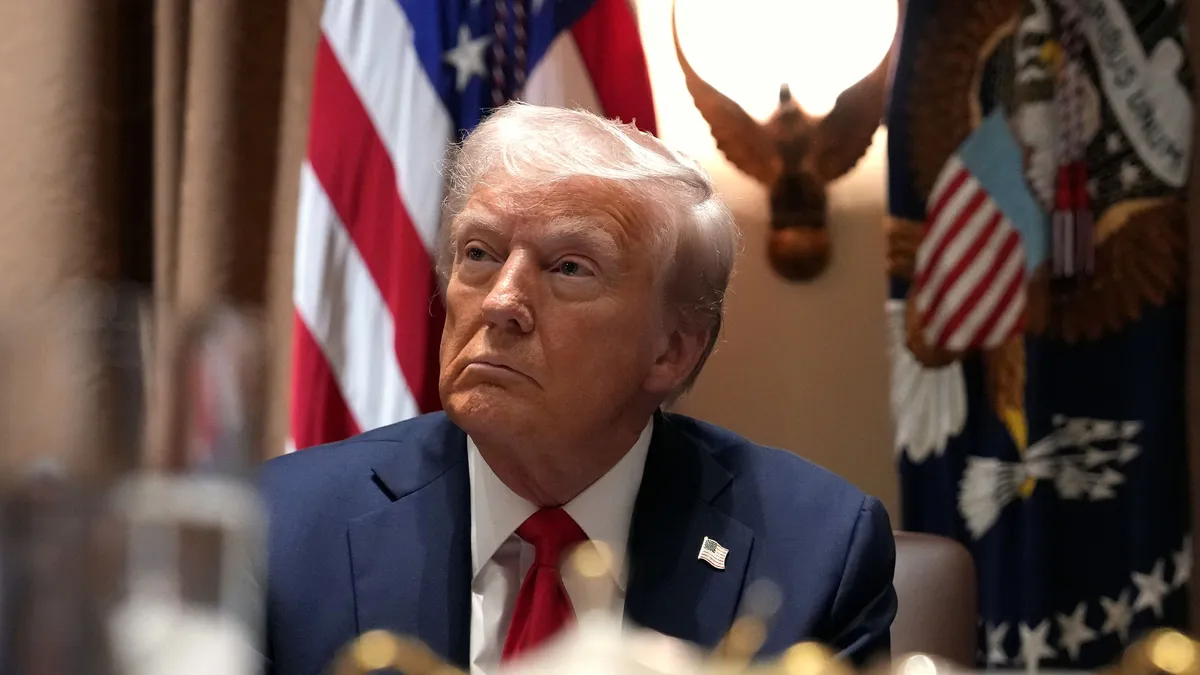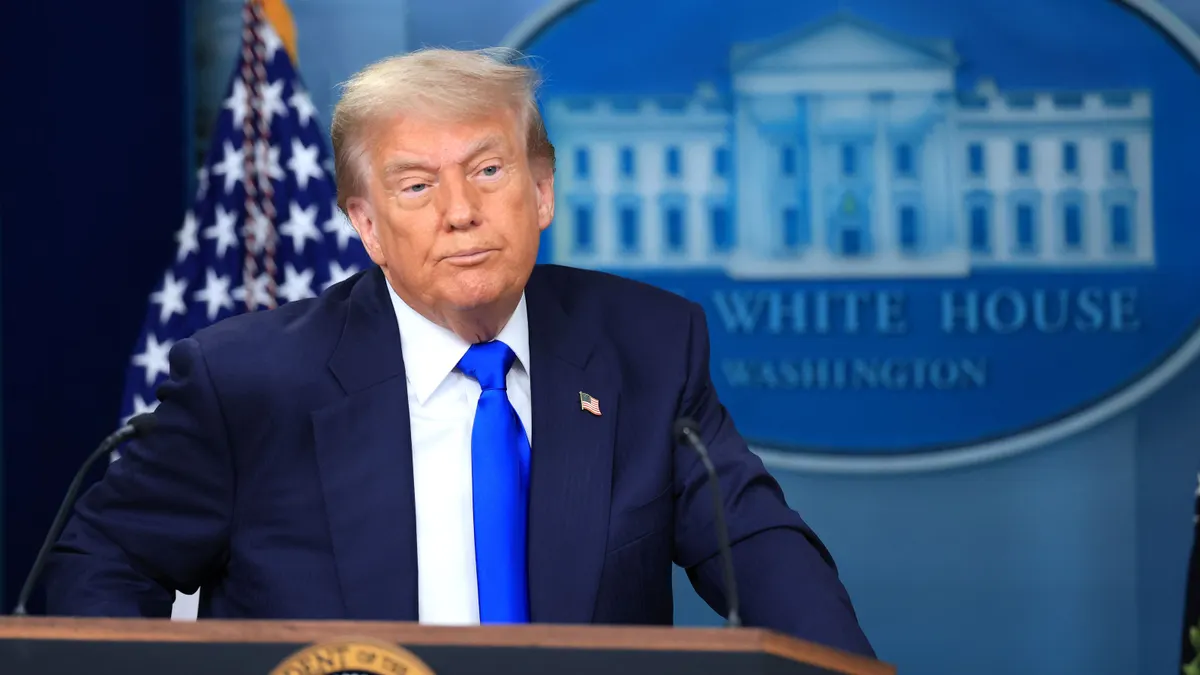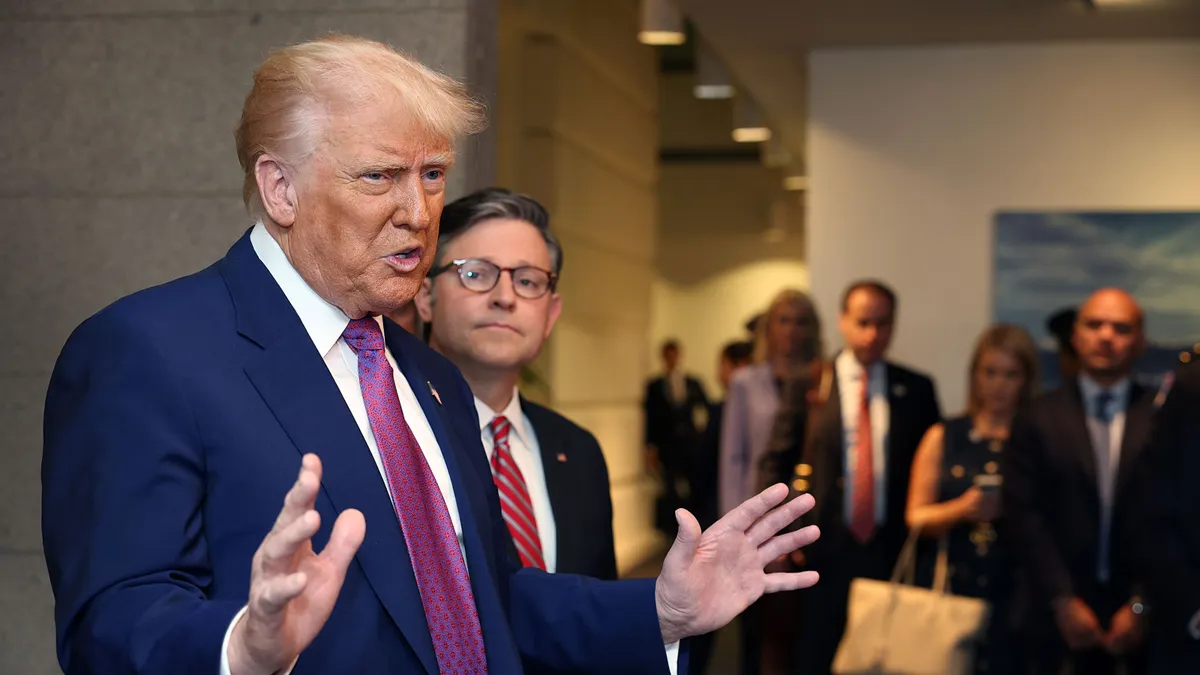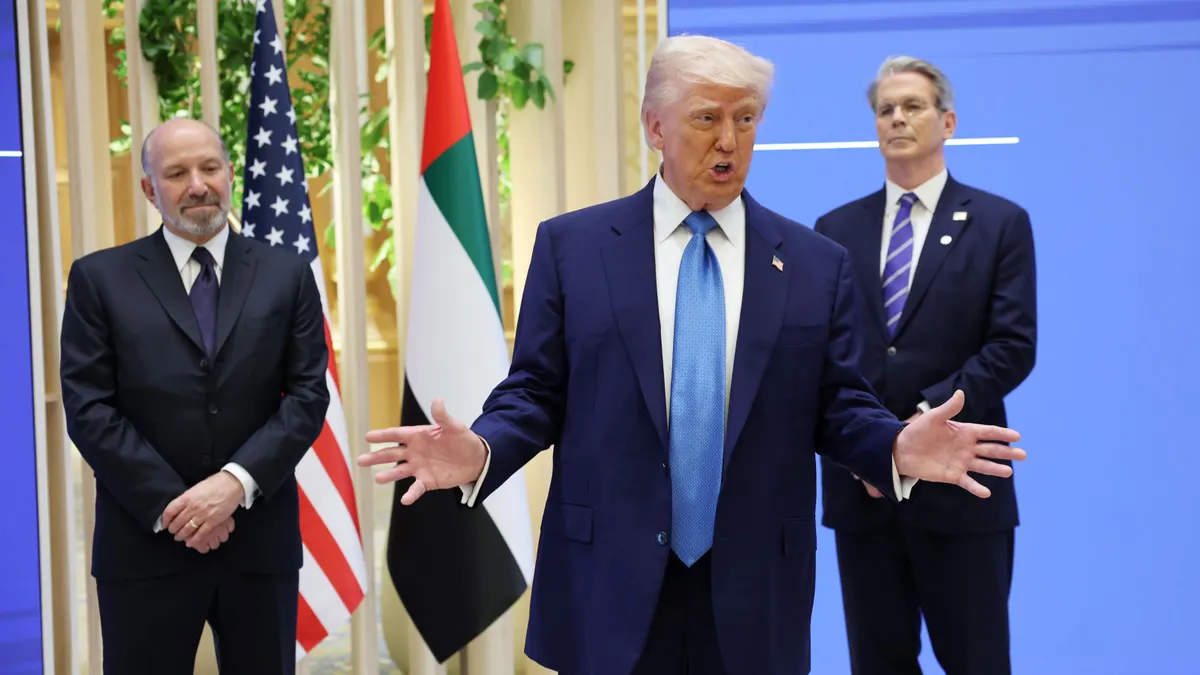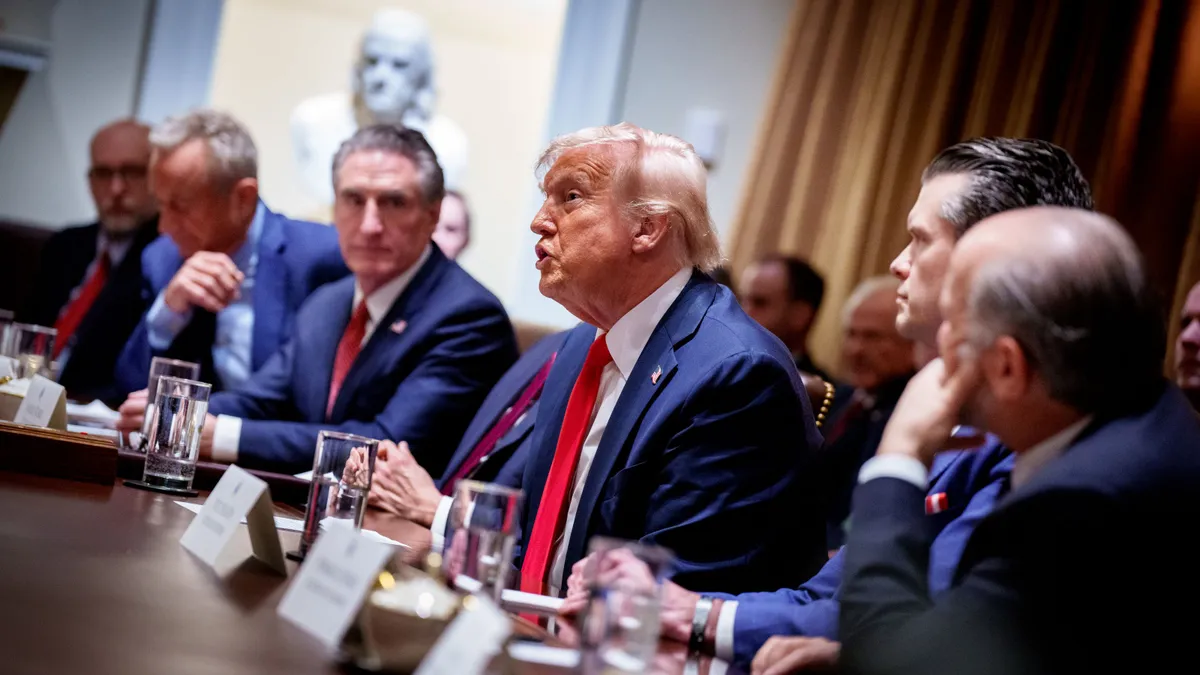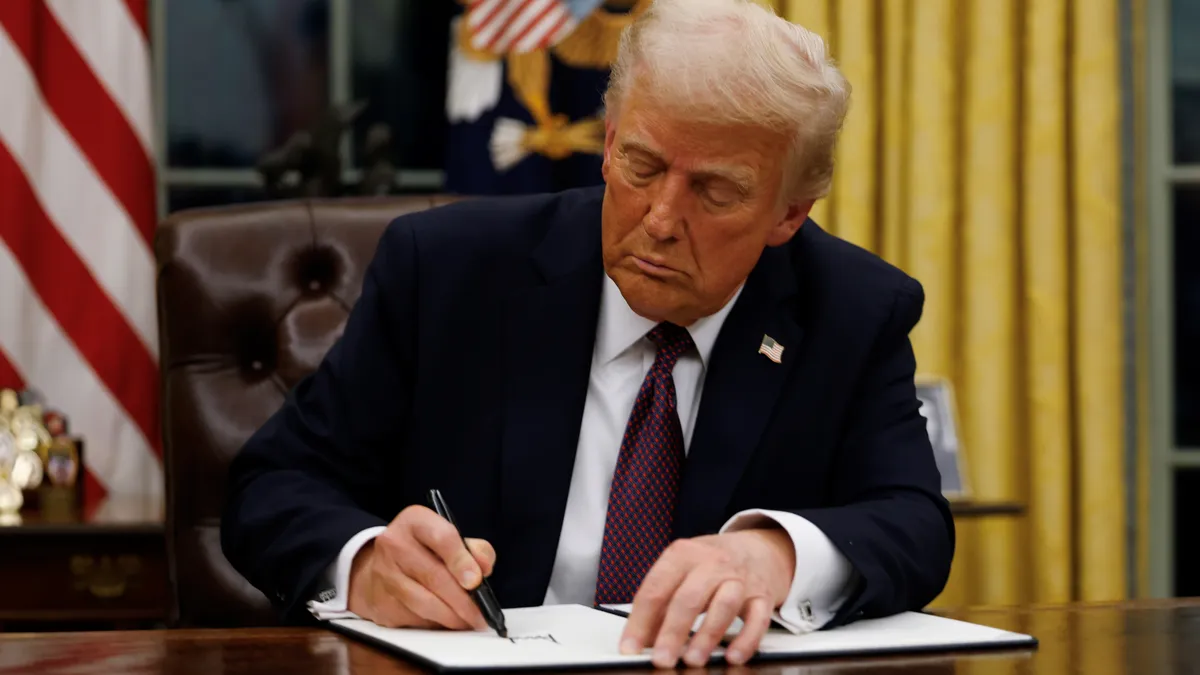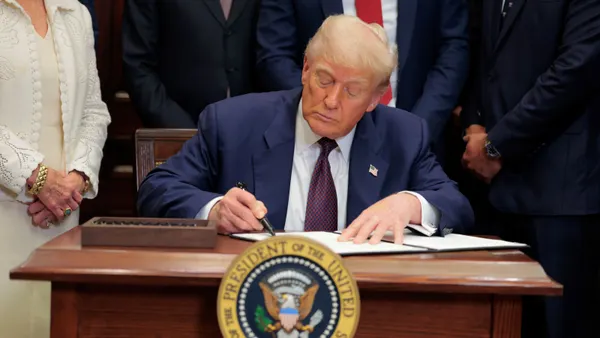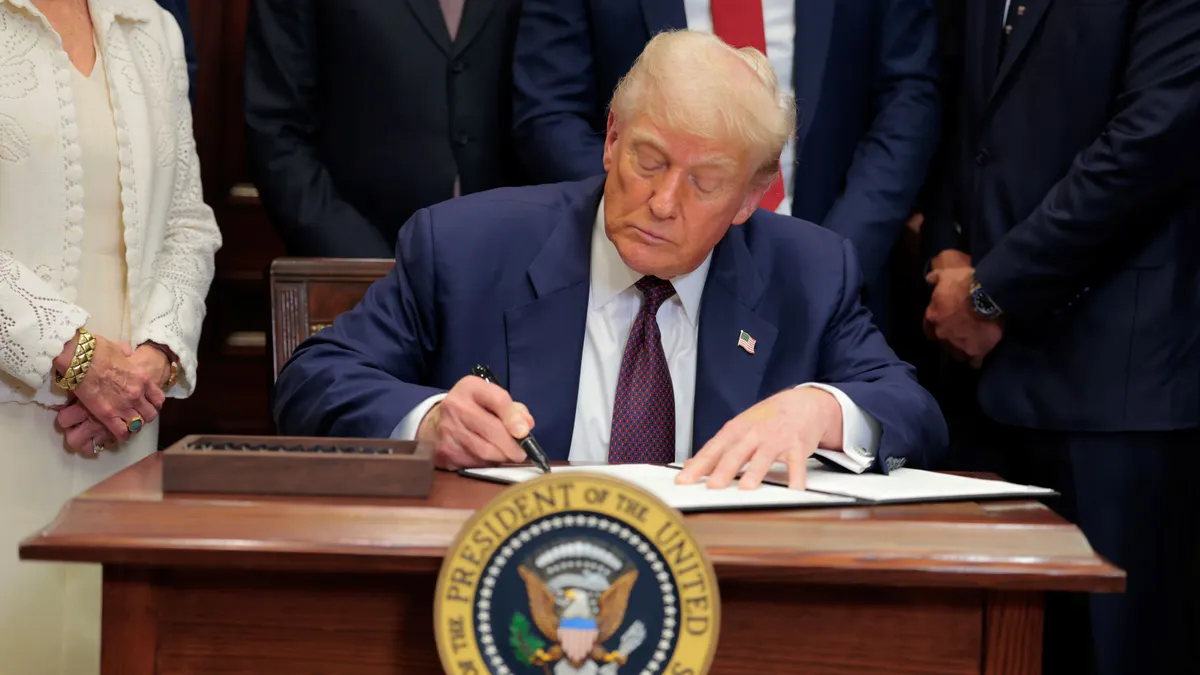
President Donald Trump ordered his administration to establish a process for imposing possible tariffs on countries that purchase or import goods from Iran.
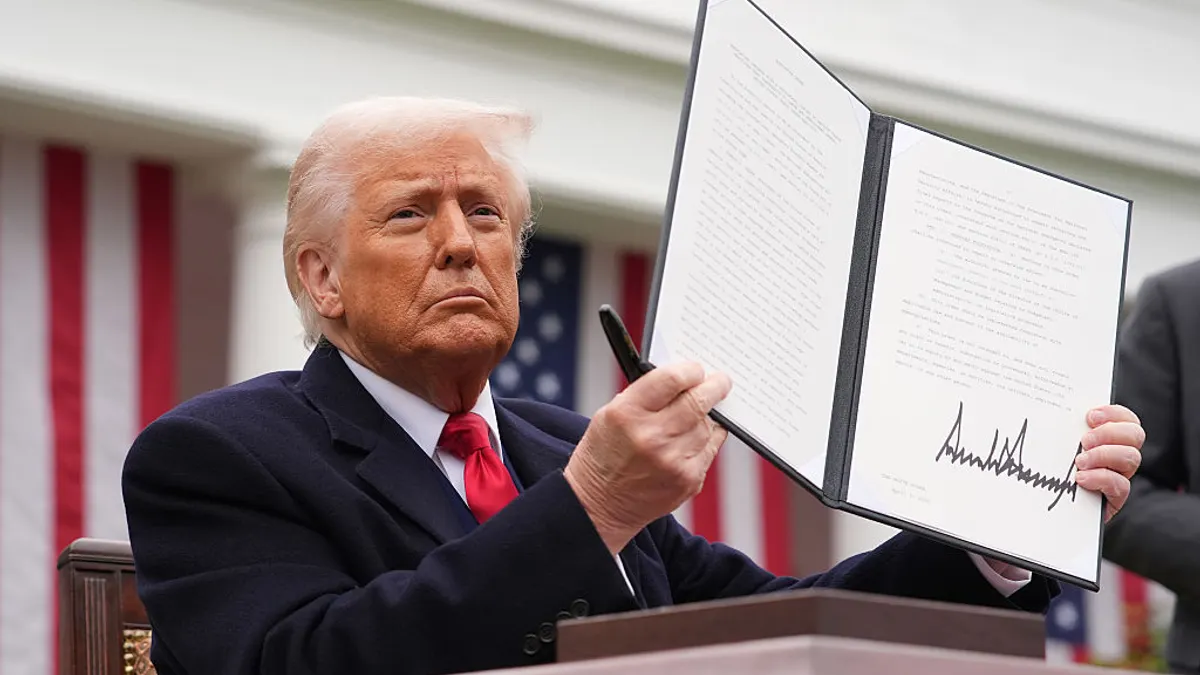
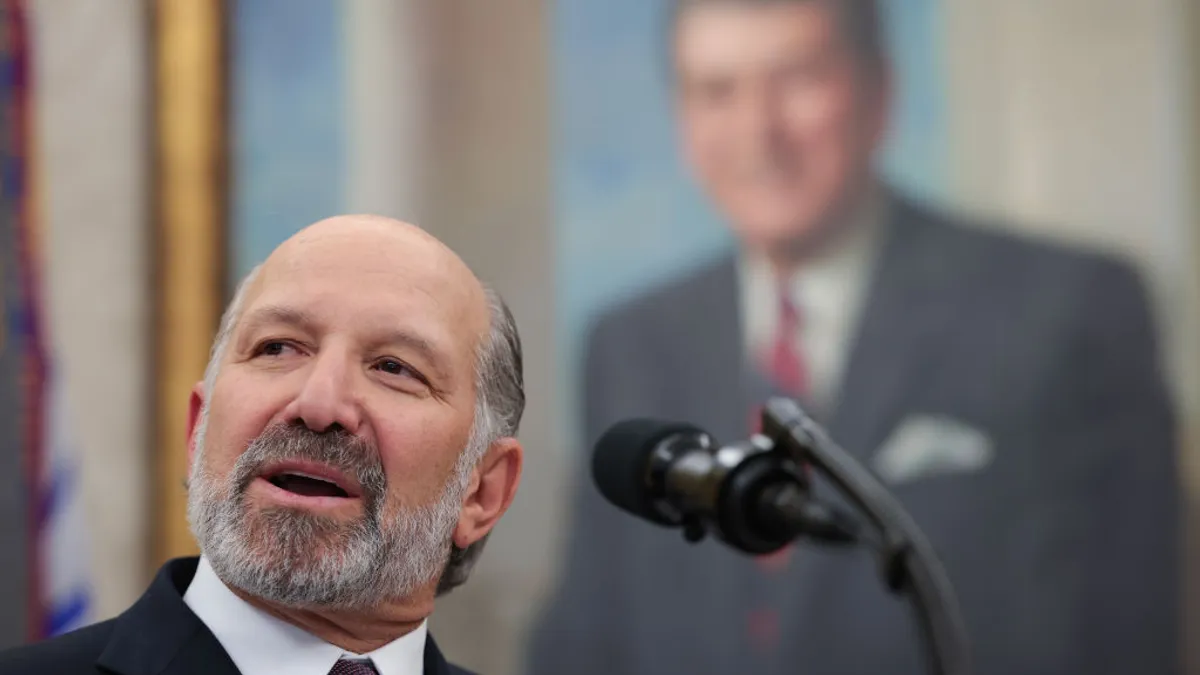
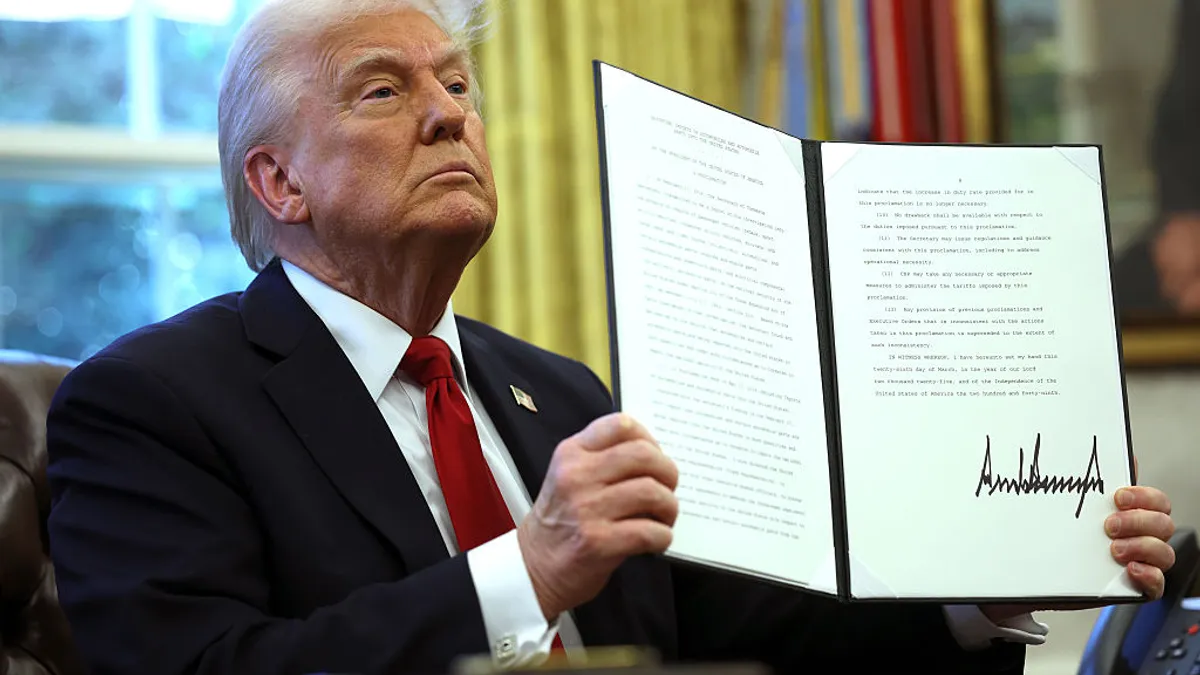
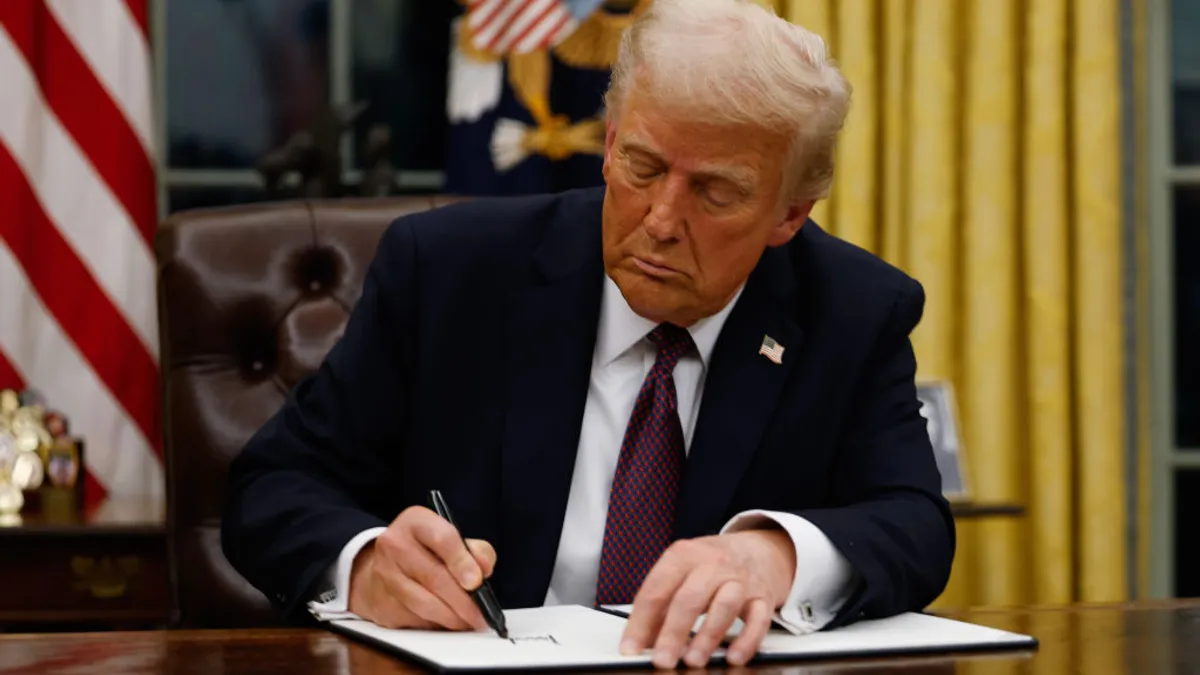
In a Feb. 6 executive order, Trump said he will authorize the Secretary of State, the Commerce Secretary and the U.S. Trade Representative to issue rules and guidance for implementing the tariffs.
The order, effective Feb. 7, does not impose a specific tariff rate. Instead, it says "an additional ad valorem rate of duty — for example, 25 percent — may be imposed." The guidance may establish grounds for an additional levy on goods imported into the U.S. from “any country that directly or indirectly purchases, imports, or otherwise acquires any goods or services from Iran.”
In January, the president said in a Truth Social post that the U.S. would charge a 25% tariff on imports from countries "doing business" with Iran. At the time, Trump said the tariff was "effective immediately," but the White House did not publish official documentation or define the meaning of "doing business."
In issuing the latest order, Trump cited the need to protect U.S. national security, foreign policy and the economy. However, the order could be modified if circumstances changed, according to a White House fact sheet.
Trump will enact the order, in part, under the International Emergency Economic Powers Act, which the administration claims gives the president sweeping powers to impose tariffs when he declares a national emergency. The Supreme Court is considering challenges to that claim under constitutional grounds and is expected to release an opinion in the near future.
Trump's order against Iran’s trading partners mirrors a similar missive signed last month that targets countries selling oil to Cuba. As part of that order, Trump also instructed cabinet officials to determine the extent of any potential tariffs.