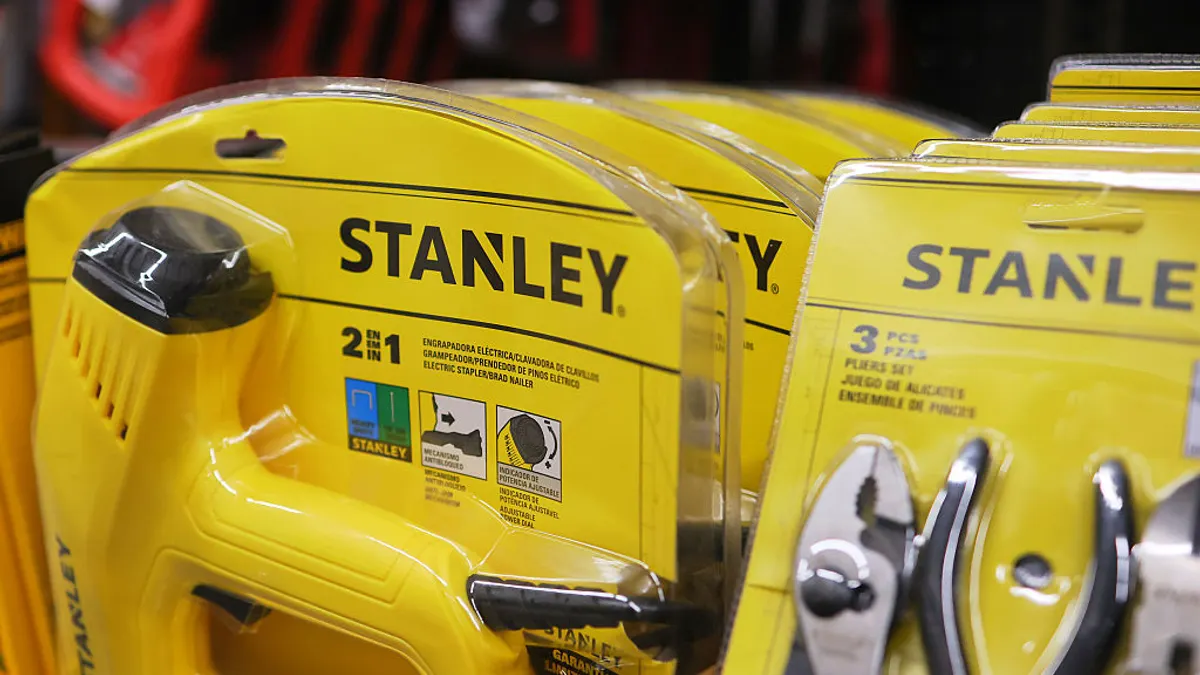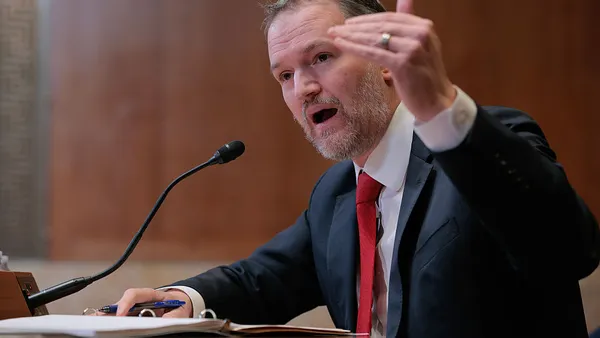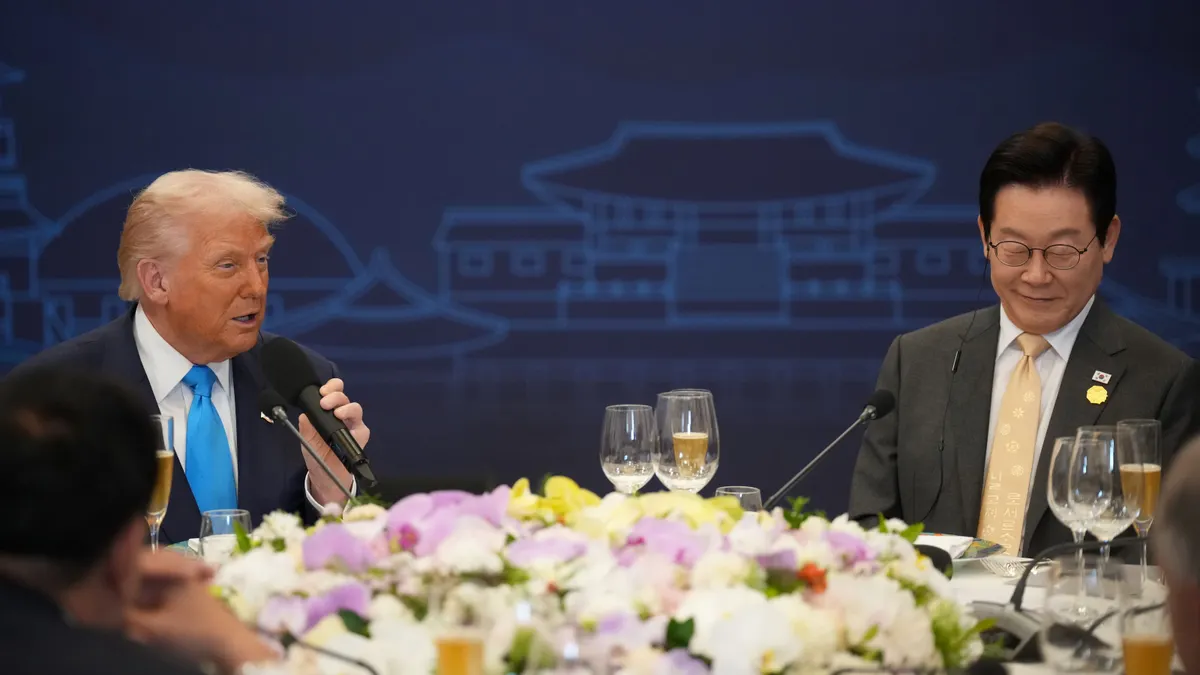
U.S. President Donald Trump plans to hike tariffs on goods from South Korea, including cars, lumber and pharmaceuticals, alleging the country has not lived up to a framework trade deal reached last year.
Trump said in a Monday Truth Social post he would increase the levies on imports from South Korea to 25%, up from the 15% rate cemented in November as part of the framework pact. However, he did not provide details on when the hike would go into effect. In addition, the White House has not yet published official documentation of the potential increase.
The U.S. and South Korea first struck a framework tariff agreement last July and later formalized provisions of the pact in November. As part of the agreement, South Korea’s National Assembly in November introduced a special law to enact terms of the framework, according to a Google translated statement from the Democratic Party of Korea, which holds a majority in the legislative body.
The statement confirms that the National Assembly has not yet approved the conditions of the framework agreement despite certain investment provisions being reflected in the country’s 2026 budget. The statement further urges assembly members to vote to pass legislation to enact terms of the framework pact.
Under the terms of the deal, South Korea agreed to scale back restrictions on U.S. car imports while addressing non-tariff trade barriers on food and agricultural products. The pact also called for South Korea to make $350 billion in investments in the U.S., including $150 billion to support shipbuilding.
Meanwhile, the U.S. agreed to limit tariffs on a large swath of goods from South Korea at 15%, including for Section 232 duties in place for cars, auto parts, timber, lumber and wood derivatives. The U.S. also agreed to cap future sector-specific levies on goods such as pharmaceuticals at 15% while matching the terms of any future agreements with countries with semiconductor trade volumes similar to South Korea’s.
The U.S. has reached similar framework deals with a host of trading partners, including Japan, the European Union and Thailand.
However, the European Parliament recently suspended efforts to cement the EU’s framework pact after Trump threatened to place fresh levies on six bloc members and the U.K and Norway as part of his push to annex Greenland. Trump has since walked back the threat, but the EU has not yet voted to restart work to ratify the agreement.