Dive Brief:
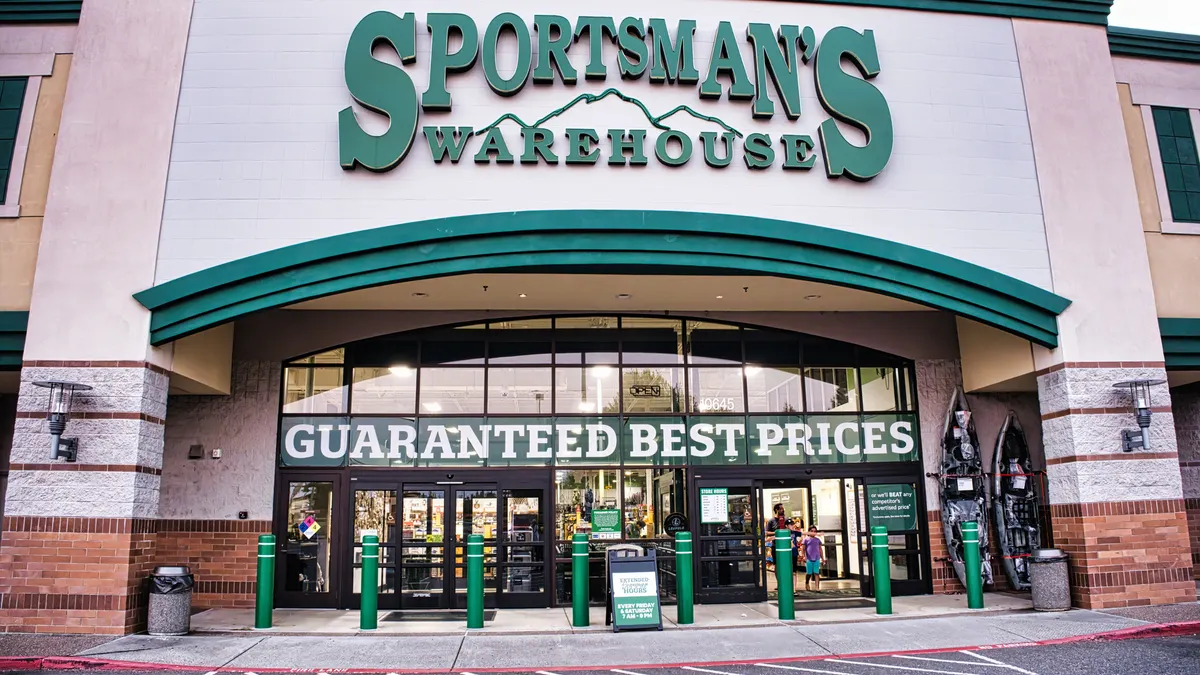
- Sportsman’s Warehouse’s multiyear effort to improve inventory efficiency is bearing fruit, as the company cut total inventory by 10% year over year in Q2.
- The $44.5 million drop in inventory to $399 million comes as the retailer doubles down on SKU rationalization by refining receipt timing to match seasonal demand, CFO Jennifer Fall Jung told analysts on a Sept. 1 earnings call.
- “We think the majority of our work around assortments and SKU reduction has kind of been done, and now it's just really optimizing on a seasonal basis,” Fall Jung said.
Dive Insight:
Sportsman’s Warehouse has spent the past few years cleaning up its inventory assortment by rationalizing SKUs and refining merchandise assortments.
Earlier this year, Sportsman’s Warehouse was prioritizing inventory timing as a strategy to drive efficiency and better product churn. For instance, in April, Fall Jung told analysts that the retailer’s spring inventory was set to arrive later.
Previously, the retailer’s inventory levels were bloated by aged merchandise that tied up “much needed working capital dollars,” President and CEO Paul Stone said on the Sept. 1 earnings call.
With the company’s inventory clean-up largely complete, it now has the working capital needed to buy core products and new products in the camping, clothing, footwear and firearms category. Meanwhile, savings from SKU reductions have been put back into the retailer’s core product mix to improve overall in-stock.
“Our fall assortment is better aligned with the products and brands that support our core pursuits of hunting, fishing, and shooting, and personal protection,” Stone told analysts.
Despite the inventory wins, Sportsman’s Warehouse is still pursuing additional improvements. Fall Jung said Q2 performance “wasn’t there” but noted the retailer’s assortment will be “back in check” during Q3.
“So we're feeling really good about our inventory levels,” Fall Jung said. “We spent the past year plus cleaning up the assortments, making sure that we weren't over assorted, putting bigger buys on our core category.”
Looking ahead, the retailer expects average inventory to be lower through the end of the year due to further improved inventory timing and the elimination of slow-moving SKUs for better turnover, according to Fall Jung. By the end of the year, the retailer is slated to have less total inventory than in 2025.
“Our core in-stocks are significantly improved, and our category level inventory is the healthiest it has been in many years,” Stone said. “This will remain a focus, as we expect to further improve turns and inventory efficiency in the balance of 2026.”
Several other retailers and brands have been prioritizing inventory health and leaning into simpler SKU mixes. Duluth Trading, for instance, has also been focused on optimizing its receipt scheduling, alongside rightsizing buys and clearing stock. In June, the retailer reported that its inventory for the quarter was down 25% YoY.
Under Armour slashed 25% of its SKUs over the last two years as part of a more disciplined inventory approach, while Dollar General has trimmed its overall SKUs by more than 1,500.