Supply chain professionals will find 2026 marked by shortages, rising costs and shifting trade dynamics. Navigating the pressures will make sourcing resilience a critical strategy in several sectors, including food, metals, healthcare and electronics.
Many companies sharpened their attention on resilience after President Donald Trump upended supply chains by using tariffs to address national security issues and drug trafficking.
In 2026, companies will build on those efforts with stronger partnerships with suppliers willing to invest in collaboration, innovation and joint problem-solving, experts said. Working together can improve reliability and reduce risk.
“Last year was about managing disruptions,” Abe Eshkenazi, CEO of the Association for Supply Chain Management, said in an interview with Supply Chain Dive. “Right now, it’s about redesigning your global network.”
Rearchitecting networks includes a deeper look at inventory levels to reduce the risk of shortages, Eshkenazi said.
“We're seeing organizations pick up additional costs with moving inventory forward and building up inventory so they can mitigate short-term shocks to the system,” Eshkenazi said.
Companies are also adapting supply chains to product changes made necessary by component constraints, Amanda Khalaf, a partner at global management consultancy Argon & Co., said in an interview with Supply Chain Dive.
“Some companies are looking at rationalizing their actual SKU base and their product base in order to mitigate against some of the price increases that will come in 2026,” Khalaf said of computer manufacturers’ response to higher memory prices.
Amid these factors and market dynamics, here’s a look at supply shortages to watch out for in 2026.
Rising copper demand will squeeze global supply
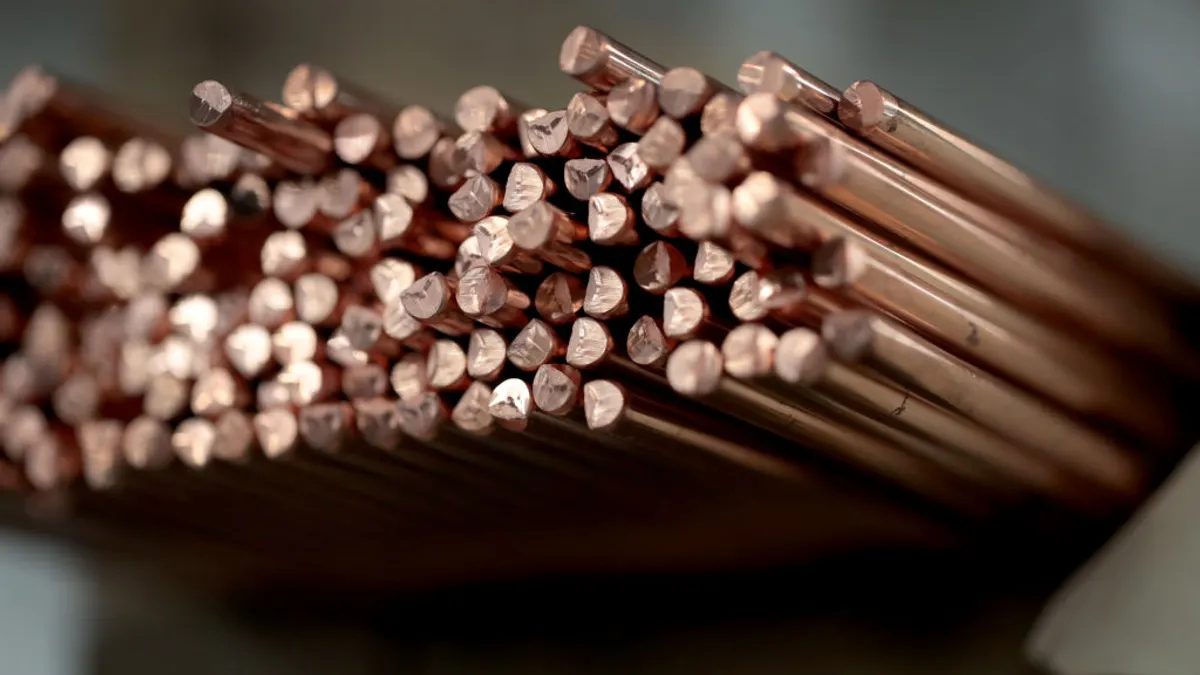
In 2026, supply chain managers will confront a copper shortage and higher prices as global competition intensifies for the metal, which industries use in a growing number of electronic systems, including AI technology, data centers and military infrastructure.
J.P. Morgan Global Research expects the U.S. will face a refined copper deficit of 330,000 metric tons this year, tightening the market and raising prices to an average of $12,075 per metric ton for the full year.
Meanwhile, the potential for additional U.S. tariffs on refined copper imports could further boost demand this year, per Goldman Sachs Research.
President Donald Trump has already installed 50% levies on semi-finished copper products and intensive copper derivative products, but an additional 15% duty could start on Jan. 1, 2027, depending on the outcome of a Commerce Department investigation. Copper imports to the U.S. could subsequently rise as companies build up stock ahead of possible levies, according to Goldman Sachs.
"Until there's another substitute available for exactly what you need, it's going to be a fight based on who can actually pay the most," Rupal Deshmukh, a partner in the strategic operations practice at global management consulting firm Kearney, said.
Beyond higher demand, copper supply risks stem from the production dominance of a small set of countries, which gives a limited group of producers and processors outsized influence over prices and long-term offtake contracts, according to S&P Global's Copper in the Age of AI report.
U.S. critical mineral supply will remain vulnerable
The potential disruption of the entire critical mineral supply that feeds advanced technologies across U.S. energy, military and commercial applications will remain a supply risk in 2026, according to experts. Adding to the pressure is the U.S.'s dependence on strategic competitor China for critical minerals it cannot produce itself, a dependence unlikely to change in the near-term, according to TD Economics, the research arm of TD Bank Group.
In 2025, China, a key source for mining and home to 85% of global critical mineral refining capacity, demonstrated a willingness to weaponize its position by tightening export restrictions on graphite, antimony and certain rare earths in retaliation for U.S. trade and technology controls, according to the Atlantic Council, a Washington, D.C., think tank.

Given the instability in U.S.-China trade relations over the last year, it's difficult to predict the impact on mineral supplies in 2026.
"I think everyone is expecting that some of the downstream impact will be higher prices for some of the minerals," Adam Borchert, a partner at Bain & Co., said, adding, "In fact, we expect in the next two to five years, we'll see some shortages."
Medical supply costs to rise, pressuring supply
Procurement executives trying to keep hospital shelves full can expect to pay more for medical and surgical supplies in 2026, according to Vizient, a healthcare performance improvement company.
Vizient's latest Spend Management Outlook, published in July, estimates the full-year inflation rate for medical and surgical supplies will reach 2.58% in 2026. Vizient maintained the projection in its State of the Healthcare Industry 2026 report, published in January.
"The inflation outlook continues to be influenced by volatility in global trade and supply chain conditions," Vizient's Spend Management Outlook says. "Rising raw material costs—driven by supply constraints, increased global demand and geopolitical instability—are contributing to elevated prices across many healthcare categories.”
The paucity of manufacturers for some devices also contributes to supply constraints, Micah Parker, SVP of spend management solutions at Vizient, said.
“Especially in that medical device space, sometimes manufacturing locations are very limited on where they may produce those products,” Parker said, adding, “If it’s one or two locations in the world, that adds risk.”
Vizient also expects drug prices to rise in 2026. In fact, the projected inflation rate for overall pharmacy spend is higher than for medical and surgical supplies, according to the company, which expects overall drug price inflation to reach 3.35% between January and December.
The dominance of specialty and complex medications in new drug approvals, along with higher-than-customary price increases for previously approved products, is behind the projected hike. Injectable drugs tend to account for the more severe shortages, according to Michael Ganio, the American Society of Health-System Pharmacists’ senior director of pharmacy practice and quality.
"If I'm a supply chain manager, I'm looking at all the potential options and trying to build as much resiliency as I can," Ganio said.
Memory chip constraints will test automakers
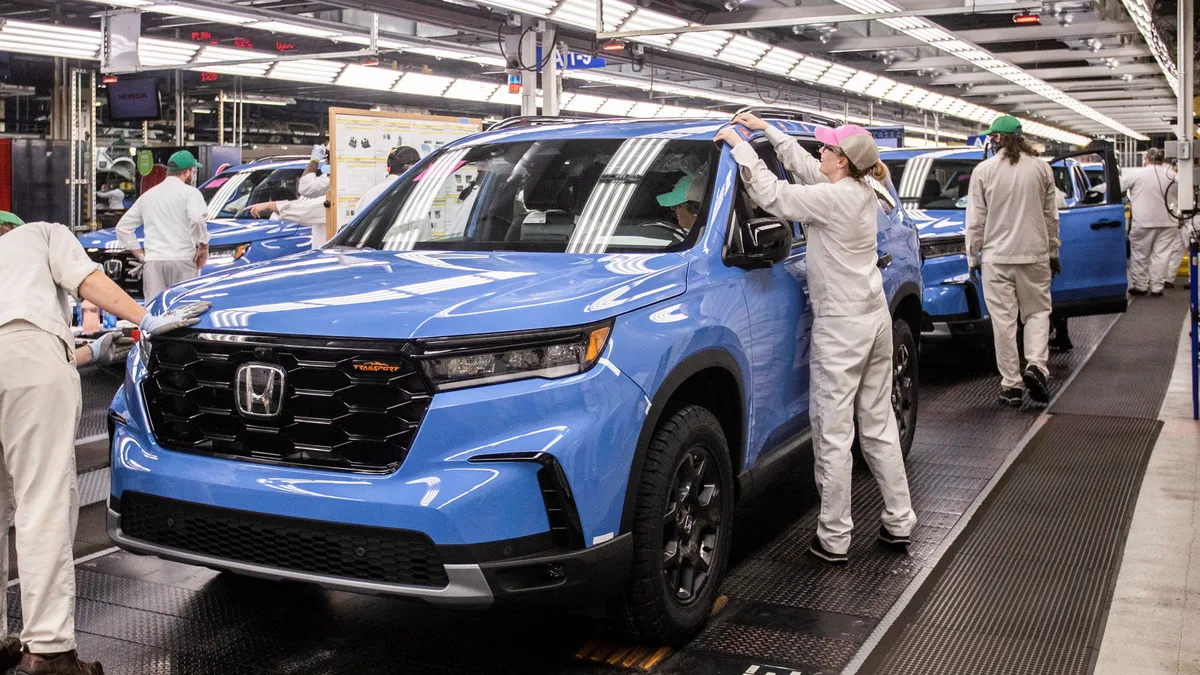
The auto industry is bracing for a tighter market for memory chips as suppliers such as Samsung Electronics, SK Hynix and Micron Technology reallocate wafer capacity toward higher-margin, high-bandwidth memory for AI data centers, according to an S&P Global Mobility Automotive Insights report.
"In 2026 and 2027, [dynamic random access memory] capacity will be constrained but elastic," the report said. "If automotive clients are ready to pay more to match the wafer value DRAM makers would get from other industries, then they will get the volume they need."
“The highest bidder wins. It's not going to be a question of supply magically appearing.”

Rupal Deshmukh
Partner in Strategic Operations, Kearney
Deshmukh of consulting firm Kearney described the market environment more succinctly: "The highest bidder wins. It's not going to be a question of supply magically appearing."
Procuring the needed volume will be expensive. S&P Global Mobility predicts DRAM prices could rise by 70% to 100% in 2026 compared to 2025.
"In this environment, supply chain resilience is crucial," S&P Global Mobility said. "OEMs and tier 1 suppliers may wish to build buffer inventory as DRAM makers pivot to data center applications, but this strategy offers limited long-term relief."
Meanwhile, major memory manufacturers are preparing for quarterly price hikes of 20% to 70% across automotive memory, with lead times for new orders expected to exceed 58 weeks, according to Fusion Worldwide, an independent electronic components distributor.
The critical role semiconductor memory chips play in modern vehicle electronic systems is driving the high demand, Fusion said. Automakers use the chips in infotainment systems, sensor and image processing, and driver-assistance and autonomous-driving electronic control units.
Beginning in 2028, the supply of older DRAM generations, still widely used in the auto industry, will dry up rapidly, no matter how much carmakers are willing to pay, S&P Global Mobility said. Therefore, the industry has two years to change designs and migrate to newer memory technologies.
Cattle shortages will keep supply tight
After enduring a 75-year low in cattle herds last season, food manufacturers could face even more stringent beef supply in 2026.
Driving the tight supply are ranchers hesitant to rebuild after years of drought, challenging economics and the resurgence of a flesh-eating pest known as the New World screwworm, which has led to restrictions on cattle imports from Mexico.
"The situation will continue to be monitored as tight cattle suppliers remain a focal point into the future, which will challenge packers' ability to operate efficiently and profitably," the USDA said in its December Livestock, Dairy, and Poultry Outlook.

The USDA projects U.S. production will decline by 1% year over year in 2026, with beef supplies tightening further as cattle raisers retain young female cattle for breeding rather than sending them to processing. Tyson Foods President and CEO Donnie King told investors in August that the industry won’t see the supply benefits of this maneuver for a couple of years.
The market turmoil has affected prices. In August, U.S. retail beef prices reached a record $9.18 a pound, according to RaboResearch, a unit of Rabobank, which specializes in agricultural financing.
“Additional price increases are expected to 2026 and 2027,” RaboResearch said in its Global Animal Protein Outlook 2026. “The U.S. is seeing a modest increase in heifer retention, but the more notable trend is a slowdown in herd liquidation.