Sai Teja Yerapothina is a senior director of last mile delivery at Walmart. All opinions are the author’s own.
Every retailer faces the same challenge every year — a tsunami of post-holiday returns. However, for decades, organizations have treated reverse logistics as a pure cost center. Returns are either regarded as a complex and expensive problem to be liquidated, or written off as quickly as possible. This view is no longer operationally or financially sustainable.
In my experience building and scaling fulfillment and reverse logistics networks, the most resilient supply chains are not just good at outbound delivery, but they are also exceptional at returns value recovery. The post-holiday surge isn't a liability, it's a massive opportunity.
The challenge is that returns inventory is unpredictable, mixed and may need processing. Success hinges on a disciplined operational framework, such as a returns decision tree. By building a clear logic for processing, operators can convert the returns surge into a reliable stream of recovered value and a foundation for a circular business model.
The problem with the traditional returns model
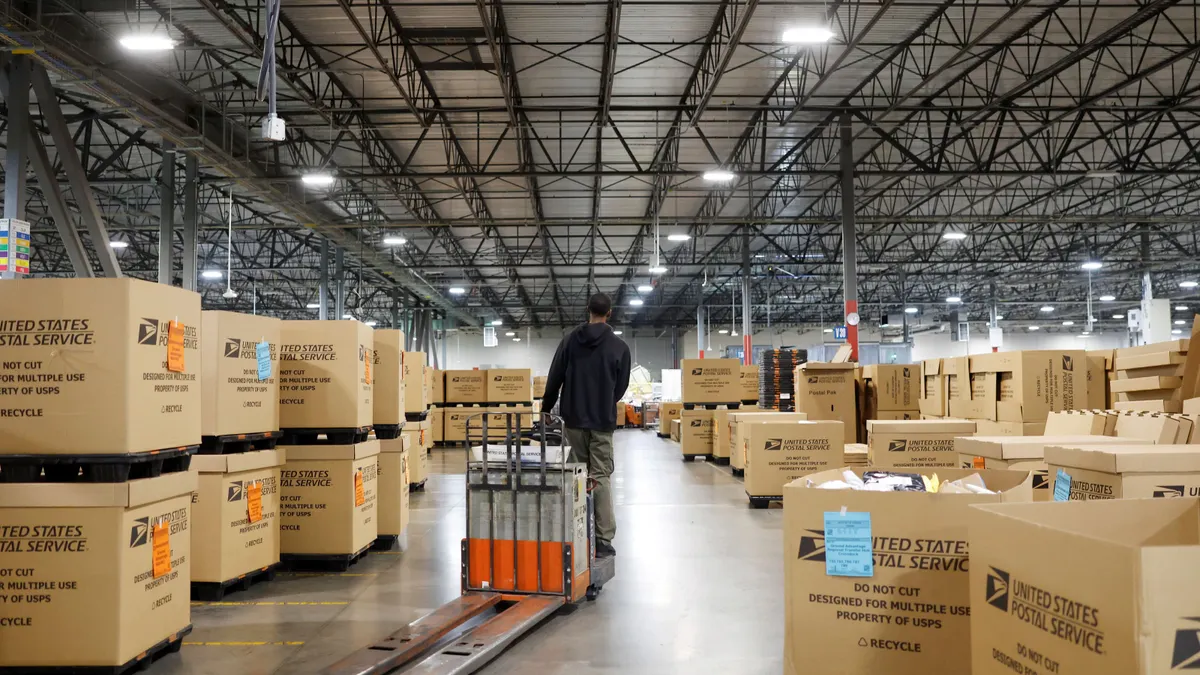
The traditional returns model is broken. Most returns are defaulted to a single, expensive path. When a customer returns an item, such as a power tool, a jacket or a kids tablet, to a store or by mail, the items are often routed back to a central returns center where they sit for days or weeks waiting for processing. As these returns sit in the returns center, their item values depreciate as each day passes. Eventually, all returns are processed in bulk and often sold by the container or pallet to a liquidator for pennies on the dollar, or sent to a landfill.
This approach fails because it liquidates margins, as the value of open box or lightly used items is lost. It is also expensive, as it costs money to ship and handle store items. The unnecessary waste also makes it unsustainable.
Building a returns decision tree
A returns decision tree is a simple, rule-based logic flow that determines the most optimal path for every returned item. The goal should be to make this decision as far upstream as possible. For a large omnichannel retailer, this first touchpoint might be the customer service desk in a physical store. For a direct-to-consumer brand, it's the received scan at the 3PL or returns center, or even when the customer drops it off at a carrier.
The logic must be simple enough for a store associate or warehouse operator to execute with a handheld scanner and a few basic questions. The rules engine categorizes items into four primary paths: resale, refurbish/renew, recycle, or donate/liquidate.
Alternatively, returned items can be eligible for a trade in.
While the decision tree is a reactive framework for general returns, offering a tradein program is proactive enablement of returns. It’s a specialized, high value subset of reverse logistics that is often mismanaged. The most successful tradein programs use standardized criteria to perform grading and valuation at the point of capture. Instore warehouse grading or self-serve guided customer flow must all follow a simple standardized framework:
- Cosmetic grading: Is the screen cracked? Are there deep scratches or dents?
- Functional check: Does it power on? Are all parts included? Is the device-lock turned off?
- Device version analysis: The value and criteria will differ vastly between a 2-year-old smartphone, a 5-year-old laptop and a current generation smartwatch.
This upfront grading allows for instant and accurate valuation for the customer, which builds trust and increases sales conversion. More importantly, it allows for smart routing and downstream disposition, bypassing unnecessary inspection steps.
The new P&L: from cost center to value stream
The tools to enable these paths aren’t complex. They are simple decision agents in handheld scanners, store POS systems or simple integration between returns management system and a 3PL’s system. As a leader, your challenge is to shift the organization’s mindset. You must change the core KPIs for your reverse logistics operation. Stop measuring only the cost per unit to process a return. Instead, start obsessively measuring cycle time, margin recovery rate and landfill diversion.
Doing this can transform your Q1 returns landscape and make returns your best performing source of sustainable inventory all year.