Dive Brief:
- The Surface Transportation Board issued a final rule requiring Class I railroads to report two new metrics weekly, effective July 8, according to a May 8 press release. The rule follows years of shippers calling for improved reporting from railroads.
- The two metrics are the original estimated time of arrival, or OETA, and industry spot and pull, or ISP. OETA measures the percentage of shipments in a week delivered within 24 hours of their estimated arrival time. ISP is a carrier’s success rate in loading and unloading goods at a facility when the railroad said it would.
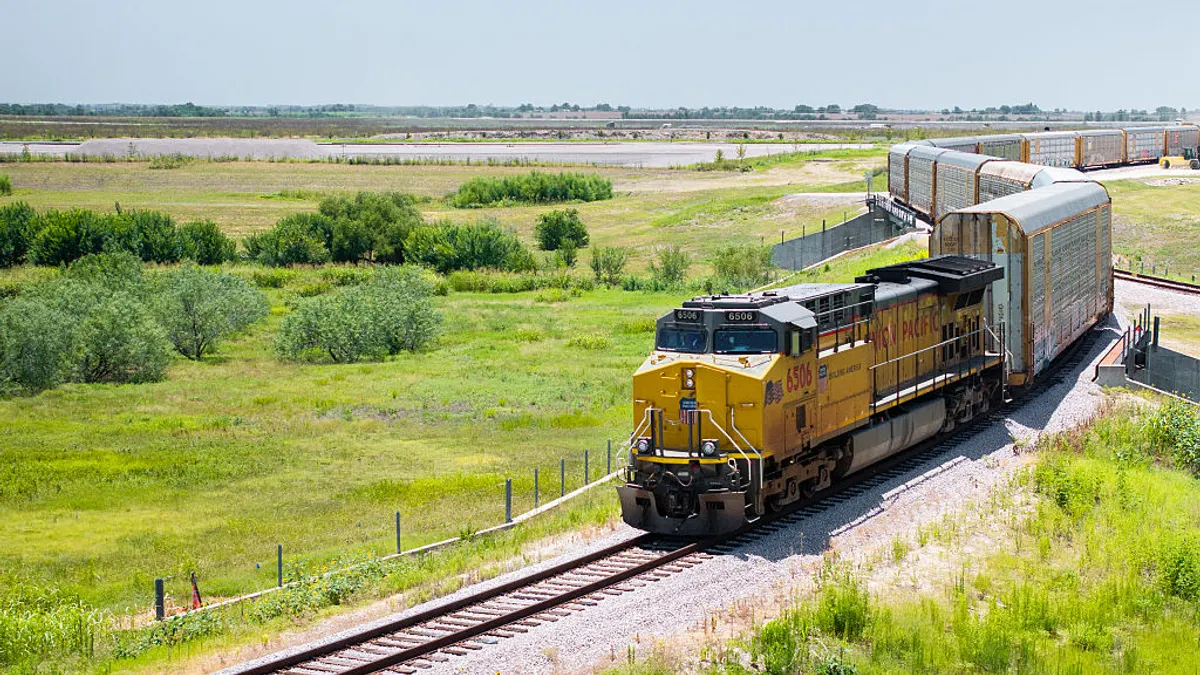
- The rule applies to carload shipments, which can consist of a variety of items such as non-perishable agricultural goods, automotive parts and lumber, Professor Michael Gorman at the University of Dayton School of Business told Supply Chain Dive in an interview.
Dive Insight:
In 2022, a rail crew shortage caused a range of service issues, Gorman said. Shippers demanded the STB for better reporting and now, four years later, the agency has come up with a solution, he added.
“The rail industry for a long time had problems with on-time performance [and] reliability of service. It's just a function of the way railroads work, and it's not necessarily the companies, but the infrastructure they work with,” Gorman, who previously was a director at BNSF Railway, said.
The final rule gives railroads flexibility in how they report their data to the board. The STB stipulates that “each carrier is required to provide with its initial data submission a document explaining its methodology for deriving its data, which will be posted on the Board’s website.” Gorman said this could create slight differences in how each railroads reports its data.
While the STB aims to solve the problem of better measurability so that there’s accountability, this new rule lacks a regulatory component besides the requirement to publish information, Gorman said.
The rule is also part of the agency’s efforts to automate its data collections for its broader data modernization initiative, per the release.
The agency launched a beta version of its Open Data Portal, which displays rail service data in a format that is easier for the public to interpret such as basic graphic data visualizations rather than spreadsheets. The data includes weekly reports that railroads already provide to the STB on performance, such as weekly average number of loaded or empty cars not moved in 48 hours or more and weekly carload originated and received by commodity.
“The agency plans to expand the Open Data Portal over time to include all public data collected by the Board and to improve the visualizations offered to the public,” the STB said.
The frequently released data from carriers will make it easier for shippers to import it into their systems, where they can conduct their own analysis and supply chain planning, Gorman said.
The data will also bring transparency to rail disputes because shippers will have data they can point to if they have any service problems, Gorman said
Overall, the data will provide “more useful information for the shippers to use,” Gorman said. “It's a win for the shippers.”
Editor's note: This story was first published in our Logistics Weekly newsletter. Sign up here.