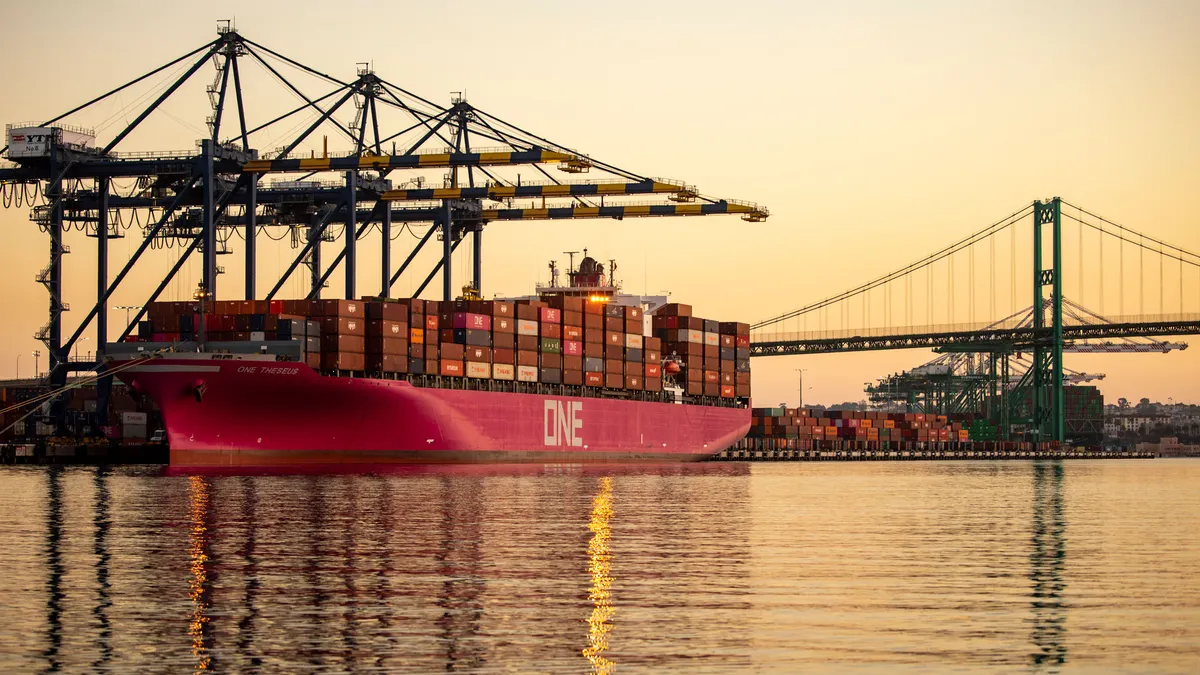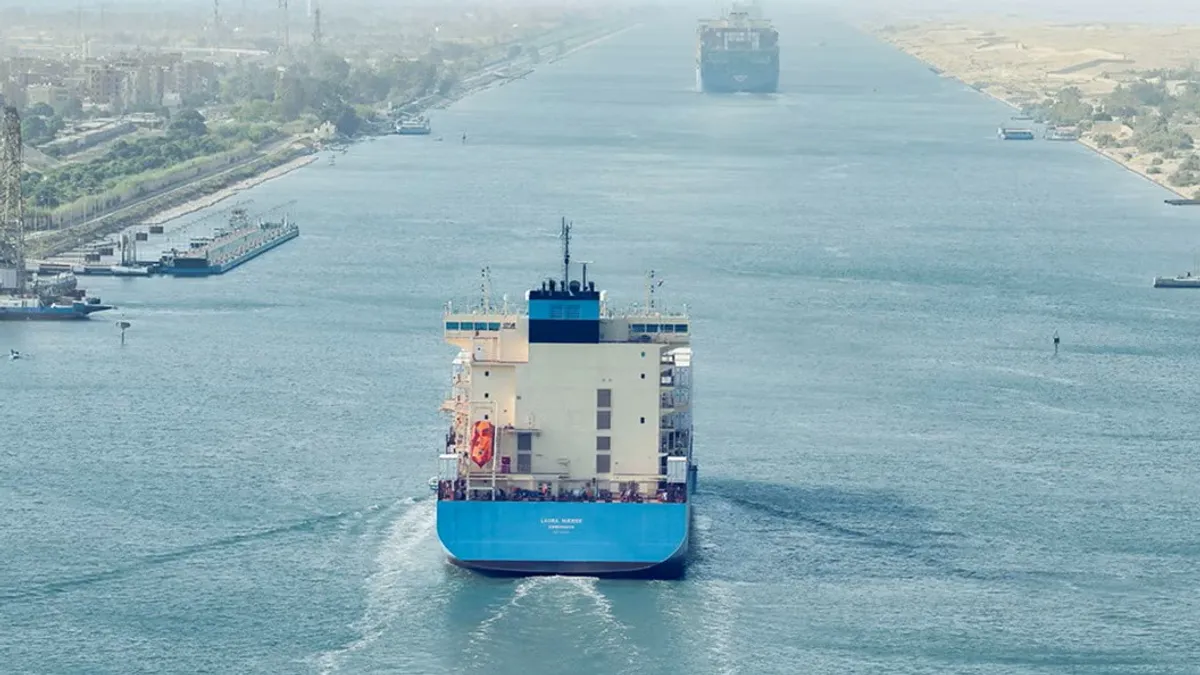
Two of the top ocean carriers are approaching the resumption of Red Sea operations differently, raising questions as to whether a full return to regular Suez Canal transit is still on the horizon.
Major shipping lines have been avoiding transiting the waterway since late 2023 following Houthi-led attacks on cargo ships, diverting sailings to mitigate the risk, including sailing around Africa via the Cape of Good Hope.
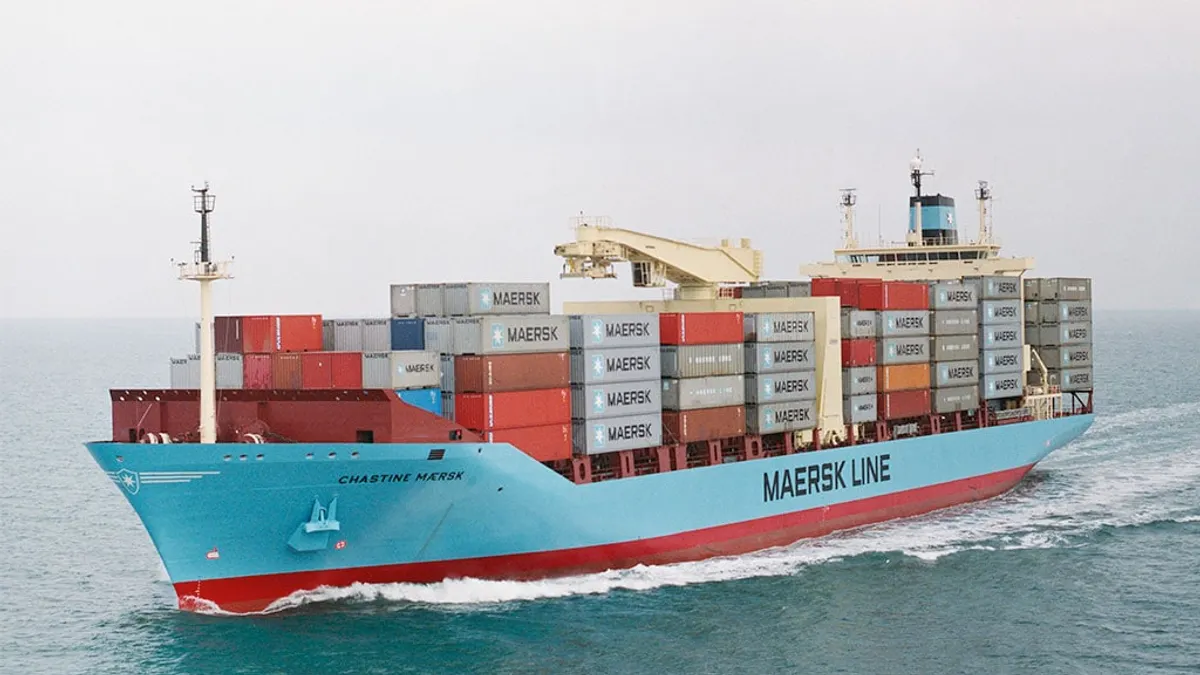
However, last week, Maersk made its first structural return to the Red Sea-Suez Canal route with its MECL service, according to a Jan. 15 press release.
The MECL service connects the Middle East and India with the U.S. East Coast, per the release. The first sailing under the structural change of the MECL service on the westbound trans-Suez route departed from Jebel Ali in Dubai on Jan. 15. The first eastbound sailing using the Suez Canal route departed North Charleston, South Carolina, on Jan. 10. All subsequent sailings will follow this route.
Should the security situation on the trans-Suez route deteriorate, Maersk will implement contingency plans that may revert individual MECL sailings or the wider structural change of the service back to the Cape of Good Hope route, according to the release.
“Maersk will continue to monitor the security situation in the Middle East region very closely, and any alteration to the MECL service will remain dependent on the ongoing stability in the Red Sea area and the absence of any escalation in conflicts in the region,” per the release. “The safety of crew, assets, and customers’ cargo remains the highest priority.”
With Maersk now making its structural return to the Red Sea region, “all carriers will be looking and considering their next moves,” Lars Jensen, CEO of Vespucci Maritime, wrote in a LinkedIn post.
“If conditions remain peaceful it might now be realistic to see a wider scale beginning to a switch-over for more carriers in the period after Chinese New Year,” he said.
However, CMA CGM, which has also been gradually resuming service through the Suez Canal over the past year, recently pulled back its efforts to resume transit on the route. As of Jan. 20, CMA CGM began rerouting vessels deployed on its FAL 1, FAL 3 and MEX services to the Cape of Good Hope.
“In light of the complex and uncertain international context, the CMA CGM Group [is] constantly and closely monitoring all potential impacts on its operations,” per a Tuesday service update.
Jensen noted that the return to Africa might cause speculation as to whether a general market reversal is in jeopardy, he wrote in a Jan. 21 LinkedIn post, but he believes that is not the correct interpretation.
CMA CGM’s FAL 1 and FAL 3 services were only recently set on the Suez Canal routing, according to Jensen. Further, vessels on the eastbound lane are mostly loaded with empty containers and low-value backhaul cargo with less time sensitivity than headhaul.
“Why was the headhaul direction not shipped via Suez as presumably more cargo owners would appreciate this?” Jensen said. “One part of the explanation might have been that headhaul shippers, and critically their insurance companies, are not yet comfortable with the transit.”
Jensen added that the Lunar New Year may also have an active impact, noting that the first vessels on FAL 1 and FAL 3 to return via the Suez Canal will arrive in China from late January through February. In turn, more vessels will be on site in Asia for peak loads before the Lunar New Year holiday.
“Reverting to round-Africa now creates a ‘gap’ in arrivals in China in the post-CNY period. This is operationally advantageous as this is a period where we seasonally see blank sailings,” he said. “It would appear that CMA CGM’s decision is operational/commercial related to the cargo demand around Chinese New Year and should not primarily be seen in the context of security.”
However, unpredictability in ocean shipping "is toxic for supply chains," Xeneta Senior Market Analyst Destine Ozuygur said in a Jan. 20 release. Carriers returning to the Red Sea and then deciding to reverse course can undermine confidence and schedule reliability — even if it isn’t for safety reasons.
“There is also irony in CMA CGM – previously the most pro-active major carrier in returning the Red Sea - taking a backward step just a few days after Maersk - generally the most risk averse carrier - announcing its MECL service will begin transiting Suez Canal again,” Ozuygur said. “It typifies the unpredictability shippers must deal with.”