Dive Brief:
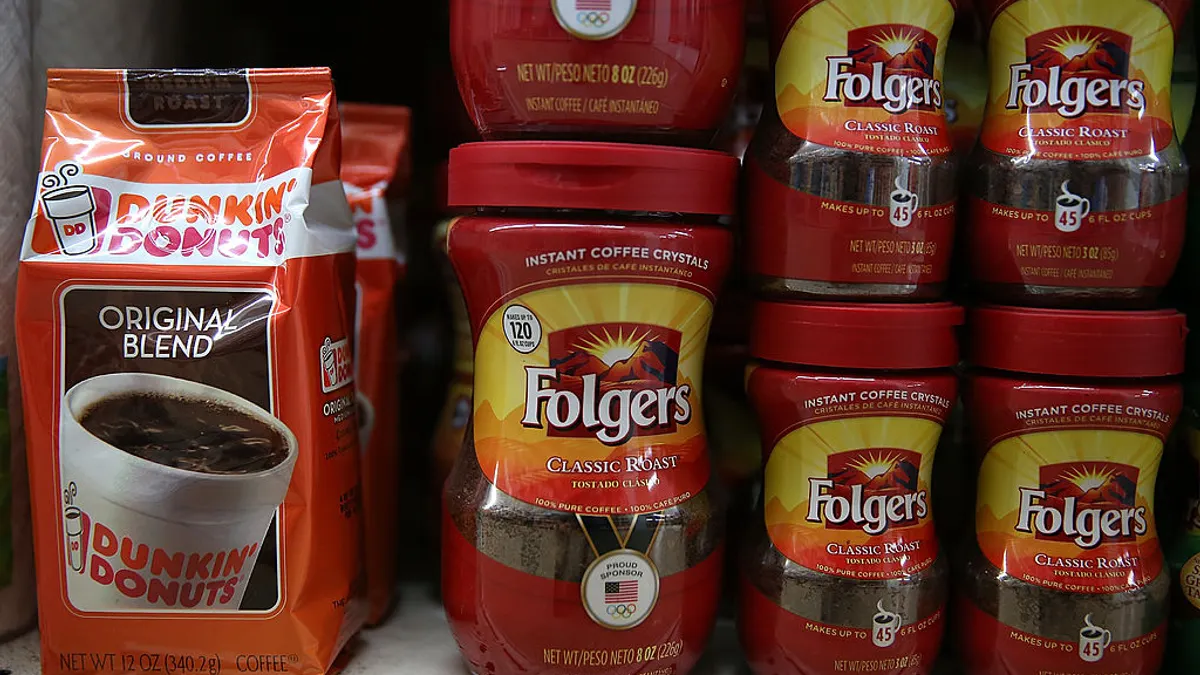
- J.M. Smucker has reversed plans for a third price hike for coffee this fiscal year, choosing instead to absorb $75 million in tariff-related costs it has accrued to date this year, according to a Nov. 25 earnings call.
- Coffee demand has remained strong even though the company raised prices previously to mitigate the impact of tariffs, CFO Tucker Marshall said.
- Recent changes in U.S. trade policy to exclude green coffee and other agricultural products from levies also contributed to the company’s decision not to further raise prices, CEO Mark Smucker said. “Our belief is that the commodity will normalize over time as it has historically,” he added.
Dive Insight:
J.M. Smucker raised coffee prices earlier this year due to tariffs on imported green coffee beans, a commodity not grown in the U.S. Despite the higher prices, demand did not fall as much as predicted, Marshall said. The company expects coffee revenue for the current fiscal year ending in late April to rise 16% year over year, with only a 6% drop in volume below the company's initial model.
The company buys 500 million pounds of unroasted beans annually, mainly from Brazil and Vietnam, which face total country-specific tariffs of 50% and 20%, respectively, from the U.S. In November, President Donald Trump issued an executive order that added coffee to a list of tariff-exempt agricultural products.
Other coffee importers have also opted to raise coffee prices to accommodate growing sourcing costs. According to the September Consumer Price Index, the price of roasted and instant coffee had risen 18.9% and 21.7%, respectively, year over year.
J.M. Smucker's decision not to raise prices again means it won't fully recover green coffee tariff costs incurred in the current fiscal year, which will have a negative impact on earnings, Smucker said. Nevertheless, "I am confident that as we move forward our portfolio is well positioned for long-term sustainable growth,” he added.
Marshall estimated that unrecovered tariff costs would lower earnings per share by $0.50 in the current fiscal year, but he did not expect the same negative impact next year. "We expect to lap these tariff costs next fiscal year, providing no further changes to U.S. trade policy for green coffee," he said in prepared remarks.