Hormel Foods has implemented artificial intelligence to sharpen demand forecasts and strengthen supply chain operations.
The branded food company deployed AI by installing o9 software between March and December 2025, according to a March 25 press release from the technology vendor. The deployment spans more than 70 sites across dry and refrigerated networks.
"By connecting demand, supply, and inventory decisions in one streamlined platform, we are shifting from reactive problem-solving to more proactive, data-driven planning," Hormel Chief Supply Chain Officer Will Bonifant said in the release. "We believe this will strengthen our ability to operate consistently, serve customers more reliably, and ultimately, drive additional growth across our brand portfolio.”
Bonifant joined Hormel in March, having previously served as VP of manufacturing, engineering and supply chain strategy at Hershey.
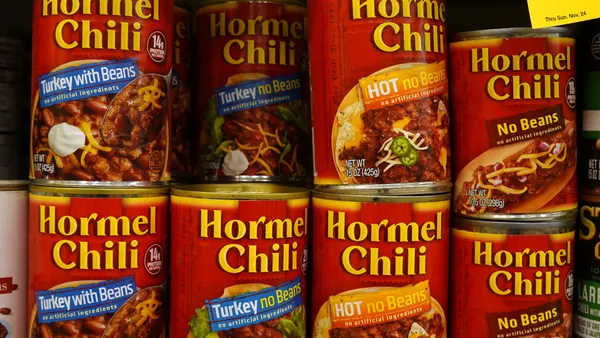
Hormel manages thousands of distinct items across a portfolio that includes brands such as Spam, Applegate and Planters, the release said. The portfolio spans refrigerated foods, shelf-stable grocery products, deli meats and ethnic cuisines.
Taken together, those product lines create complex planning variables, including perishability, seasonal demand spikes, capacity constraints and multi-tier distribution flows, o9 said.
Hormel declined to comment for this story, but in a Dec. 4 earnings call, President and Director John Ghingo said the company was implementing AI-enabled tools like o9 and streamlining processes including integrated business planning.
"Enhanced data access, cutting-edge technology and modernized workflows are reinventing nearly every aspect of our business, across all aspects of our supply chain, cross-functional collaboration and all the way to the physical and digital shelf," Ghingo said.
Hormel is leveraging o9's forecasting intelligence to model key demand drivers, cut back on manual overrides and improve forecast accuracy for seasonal demand, the technology vendor said.
Hormel uses other features in the o9 platform, such as system-recommended inventory transfers and truckload optimization based on weight, volume and stackability constraints, according to the software maker.
Beyond logistics, Hormel planners can evaluate the software’s demand signals to synchronize supply, inventory and deployment decisions and evaluate trade-offs earlier in the planning cycle, o9 said. This improves visibility and alignment across Hormel’s retail, foodservice and international segments.
o9 deployed the software at Hormel's sites with consulting firm Accenture. The latter is helping the foodmaker execute a "growth-oriented pivot from a supply-led value chain to a demand-driven value chain," Adheer Bahulkar, global supply chain lead for consumer industries, said in the release.
Hormel is among a growing number of large enterprises using AI‑driven forecasting to anticipate demand. Gartner, a technology research and advisory firm, projects 70% of similar organizations will adopt such tools by 2030.