Dive Brief:
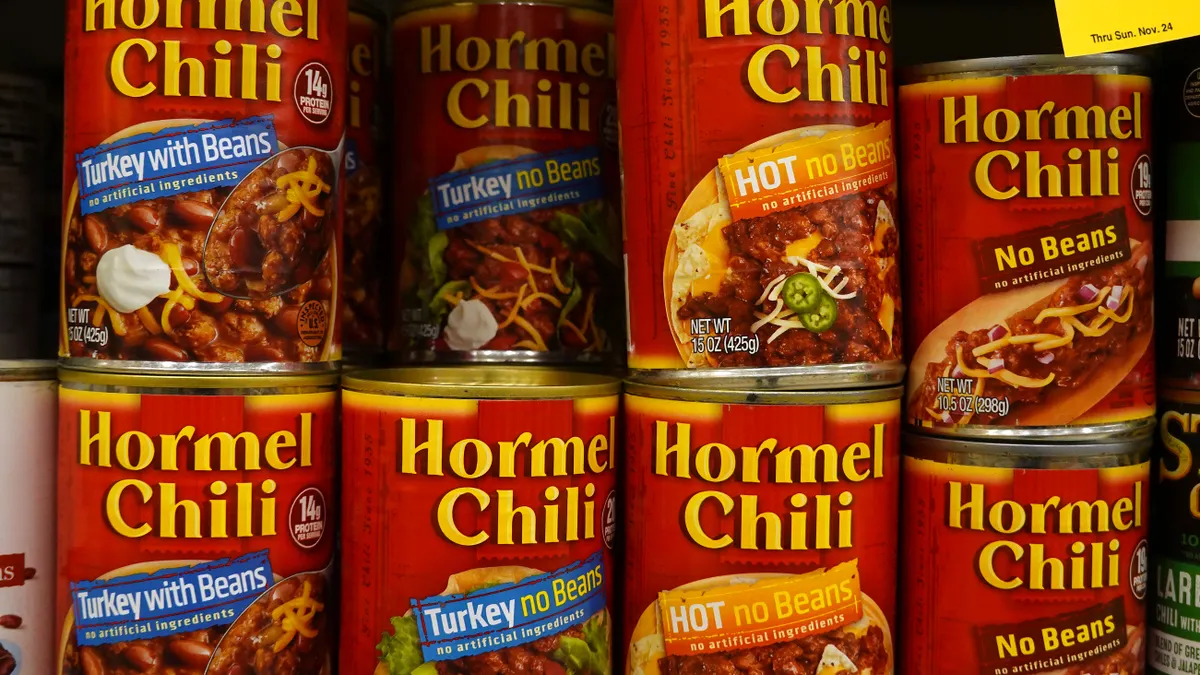
- Hormel Foods faced elevated pork and beef prices in fiscal 2025, while turkey supplies were constrained by the avian flu, interim CFO and Controller Paul Kuehneman said on a Dec. 4 earnings call.
- Cost inflation for pork bellies, pork cutout and pork trim rose 25%, 10% and 20%, respectively, during the year. Beef prices also rose significantly throughout the year, Kuehneman told investors.
- "As we previously discussed, we took pricing actions at various times during fiscal 2025," he said. "However, due to the timing of some cost inflation, we cannot fully offset the margin impacts within the fiscal year."
Dive Insight:
Hormel leaned on its multiyear Transform and Modernization initiative to offset some margin pressure in fiscal 2025, which ended Oct. 26, according to Kuehneman. The global branded food company launched the project at the end of fiscal 2023, focusing in part on transforming the supply chain and minimizing portfolio complexity. The initiative has led to increased distribution capacity and optimization of the manufacturing footprint.
In fiscal 2026, Hormel expects the initiative to continue offsetting inflationary pressures and to support margin expansion, interim CEO and Director Jeffrey Ettinger said. However, the company will no longer break out savings from the program separately.
"We believe its financial benefits will be spread in supporting our enhanced marketing programs, offsetting some of the continued inflationary pressure and allowing us to expand margins," Ettinger said.
Beef costs will remain high and likely will pose a challenge throughout fiscal 2026, while pork input costs are expected to decline from fiscal 2025 but remain above the five-year average, per the call. Meanwhile, turkey supplies are expected to remain constrained through the first half of 2026.
Tyson Foods also faced supply challenges in its fiscal 2025. The company leaned on value-added products and operational efficiencies across production facilities to navigate fewer hogs and record-low cattle supplies. The decline in cattle availability is due to drought, cattle producers holding back heifers to rebuild stock, and the resurgence of a flesh-eating pest in Mexico known as the New World screwworm.