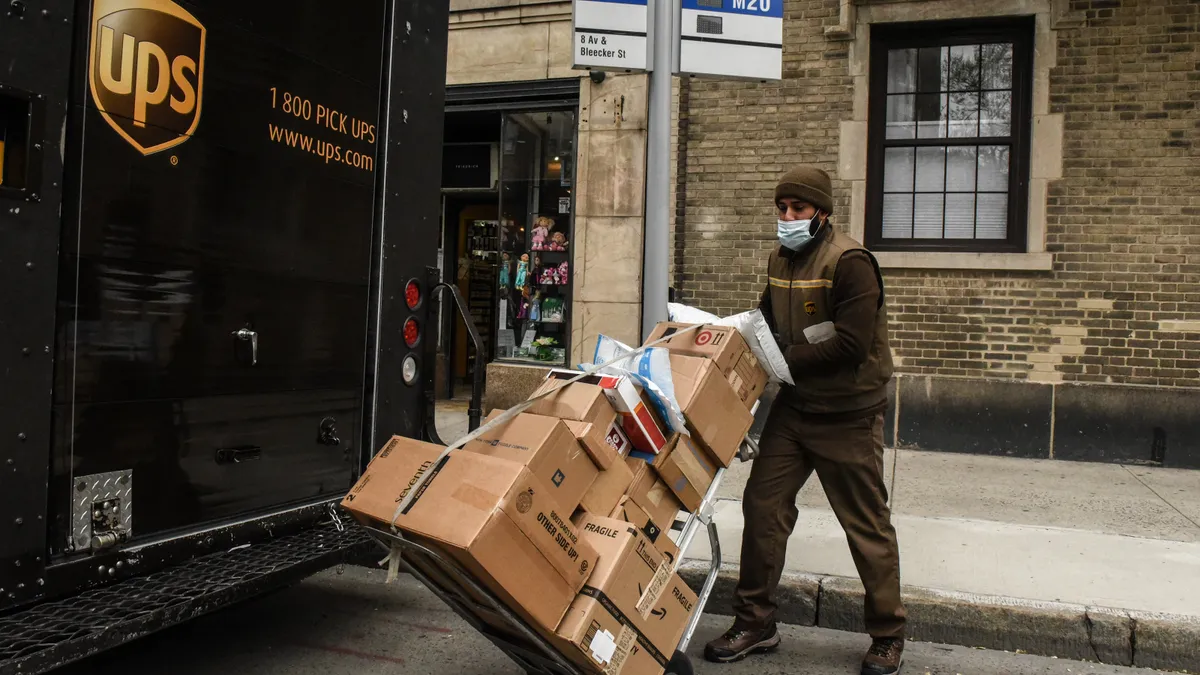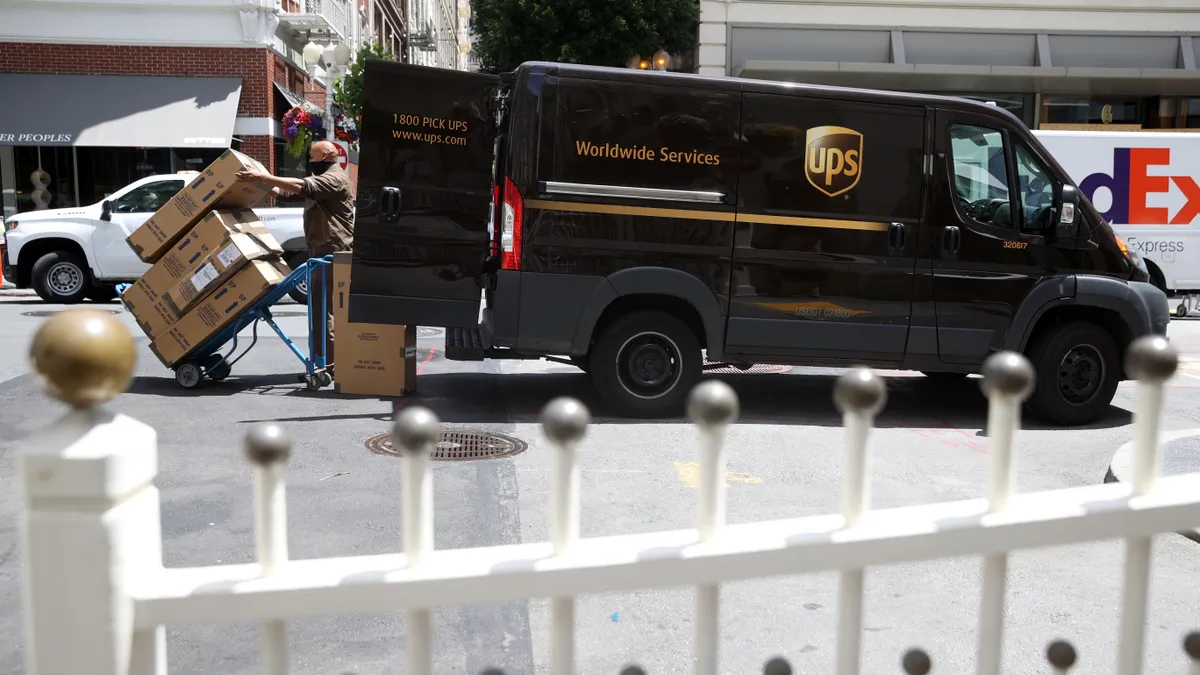
FedEx, UPS and other parcel carriers are levying higher surcharges and rates amid escalating fuel costs tied to the war in Iran, a development experts say is challenging shippers' transportation budgets.
Both FedEx and UPS increased their fuel surcharge rates, which are tied to diesel fuel and jet fuel prices posted by the U.S. Energy Information Administration, by several percentage points in March. The rate applies to just about every type of charge on the carrier's shipping services, meaning "the impact of these increases is felt exponentially," said David Sullivan, director of professional services at ShipScience, in an email.
FedEx, UPS fuel surcharge rates escalate in March
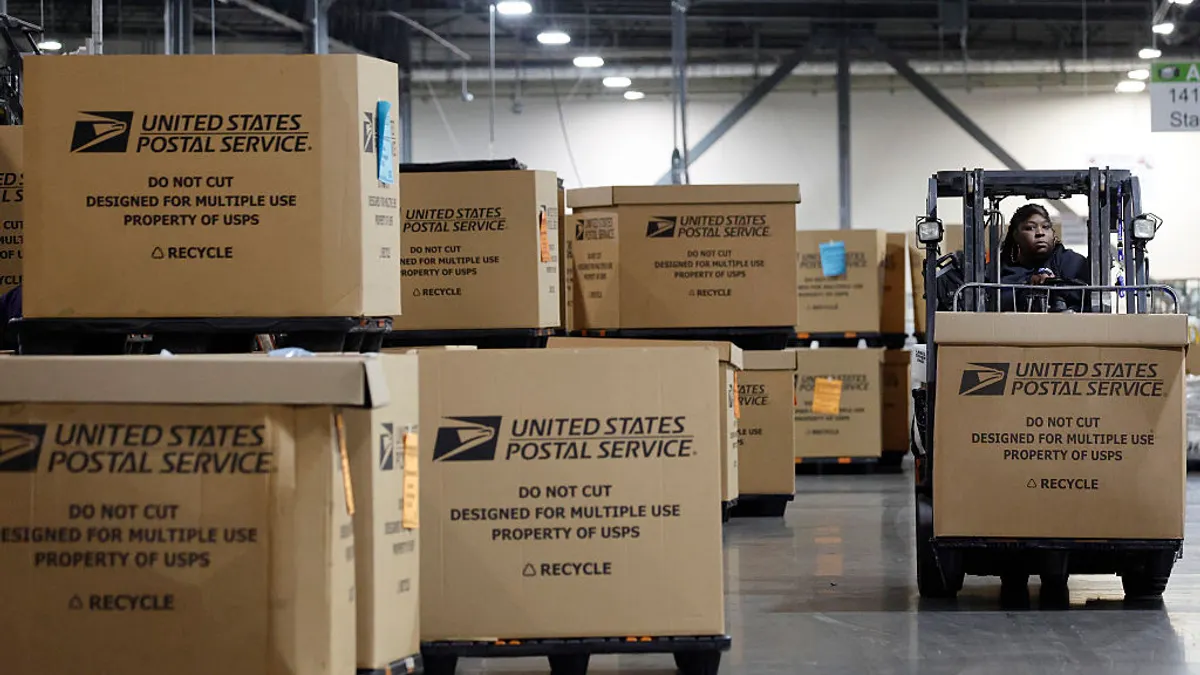
The two carriers aren't alone in bumping up charges in response to escalating fuel costs. The U.S. Postal Service plans to levy an 8% temporary price hike on several package shipping offerings, including Ground Advantage, starting April 26. The agency cited "changing market conditions concerning transportation costs, including the increasing price of fuel and contracted transportation" as the reason for the increase in a Postal Regulatory Commission filing.
In the face of rate hikes, there are several approaches shippers can explore to mitigate carriers' rising fuel surcharges, ranging from negotiating discounts to tapping alternative delivery providers, experts told Supply Chain Dive.
To blunt fuel fees, limit costs elsewhere
Historically, FedEx and UPS typically reserved fuel surcharge discounts for their larger customers, said Paul Yaussy, head of parcel contract intelligence at Loop, in an interview. But in recent years, a wider range of customers have been able to secure reduced fuel rates in contract negotiations with the two carriers.
"The cost of fuel surcharge has gone up so dramatically that essentially, FedEx and UPS have made it an open invitation that this is something that's going to be negotiated now," Yaussy said. "So it's very common to negotiate fuel surcharge discounts."
However, parcel carriers may be less amenable to providing fuel surcharge discounts in the near term, given climbing diesel prices, experts said. Additionally, contractual discounts on fuel surcharges have diminishing returns, given how frequently FedEx and UPS adjust their fee calculations, according to Sullivan.
"The best way to see any meaningful relief from fuel is to be vigilant about all other parcel related costs," Sullivan said.
FedEx and UPS fuel fees apply to base shipping rates and a range of other surcharges, which means shippers' efforts to reduce delivery costs overall lead to less exposure to fuel prices, Yaussy said. For example, shippers could tap slower but more cost-effective services, limit the distance packages travel via distribution adjustments or trim their packaging sizes to reduce base rates and capitalize on this connection.
As for Postal Service shippers, renegotiating contracts to reduce the sting of the 8% increase could be difficult to do quickly, as negotiations with the agency tend to be lengthy, Yaussy said. Postal Service customers should work to quantify their exposure to the rate hike and reassess their carrier mix to determine if the agency remains a viable option price-wise, according to an analysis from Sifted.
"Shippers who routed lightweight parcels to USPS specifically to avoid fuel surcharge volatility need to rerun that analysis," per Sifted. "Total landed cost, not base rate, is the metric that matters when comparing carriers."
Alternative carriers could offer fuel fee relief
Leveraging smaller delivery providers outside of FedEx, UPS and the Postal Service could help shippers blunt the effects of escalating costs tied to fuel, according to experts.
Alternative carrier OnTrac's fuel surcharge is structured similarly to major parcel carriers, adjusting weekly based on fuel costs. However, OnTrac’s rate will still be lower than FedEx and UPS, even when factoring in upcoming changes to its fuel fee calculations, LPF Spend Management founder Nate Skiver said in a LinkedIn post.
Some smaller delivery providers avoid levying fuel surcharges altogether, particularly if they concentrate on a specific region, said Ben Emmrich, CEO and co-founder of Tusk Logistics, which offers an alternative carrier shipping network. A limited geographic coverage means they focus on shorter-distance deliveries, reducing their exposure to fuel costs compared to national carriers, he added.
Although interest in alternative carriers is growing, many shippers still prefer to work with one major delivery provider even as FedEx and UPS rates climb, said Adi Karamcheti, a senior consultant of professional services at Shipware.
"As a general rule, 'I want FedEx or UPS' is still sort of what we see," Karamcheti said in an interview.