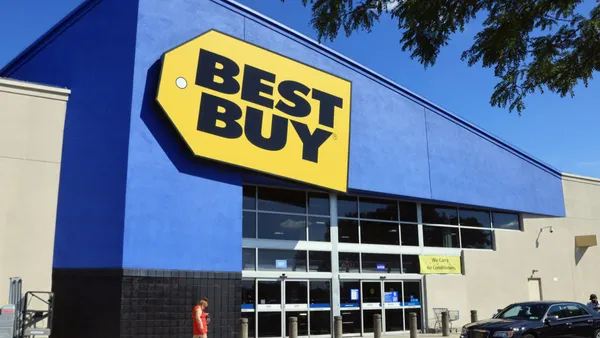
Best Buy is piloting battery-powered yard vehicles at two distribution centers in California, according to a FY26 Corporate Responsibility and Sustainability Report. The vehicles, called electric yard switchers, move cargo containers and trailers and produce zero tailpipe emissions.
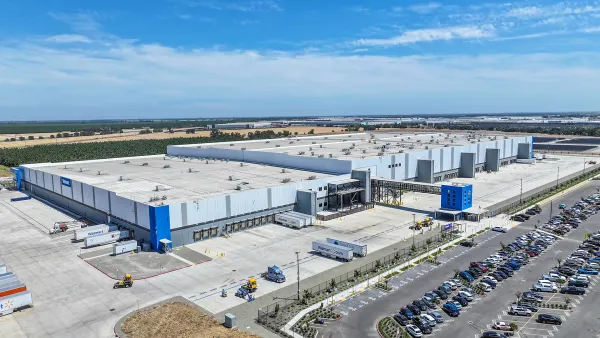
The investments aim to curb emissions compliance costs at California warehouses while cutting diesel fuel reliance and other associated maintenance expenses, per the report. The pilot is intended to help Best Buy evaluate performance, operational feasibility and total cost of ownership to gauge potential future deployment across the retailer’s supply chain.
Best Buy did not specify which California warehouses were included in the pilot, when it started or future rollout plans, and did not respond by publication time.
The electric yard switcher investments are part of a larger effort to slash carbon emissions across its distribution center network, according to the report.
In August, Best Buy announced that it achieved its goal to be zero-waste at all of its supply chain facilities. The retailer’s supply chain site in Chino, California, was the first of Best Buy’s 29 supply chain facilities to be certified as zero waste in 2021.
As part of its sustainability efforts, the retailer installed a solar field at a distribution center in Dinuba, California, in the Central Valley. The solar field can generate nearly 6 million kilowatt-hours of electricity each year to power the site. The Dinuba facility is Best Buy’s first distribution warehouse to have a solar field.
Best Buy also operates expanded polystyrene, or EPS, densifiers at its distribution centers, which processes EPS into pellets that are then sent back to the retailer’s partners to be repurposed, per the report. The consumer electronics retailer partners with vendors to repurpose its EPS into foam blanks, which is a sustainable alternative to petroleum-based foam. In FY26, Best Buy recycled 4.2 million pounds of EPS, the same amount it reported in 2025.