Dive Brief:
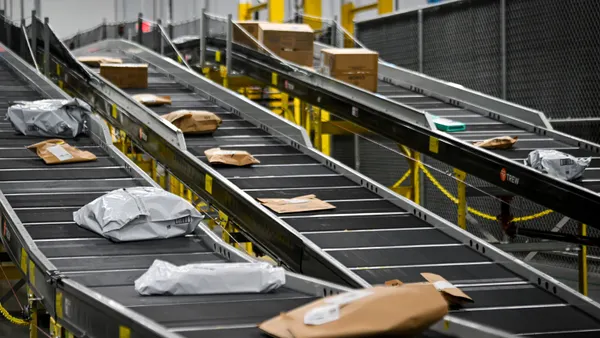
- Amazon delivered nearly 70% more items the same day they were ordered in 2025 than the year before as customers flocked to fast shipping options in categories like food and essentials, CEO Andy Jassy said on a Q4 earnings call Thursday.
- Groceries and "Everyday Essentials" like health, beauty and baby care made up half of the total items that U.S. Prime members received the same day or next day last year, CFO Brian Olsavsky said on the call. The company can now deliver perishable groceries to customers in over 2,300 U.S. cities and towns the same day, he added.
- "We also see that customers shopping perishable groceries add 3x more items to their same-day delivery orders," Olsavsky said. "Looking ahead, we see further opportunity to enhance productivity in our global fulfillment network while delivering at faster speeds for customers."
Dive Insight:
Same-day is Amazon's fastest-growing delivery option, and nearly 100 million U.S. customers used it in 2025, Jassy said. Rural customers particularly benefited from the quick delivery push last year, with nearly twice as many average monthly shoppers in rural areas receiving same-day delivery compared to the year before, he added.
Beyond groceries and essentials, same-day delivery can also come in handy for last-minute gift shopping. The option allowed for later order cutoff times during the 2025 holidays, Jassy noted. On Christmas Eve, customers in about 4,000 U.S. cities could order items up until the middle of the day for same-day delivery, he said.
Amazon is looking to increase its speeds further in the future as the fast delivery capabilities of rivals like Walmart grow. The company is testing Amazon Now, which offers deliveries in 30 minutes or less, in several U.S. communities amid a positive reception in India.
"It's early, but customers are loving it," Jassy said. "For example, in India, customer response exceeded our most optimistic expectations, and we're seeing Prime members triple their shopping frequency once they start using it."
Amazon's accelerating delivery speeds have been fueled in part by its shift from a national to a regional network model in the U.S., which aims to position inventory closer to end customers to reduce shipping distances. The e-commerce giant now has 10 distinct regions in its U.S. fulfillment network, up from eight previously, according to Jassy.
"We've extended regionalization to what we do with our inbound delivery to be much more efficient in being able to get more items closer to customers more quickly," Jassy said.