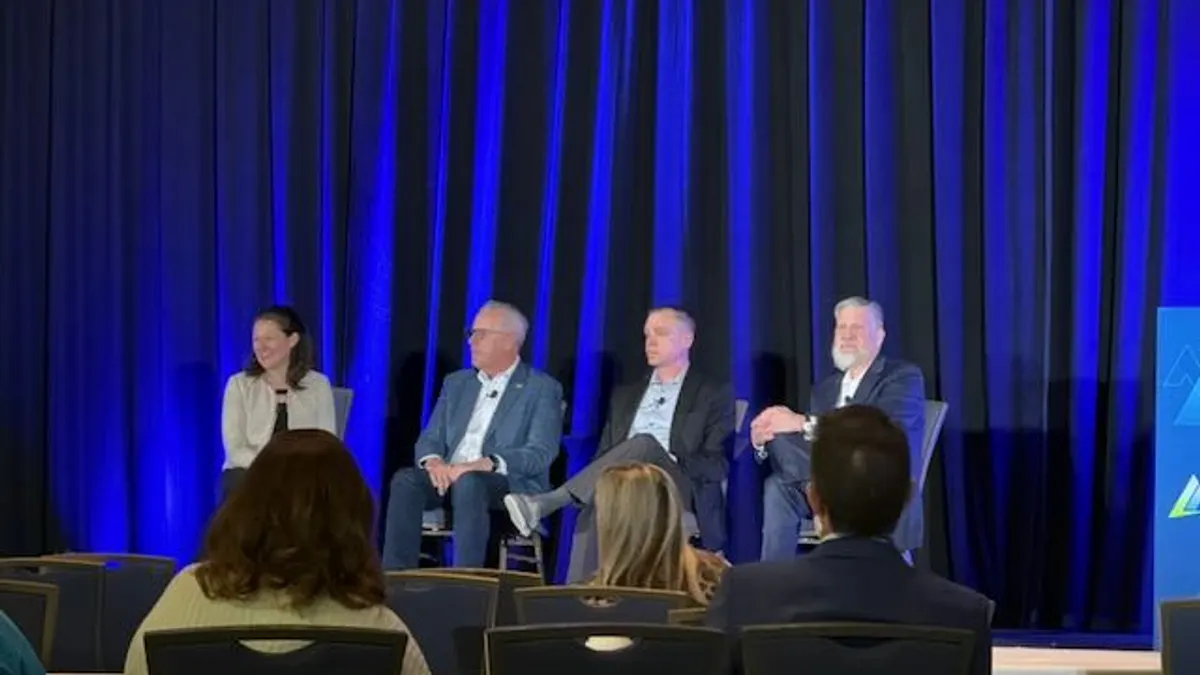
AURORA, Colo. – Companies looking to use artificial intelligence in procurement should define the business problem the technology will solve, start with a small pilot, and expand incrementally with each successful step, sourcing executives said at the Institute for Supply Management World 2026 conference in late April.
Procurement executives who spoke on panels or with Supply Chain Dive said AI agents would mature within software for more efficient supplier management. However, they warned that procurement teams should approach the technology cautiously to avoid spending heavily on projects that fail.
At specialty materials supplier Toray Industries (America), John Eustis, SVP of U.S. group procurement, is taking an incremental approach to AI, starting with a low-risk pilot using AI agents within the procurement platform Levelpath.
“That’s more or less how we’re approaching it right now within Toray, because we don’t have a blank check,” Eustis said, adding that starting small is one way to control the cost of using AI agents.
Another way to manage costs is to carefully choose where to use AI, so its capabilities go significantly beyond those already present in procurement software, Chris Martus, VP of procurement at The Mosaic Company, said.
“You have to have a clear business case for what you want to achieve, and clear objectives, and then you can identify whether the juice is worth the squeeze,” Martus said.
The agentic AI business case
Eustis’ team has built simple AI agents to review pallet designs submitted by suppliers in response to a request for quote. These agents determine whether suppliers’ specifications and drawings meet — or fall short of — Toray’s requirements.
If the agent can eventually provide insights on 60% to 70% of bids, Eustis said, it would save the team a significant amount of time. Eustis plans to expand the project if the pilot proves successful.
Dan Bartel, chief procurement officer for American Airlines, said the airline uses the Copilot Studio agent-building platform within Microsoft 365. While the airline encourages procurement workers to automate workflows with agents, it does not yet have a full license for the entire team.
“We're working on proving out the business case to be able to do that right, and that's just going to come with time,” Bartel said during a panel discussion.
One way to get the most out of AI agents is to configure them effectively, which starts by clearly defining the steps they should take within the procurement process, according to Eustis.
“I come back to, what’s the business problem you’re trying to solve?” Eustis said. “The more you understand it, the easier it is to write an agent to help you either do the whole process or portions of it.”
Eustis carved out a portion of his technology budget to build AI pilots and hired a data analyst for his procurement team. Ultimately, however, he does not expect this work to replace people within the sourcing process.
“We're trying to just take a lot of the grunt work, the easy stuff, off their plate, so they can focus on the more important stuff,” Eustis said.
This story was first published in our Procurement Weekly newsletter. Sign up here.