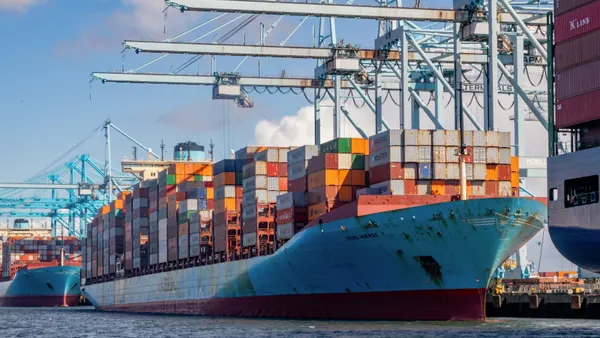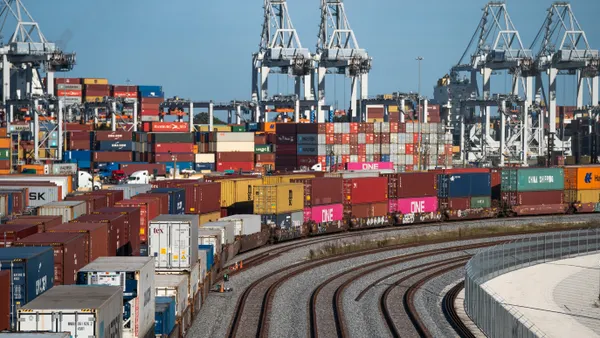
The Port of Los Angeles is unlikely to see a major drop in cargo volumes in 2026, Port Executive Director Gene Seroka said during a Dec. 16 media briefing.
However, the port will likely see single-digit declines in overall import volumes compared to 2025 due to high inventories following months of cargo frontloading, Seroka said.
While inventory levels are “nothing to be nervous about,” numbers are still elevated, according to Seroka. He added that the National Retail Federation forecasts the highest level of holiday sales in history at more than a trillion dollars.
“We'll come in after the holiday season and see what inventories look like,” the port director said on the call. “Once again, retailers don't want to start doing deep discounts on products after the holiday season, so this is going to be a pretty important point in time when it comes to the replenishment concept.”
Seroka noted that shippers aren’t canceling a lot of purchase orders, which are sent to factories in Asia three to four months in advance of the scheduled ship date to Los Angeles. Last month, the U.S. government shutdown caused a gap in data that stalled purchase decisions ahead of the Lunar New Year closures.
“I’m still feeling okay, overall,” he said.
In November, the Port of Los Angeles processed 782,249 twenty-foot equivalent units, or TEUs, down 12% year over year, according to the port’s press release. Year to date, the port has handled almost 9.5 million TEUs, which is 1% higher than the previous year.
Meanwhile, November imports were down 11% YoY at 406,421 TEUs. Exports landed at 113,706 TEUs, down 8% YoY. The port processed 262,122 empty container units, which is 13% lower than 2024.
“Even with all the trade uncertainty, we'll finish 2025 north of 10 million TEUs, putting this year firmly in our top three of all time,” Seroka said.
Despite the high volumes, Seroka noted that the port is weathering negative effects from retaliatory tariffs and trade deals affecting U.S. agriculture and manufacturing exports.
“This is a headwind we may face for some time to come,” he said.
The industry is still facing much uncertainty, said Seroka. Evolving tariff policies continue to influence supply chain operations, including the ongoing Supreme Court case determining the legality of President Donald Trump’s use of the International Emergency Economic Powers Act to implement tariffs. However, framework deals being prepared for further codification could provide some stability in the meantime.