LONG BEACH, Calif. — The impact of the conflict between the U.S. and Iran on ocean shipping reaches beyond the Middle East. As a result, the return of Red Sea services are now out the window, carriers are implementing surcharges and contract negotiations have stalled, Vespucci Maritime CEO Lars Jensen said at TPM26 by S&P Global.
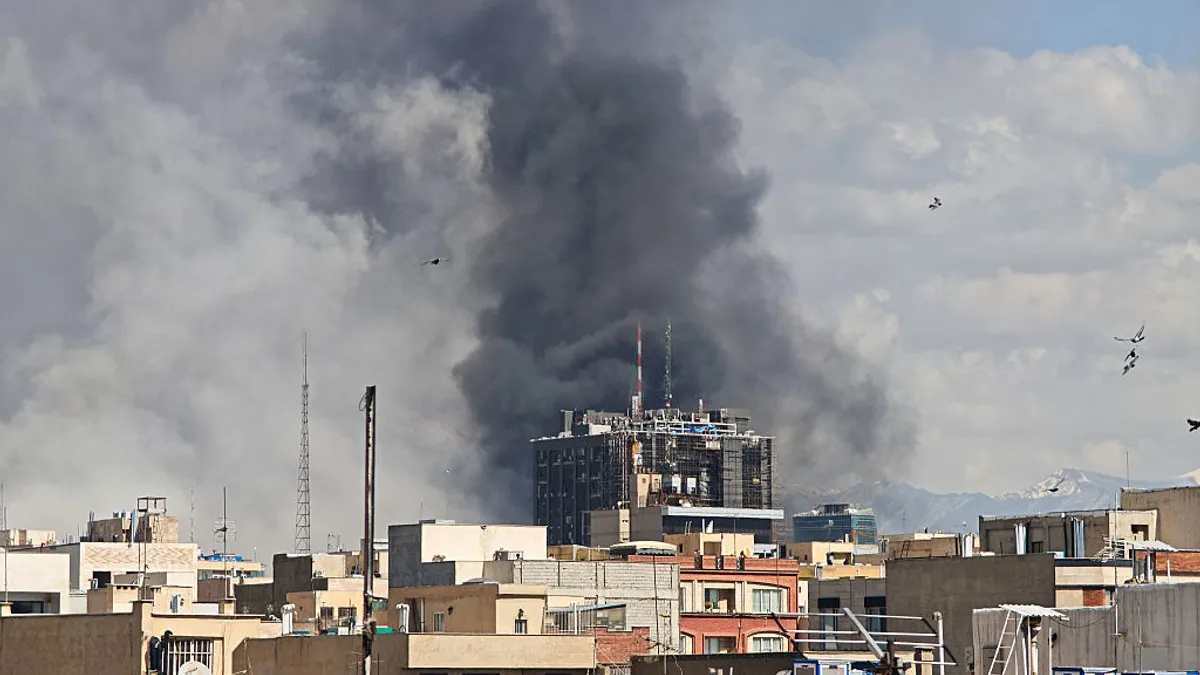
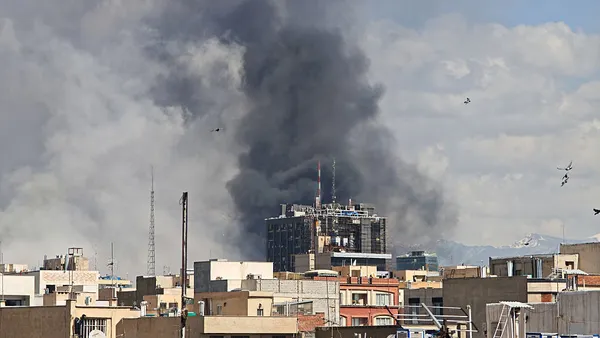
The U.S. and Israel launched military strikes against Iran on Feb. 28, disrupting logistics activity in the Middle East as air and ocean carriers deployed temporary suspensions and other service disruptions for cargo transiting through the region.
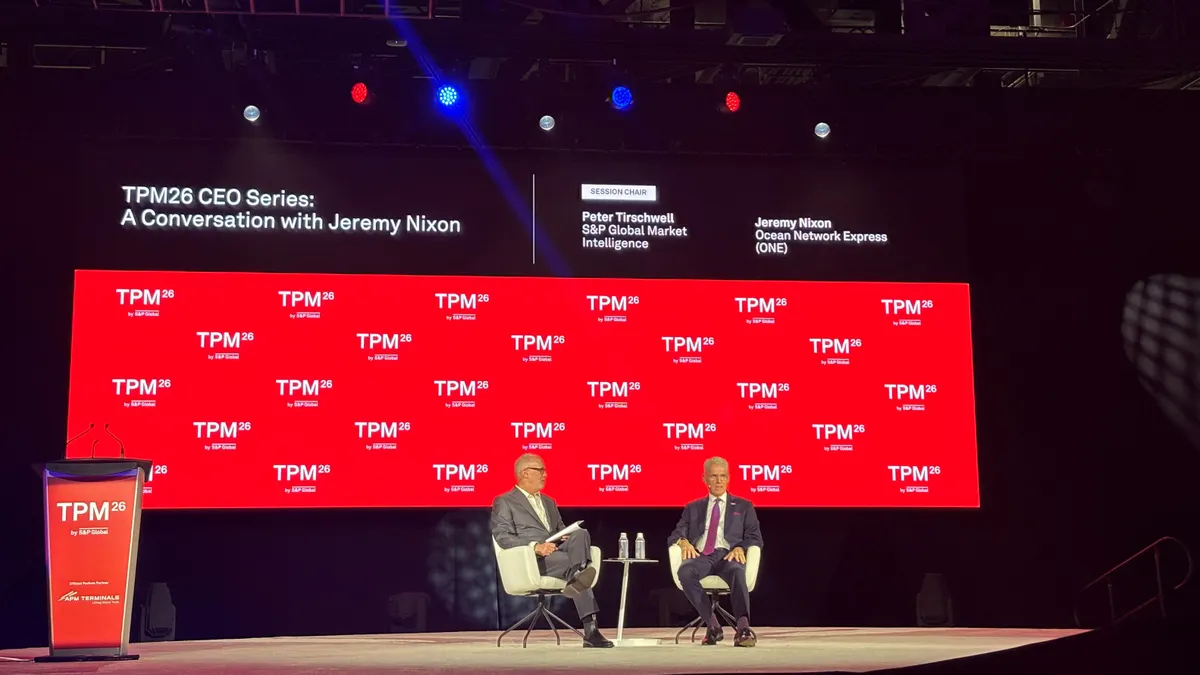
During the first week of March, more than 700 vessels were backed up as the Strait of Hormuz, the waterway bordering Iran that connects the Persian Gulf with the Indian Ocean, remained closed, impacting about 10% of the world’s container fleet, Ocean Network Express CEO Jeremy Nixon shared at TPM26.
While the conflict will lead to a contraction in capacity, “it’s definitely not pandemic scale — it’s also not even Red Sea scale,” Jensen said. But for Gulf countries, it is a “major disaster” since there likely won’t be enough overland capacity to move disrupted cargo.
“The basic perception was normalization [of Red Sea shipping], release of substantial amounts of capacity over summer, weakening global supply and demand. That’s now not going to happen.”

Lars Jensen
CEO of Vespucci Maritime
Jensen said that roughly 2 million twenty-foot equivalent units will be impacted as a result of the conflict based on cargo aboard vessels from ports in the gulf or booked within the next 90 days.
Even if the situation is resolved soon, bottlenecks will persist and costs will still be levied onto shippers, Jensen said. But if it lasts another year — or even longer — the Iran conflict will prompt the “same phenomenon as the Red Sea,” meaning that ocean carriers will adjust schedules and opt for alternative routes.
“But from a global supply demand perspective, it is relatively limited how much this actually changes, the overall capacity equation will be slightly stronger, but not massively,” Jensen said.
Despite a more regionalized direct impact, the ripple effects from the Iran conflict will still touch global logistics. Here’s how, according to Jensen. Here’s how, according to Jensen.
Red Sea return no longer in the cards
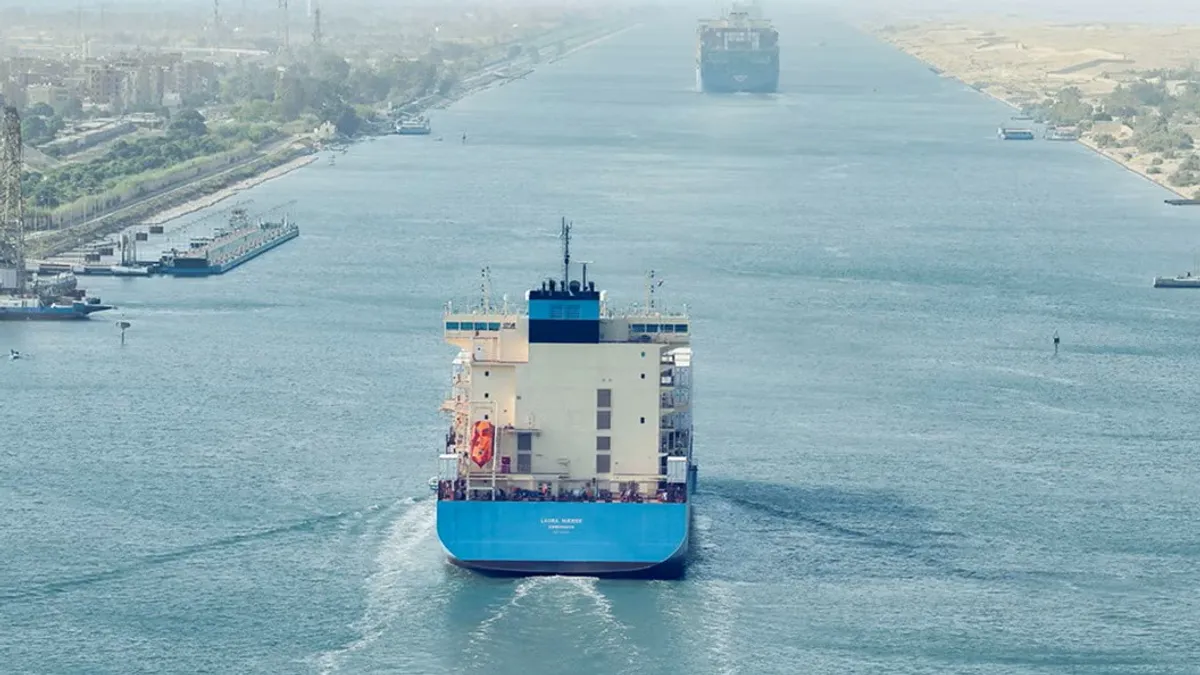
For more than a year, ocean shippers have been slowly considering resumptions in the Red Sea, such as Maersk with the structural return of its MECL service in January. Ocean carriers have been avoiding the Suez Canal waterway since late 2023 due to Houthi-led attacks on cargo ships. Shipping lines have since rerouted services, including opting to sail around Africa via the Cape of Good Hope.
Any positive outlook on Red Sea operations normalizing has since disappeared, with ocean carriers pulling a U-turn on service resumptions, including Maersk, Hapag-Lloyd and CMA CGM, Jensen said. This means that the situation in the Red Sea has been set back by more than a year, he added.
“So realistically, we are probably looking at at least six months into the future before anybody’s going to start contemplating doing this again, and that is if we stop the Iranian war basically today,” Jensen said.
Jensen now says the 2026 ocean market outlook includes acceptance that route deviations around Africa will continue, strengthening the supply and demand balance.
“The basic perception was normalization [of Red Sea shipping], release of substantial amounts of capacity over summer, weakening global supply and demand,” the CEO said. “That’s now not going to happen.”
Shipping surcharges set to surge
Shipping is no longer about supply and demand — it’s about surcharges, Jensen said. Because of the situation in the Middle East, carriers will implement “as many and as high surcharges as humanly possible,” whether as fuel-related or emergency conflict fees.
Regardless of whatever shape surcharges take, how high they will go and long they will last remains unclear.
While the conflict primarily impacts the Middle East market and Asia to Europe corridors, U.S. shippers are also at risk.
“Hang on a second,” Jensen said. “I’m only shipping from Shanghai to Los Angeles, why on earth would I bother about what happens in the Middle East?”
The answer is fuel prices, which are rapidly rising, he said. As of Wednesday morning, Brent crude oil prices hovered near $90 a barrel. Air cargo and trucking industries will also face the impact of higher fuel costs.
“And then, as I mentioned earlier, you’re going to get all these congestion effects in Asia that is going to impact everything and everyone. So, you’re going to see these surcharges also on the Pacific.”
Lars Jensen
CEO of Vespucci Maritime
In a recent LinkedIn post, Jensen said that carriers’ variable bunker fuel surcharges are often adjusted each quarter with a one-month notice, meaning that the current surge in oil prices will be reflected in Q3 2026 charges. He added that Q2 surcharges were already announced right before the Hormuz crisis.
“And then, as I mentioned earlier, you’re going to get all these congestion effects in Asia that is going to impact everything and everyone,” Jensen said at TPM26. “So, you’re going to see these surcharges also on the Pacific.”
Contract negotiations tip in carriers’ favor
The 2026 ocean shipping market was initially poised for slight overcapacity and a downward pressure on rates, but the outlook has since flipped, Jensen said. He further noted that unless there is a “miracle in the Middle East” and a rapid reversal from carriers in relation to the Red Sea, the market will shift back in favor of the carriers.
The crisis has prompted a change in ocean shipping contract negotiations, including at TPM26, Jensen said. Shippers were looking to finalize contracts at lower rates while carriers battled trepidation about whether or not they will have to concede to less favorable terms, he explained.
“And then the weekend happened, and now we see carriers stalling on finalizing contracts,” Jensen said days after the Saturday joint attack by the U.S. and Israel at the end of last month. “This is exactly why, because the market has, right now, changed fundamentally for 2026 in terms of global supply and demand balance.”
In light of the outlook, it is currently too soon to see the impact of the Iran conflict on U.S. container imports, per a March 9 Global Port Tracker update produced by the National Retail Federation and Hackett Associates.
“The immediate impact on containerized traffic to the United States is not likely to be substantial since little U.S.-bound container cargo is sourced from the region,” Hackett Associates Founder Ben Hackett said in a press release.
Despite this, climbing oil and gasoline prices will drive structural inflation, per the report. If those costs squeeze consumer discretionary spending and U.S. manufacturing, it could dampen import volumes.
Editor's note: This story was first published in our Logistics Weekly newsletter. Sign up here.