Editor’s note: This story is part of a series highlighting takeaways from a Jan. 28 event hosted by Supply Chain Dive and Retail Dive. Register here to watch the replay on demand.
Companies that previously relied on the de minimis exemption for cross-border shipments must be even more vigilant about data precision and margin protection following the trade tool’s demise, experts said during Supply Chain Dive’s Jan. 28 event, “How the 2025 Holiday Season Fared & What It Says About 2026.”
The de minimis provision — a federal regulation that previously exempted imports below $800 to enter the U.S. tax and tariff free — was abruptly eliminated in August 2025. Before its demise, the exemption was a key driver in direct-to-consumer e-commerce imports, fueling nearly 1.4 billion import shipments in 2024, with the total value of eligible goods reaching $64.6 billion, according to data from Customs and Border Protection.
The end of the trade tool has had ripple effects throughout the supply chain, impacting air cargo volumes and capacity, peak season planning and profit margins for retailers such as Aritzia.
Here are four best practices panel experts suggested merchants and e-commerce retailers employ to successfully navigate the post-de minimis environment.
1. Gather your data
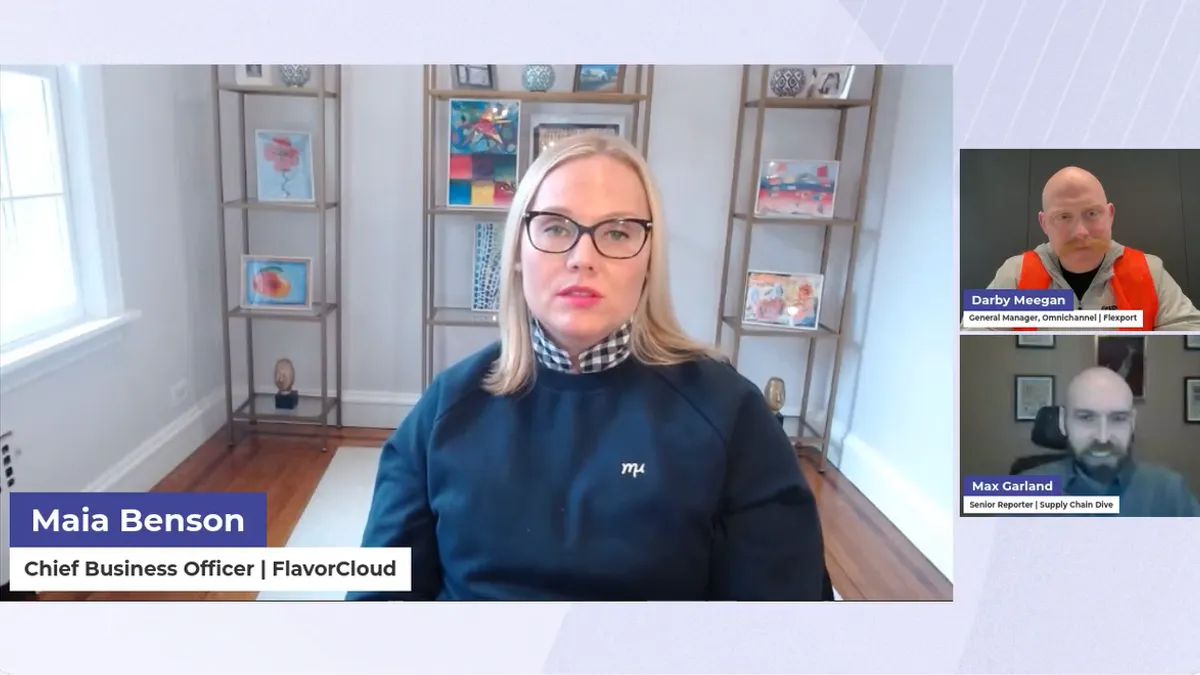
While the provision enabled low-cost imports to avoid duties, it also meant that goods could come into the country without item-related data, Maia Benson, chief business officer at FlavorCloud, said. This is not the case anymore.
“Get your data in line,” Benson said. For shippers importing in the U.S., this includes 10-digit HS codes, country of origin and “excellent product descriptions.”
“So data, data, data is going to be required of all inbound shippers, small, medium and large,” Benson said.
2. Protect your margins
“The best guidance I can give is [to] protect your margins,” Benson said.
To do this, she suggested first knowing your margins and then using information that allows shippers to construct pricing strategies based on landed cost data.
Working with supply chain and logistics partners to bring in inventory, offer storage options and build business cases to justify rightsizing a U.S. footprint for inventory health is also key, according to Benson.
3. Secure a good customs partner
Companies inbounding goods should identify and engage with a trusted customs partner, Darby Meegan, general manager of omnichannel at Flexport, said. This is especially important for brands that are entering the U.S. market through a standard customs flow for the first time.
Beyond the demise of de minimis, tariffs have also changed throughout the last year as President Donald Trump reshapes U.S. trade policy.
Such duties can be line items based on composition, assembly or country of origin, Meegan said. Strong customer partners can work with brands to analyze products and ensure “that you're getting the most out of your inbounding, and you're paying what you owe, and not more.”
Further, brands may review SKU rationalization and target a smaller SKU profile, focusing on a core catalog to help control product costs, Meegan said.
“If you're not already doing it, start doing it and look at it very intently,” he said.
4. Negotiate for optimal rates
Brands should negotiate with partners and providers to procure the best shipping rates, Meegan advised. He further noted companies should examine the cost of their supply chains to identify places where they can “squeeze it,” especially as tariffs threaten to drive up operating costs.
“But if you're densifying your supply chain, if you're working with good partners, and you are accelerating the intelligence behind your supply chain, you're going to see huge dividends,” he said.
Meegan added that problems will continue to evolve, and issues in Q1 are not going to be the same challenges faced in Q3. While inventory and carrying costs will become an issue right now, companies must focus on how they procure goods and import them to the U.S.
“But, ultimately, the dedication and the intensity of which you approach these problems are going to pay dividends,” Meegan said.