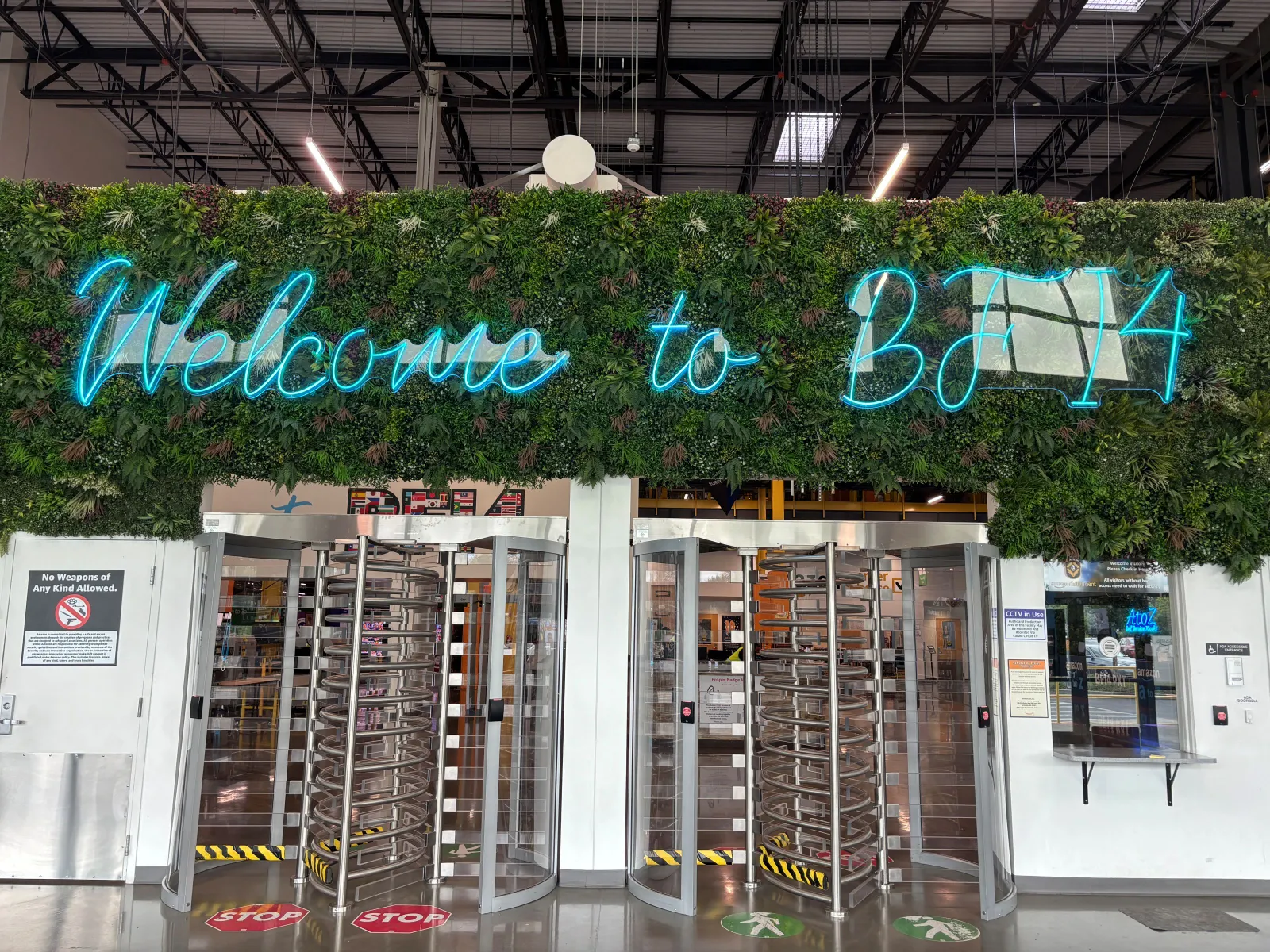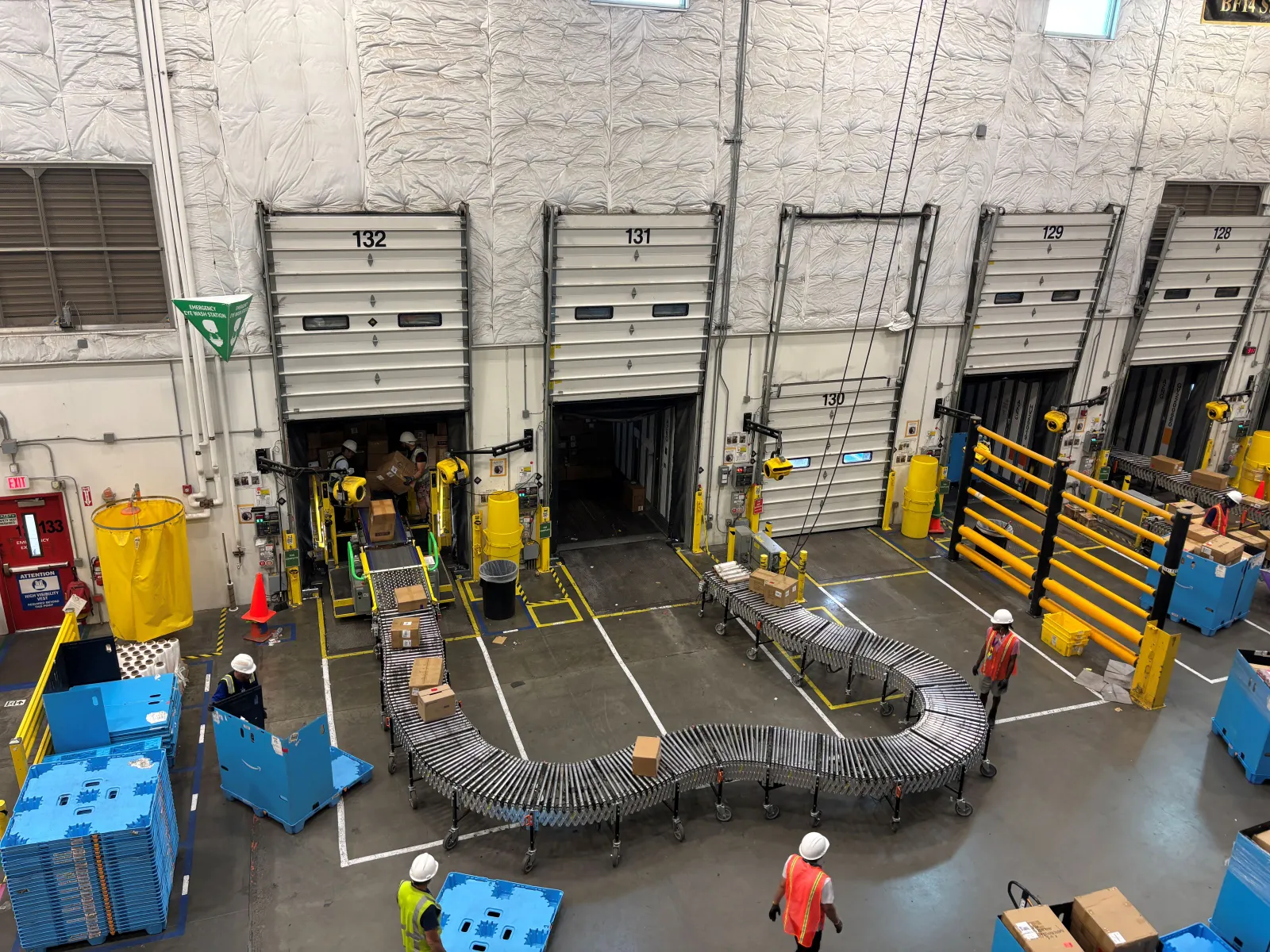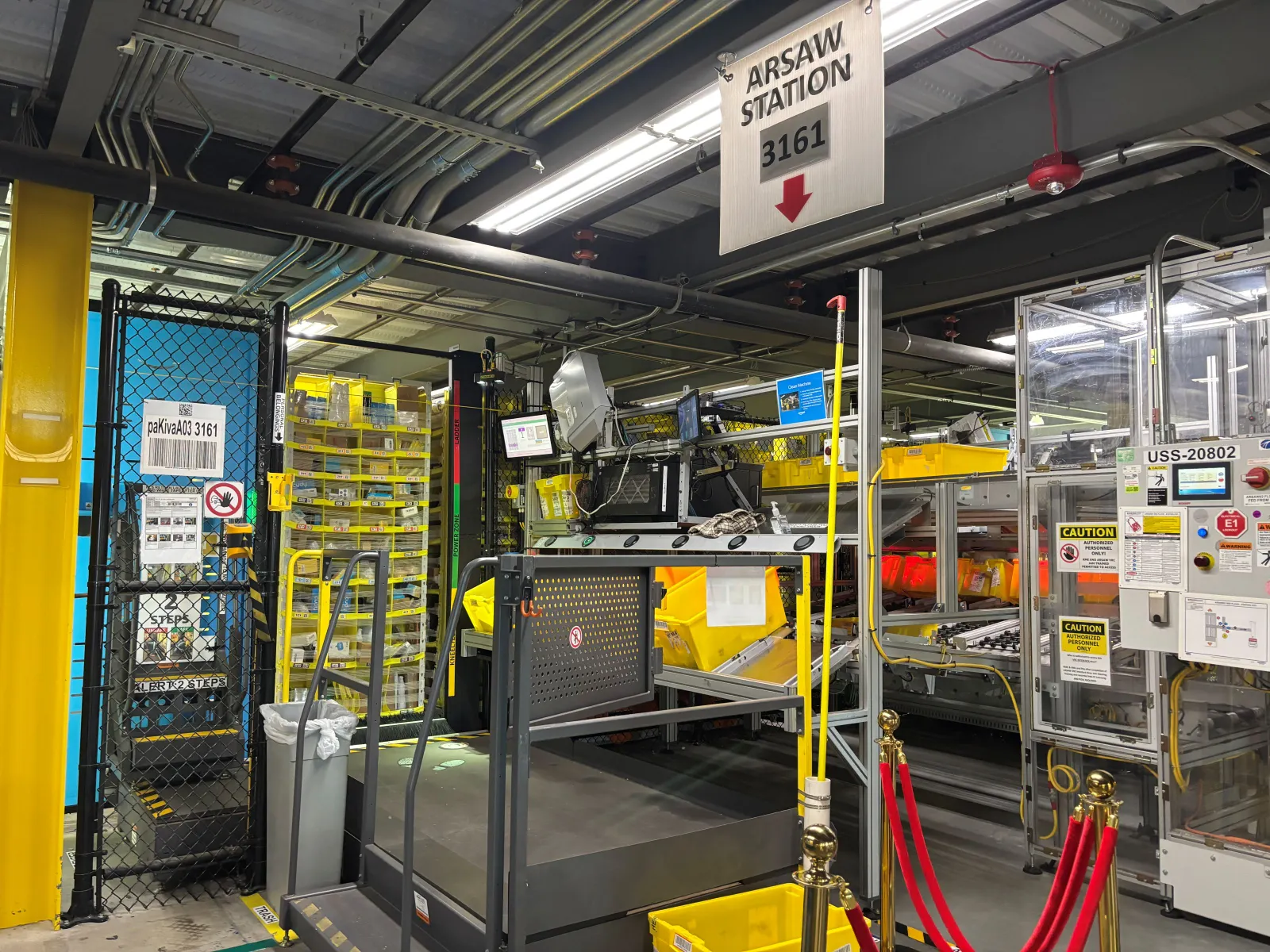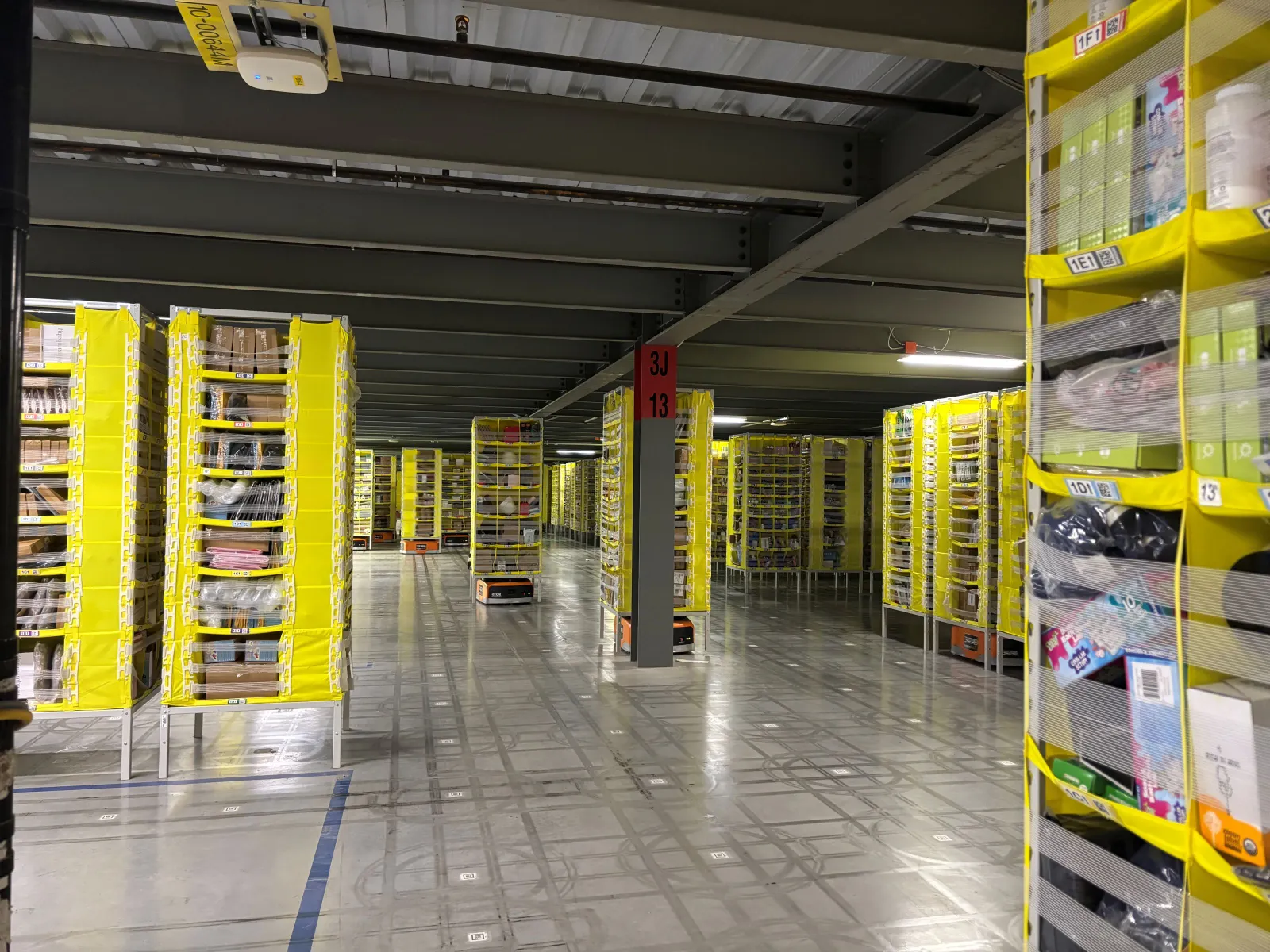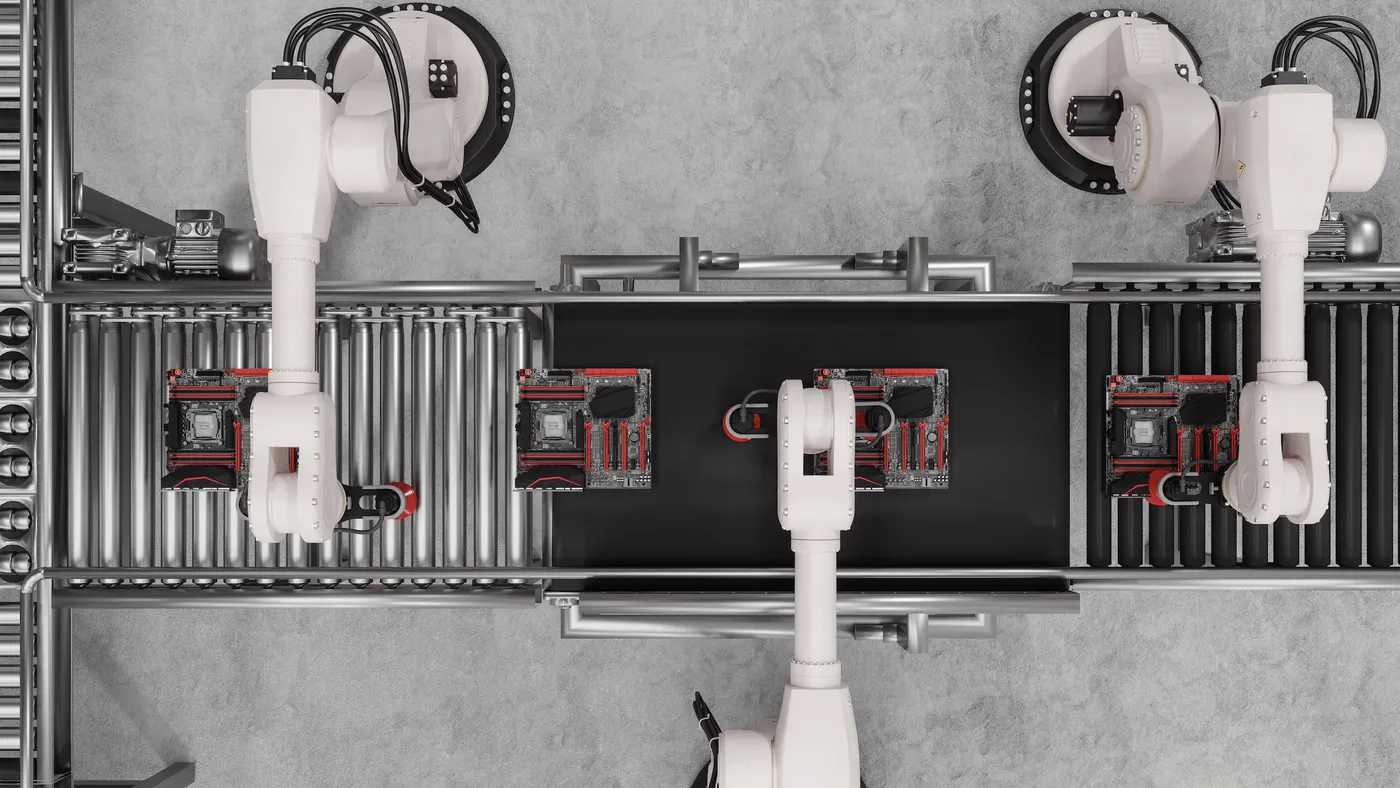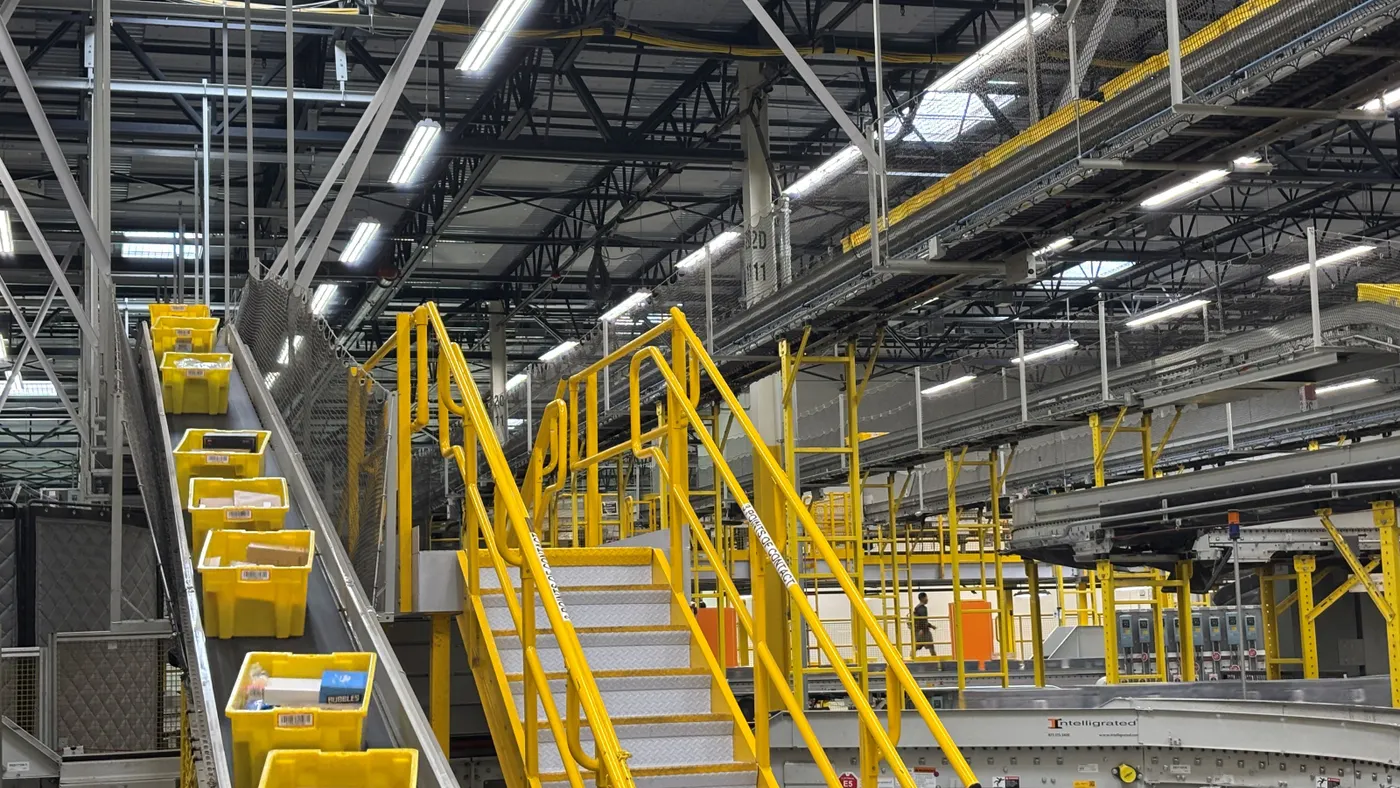
Once a future ambition, the state of warehouse automation has matured and become the bedrock of operations management.
Over the last few years, we’ve seen pilot programs turned to promising long-term strategies, which are now being rolled out across warehouse networks. Improving accuracy, safety and efficiency are just a few benefits companies are reaping from technology investments — but automation isn’t a one-size-fits all approach.
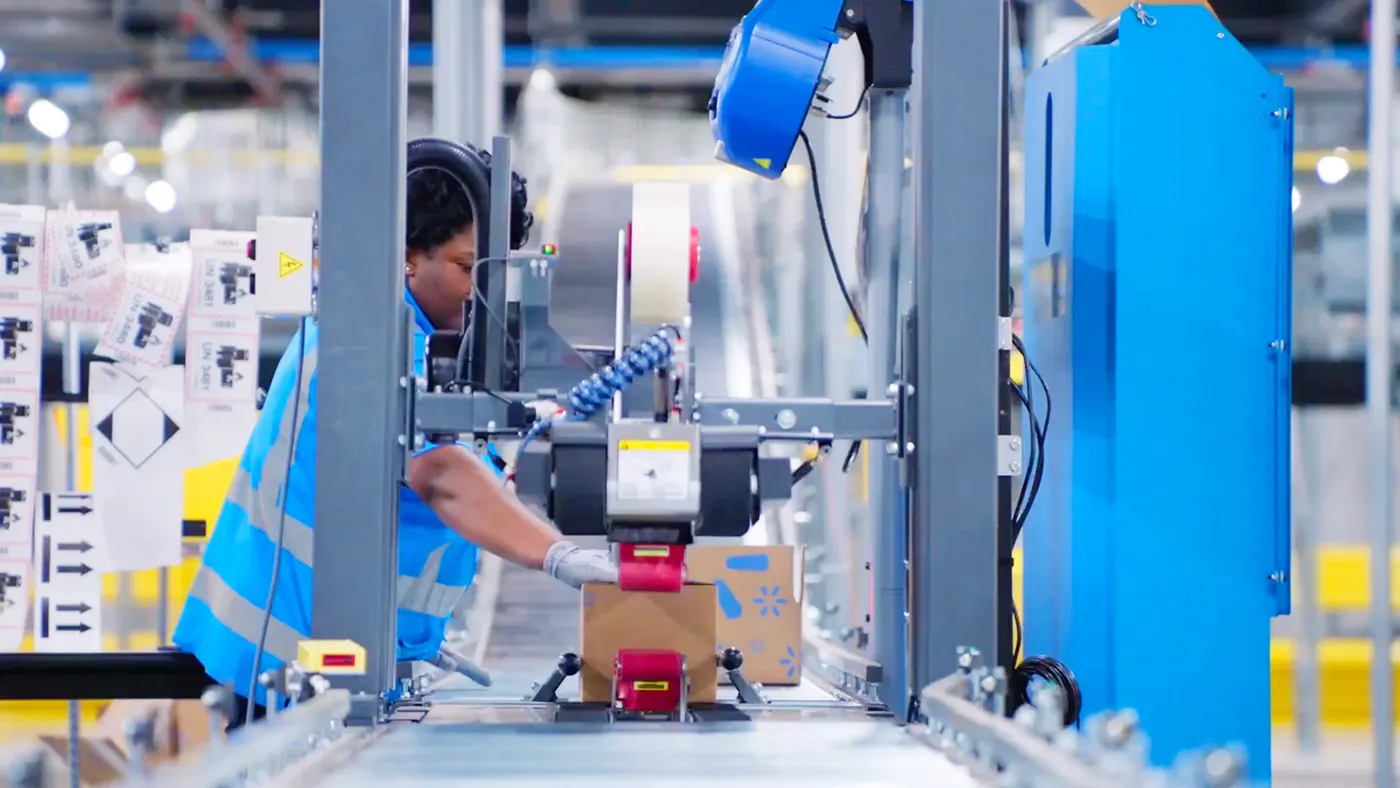
Walmart, for instance, is outfitting its distribution centers with RanPak AutoFill machines, which provide customers with data on package volume dimensions. Amazon, meanwhile, is testing a wide scope of technologies, including Blue Jay — a system that operates multiple robotic arms to help handle tasks simultaneously. Other companies remain focused on a complete operational overhaul, implementing warehouse management systems to keep their supply chains moving smoothly and optimally.
These examples barely scratch the surface of the activity buzzing throughout supply chain facilities. Read the trendline below to see how companies are using AI, robotics and other forms of technology in their warehouse.
Walmart deploys sensors to boost inventory tracking, AI efforts
The retail giant is growing its collaboration with Wiliot to strengthen pallet-level monitoring from distribution centers to stores.
By: Max Garland• Published Nov. 4, 2025
Dive Brief:
Walmart has deployed inventory-tracking sensors across its supply chain through a collaboration with Wiliot, providing more data for the retailer's artificial intelligence push.
Data from Wiliot's ambient Internet of Things sensors aim to help Walmart improve its supply chain efficiency, inventory accuracy and cold chain compliance via real-time insights into stock levels and locations, according to an Oct. 2 news release.
The sensors provide automated alerts and reduce manual tasks for employees, per the release. They are currently deployed across 500 Walmart stores, with a national expansion covering 4,600 retail locations and 40-plus distribution centers planned for 2026.
Dive Insight:
Millions of Wiliot sensors, called Pixels, are already deployed on pallets moving from distribution centers to stores throughout Walmart's supply chain, said Julien Bellanger, Wiliot's president, in an interview with Supply Chain Dive. The company eventually aims to enable tagging at the case level for Walmart, rather than the pallet level, so the retailer can track inventory in an even more granular fashion, he added.
An image of Wiliot's ambient Internet of Things sensor.
Courtesy of Wiliot
The sensors are particularly helpful in cold chain applications, such as making sure produce is quickly moved to a cooler once it reaches a store, according to Bellanger. They also provide automatic signals that make it easier to know where a pallet is in real time.
"Positive confirmation of receipts in supply chain, as you know, is very important," he said. "No manual scanning, no paper trail, just a signal that is automatically created based on real data, and that both the supplier and Walmart will capture eventually."
Wiliot's sensors feed inventory data into Walmart's AI systems. The collaboration comes as Walmart scales up its use of AI in its supply chain, with inventory management being a key focus area for the technology.
"With Wiliot's ambient IoT technology, coupled with our AI systems, we're not only optimizing our supply chain to make faster, smarter inventory decisions, but we're also tackling one of the hardest problems in retail—knowing exactly what we own and where it is at any given moment," Greg Cathey, Walmart SVP of transformation and innovation, said in the release.
Article top image credit: Courtesy of Wiliot
Amazon unveils 3 new systems to boost its fulfillment, delivery network
A multiarmed robotics system, an agentic AI model and smart glasses for drivers build upon other technologies the e-commerce giant has revealed.
By: Max Garland• Published Oct. 27, 2025
Amazon is testing new technologies ranging from a multiarmed robotics system to smart glasses for delivery drivers, the company announced Oct. 22.
The innovations aim to reduce repetitive tasks, boost productivity and accelerate delivery speeds, according to the e-commerce giant. They also build on other technology-focused advances from Amazon in 2025, including additional fulfillment center robots and better demand forecasting and delivery mapping.
Here's a deeper look at Blue Jay, Project Eluna and Amazon's smart delivery glasses, three of the company's latest innovations supporting its fulfillment network.
Blue Jay
Blue Jay is a system that coordinates multiple robotic arms to perform several item-handling tasks simultaneously, reducing repetitive reaching and lifting by employees, according to Amazon.
The system can handle the work of what previously would be three separate robotic stations into a single workspace for picking, stowing and consolidating items, which helps the company save on physical warehouse space. Blue Jay moved from concept to production in just over a year, a condensed timeline compared to the three-plus years needed for other robotic systems like Robin, Cardinal and Sparrow.
"The reason: Years of trial-and-error were condensed into months of development thanks to advancements in AI," Amazon said. "Our engineers were able to iterate on dozens of prototypes for Blue Jay with the use of digital twins."
Amazon is testing Blue Jay at a South Carolina facility, where the system is already able to handle about 75% of items stored. Over time, Amazon expects the technology to serve a key role in its same-day fulfillment and delivery sites.
Project Eluna
Project Eluna is an agentic artificial intelligence model that helps Amazon operations managers make more informed decisions on how to keep the fulfillment process running smoothly, the company said.
Amazon described the system as an extra teammate "designed to act with a degree of autonomy, reasoning through complex operational situations and recommending actions to operators." To do this, Project Eluna factors in historical and real-time building data to anticipate potential fulfillment challenges and help managers keep facilities on track, the company said.
"Operators can ask questions like, 'Where should we shift people to avoid a bottleneck?' and receive clear, data-backed recommendations," Amazon said. "The goal: less putting out fires, more foresight."
Project Eluna will be piloted at a Tennessee fulfillment center to assist operators during the holiday shipping rush, focusing initially on optimizing sortation, according to Amazon. Eventually, the system will support preventive safety measures, such as planning ergonomic employee rotations and improving maintenance schedules.
Smart delivery glasses
Amazon's in-development smart delivery glasses aim to help couriers focus on their surroundings, more easily identify hazards and navigate efficiently to customers' doorsteps, the company said.
The wearable system displays real-time navigation and instructions for delivery drivers, providing a hands-free process that reduces reliance on their phones. The glasses help drivers locate and scan packages and follow turn-by-turn walking directions to the destination, which can be handy in navigating complex environments like apartment buildings, per Amazon.
Hundreds of delivery drivers tested early versions of the glasses, with their feedback shaping the next iteration of the system, the company said.
"We anticipate future versions of the glasses will provide real-time defect detection, where the glasses can help notify drivers if they’ve mistakenly dropped a package at a customer doorstep that does not correspond with the house or apartment number on the package, detect hazards like low light and adjust the lenses, notify that there’s a pet in the yard, and more," according to Amazon.
Article top image credit: Courtesy of Amazon
UNFI opens robotic distribution center in Florida
The tech-powered facility is part of the company’s multiyear effort to boost its performance through investments in automation.
By: Sam Silverstein• Published Sept. 12, 2025
Dive Brief:
United Natural Foods, Inc. has opened a new distribution center in Sarasota, Florida, that is replete with automation technology designed to boost order accuracy and efficiency, the grocery wholesaler and distributor announced Sept. 9.
The equipment will help UNFI improve its ability to serve grocers while also cutting operating costs and improving working conditions for employees, according to the company.
The 1-million-square-foot facility is UNFI’s first distribution center equipped with Pick-it-Easy robots from warehouse logistics firm Knapp, which use artificial intelligence to identify physical characteristics of goods as they grip and move them. The distribution center, which employs more than 400 people, also has a system from Knapp that delivers products directly to workers.
The company noted in the announcement that it has also added automation gear to distribution centers in other locations, including Centralia, Washington; and Carlisle and Manchester, Pennsylvania.
UNFI has been focusing over the past two years on what CEO Sandy Douglas has described as a “transformation agenda” aimed at improving its performance following forecasting challenges that emerged in 2023 and led to a sharp decline in the company’s profitability.
While the company has made progress toward strengthening its operations since that point, it has also dealt with costly setbacks.
In June, UNFI was hit by a cyberattack that forced it to temporarily take down its online ordering systems, severely impairing its ability to fulfill orders from retailers. The company later said it expected the intrusion to result in at least $350 million in lost sales.
UNFI also revealed in June that it had mutually agreed to cut short a multiyear distribution agreement with Key Food that had been expected to drive $10 billion in sales over a 10-year term. The company said the decision would lead to the closure of a distribution center in Allentown, Pennsylvania.
Article top image credit: Peyton Bigora/Supply Chain Dive
Walmart adding Ranpak AutoFill machines to more distribution centers
The automated equipment provides customers with data on package volume dimensions, among other benefits, Ranpak CEO Omar Asali said.
By: Katie Pyzyk• Published Aug. 28, 2025
Ranpak is expanding its automation solutions at Walmart’s distribution centers, the company announced Aug. 26.
Under the multiyear agreement, Walmart will install Ranpak’s AutoFill machines at sites in the Chicago, Dallas, Philadelphia and Sacramento, California, metro areas. Walmart already uses this equipment at anIndianapolis-area fulfillment center, where it automates void filling and box closing to increase productivity.
This is the second major deal Ranpak has landed in 2025 with an e-commerce giant. In January, Amazon agreed to spend $400 million on an eight-year deal to acquire up to 18.7 million Ranpak shares, which will amount to an estimated 17% of the company’s shares when completed.
“I don't think it's easy to sign commercial and strategic deals the way we have with the two largest, most important retailers and e-commerce players,” said CEO Omar Asali. “I certainly am very proud that that's where we are, and I'm very proud of our team. It's really nice to get the endorsement of the largest players out there.”
Asali, who has been the Ohio-based company’s CEO since 2019, said Ranpak still will invest in the business segment that manufactures packaging. Concurrently, a large part of the company’s strategy is to push toward more automation innovation and using artificial intelligence in its equipment offerings.
Omar Asali, CEO at Ranpak
Permission granted by Ranpak
“I know it’s fashionable for everybody to talk about AI. But we are taking those investments very seriously, because we think that's going to be key to our journey in terms of winning market share and winning with big accounts,” Asali said.
Asali spoke with Packaging Dive about topics including AI-enabled automation, sustainability, navigating economic uncertainty, and predictions for the traditionally busy upcoming holiday season.
This interview has been edited for length and clarity.
PACKAGING DIVE: This Walmart deal is the second major one you've announced with an e-commerce giant this year. Is your strategy now to move more toward these large enterprise customers instead of serving smaller individual customers?
OMAR ASALI: No, I would say it's in addition to; It's not to move away from anything.
We're a 50-year-old company. The legacy business has been around packaging, all sustainable, all fiber-based. We have zero exposure to plastic, and we've partnered a lot with small and medium-sized enterprises and help them ship product.
We've done a few deals with some of the larger enterprises. I would say, the last couple of years we've put more emphasis on making sure we're winning our market share with the large enterprises, because that's where we were under indexed. But it's certainly in addition to covering the small and medium-sized enterprises — it's not in lieu of.
The Walmart deal is for your machinery related to void fill, as opposed to rightsized boxmaking equipment — and rightsizing has been a hot topic for the last few years. What kind of demand are you seeing for these two different technologies, and how do you balance your focal areas?
We're seeing very robust demand for automation. Whether it's rightsizing, whether it's the automatic void filling, whether it's bagging, even whether it's wrapping or mailer on demand, we're seeing very robust need for these products.
It's driven by a couple of things. One is just the amount of shipments that the large players are shipping. And to handle that type of volume, they need more automated solutions.
Two, just labor shortages and labor issues, frankly. More recently, even some of the immigration changes are adding pressure to these guys and their needs as we enter peak season later this year. Plus, probably some of the tax benefits around when you're investing in equipment and getting accelerated depreciation.
I think it’s a whole host of reasons. All these factors are increasing the level of conversation we're having with customers.
You mentioned seasonal pickup during the holiday season. But we're seeing a lot of economic pressure right now on consumers and reduced buying in certain sectors. Are you concerned about that?
I am concerned about it in terms of how concentrated the activity is. Meaning, I would love to see a lot more breadth in economic activity, where smaller enterprises, medium-sized enterprises, large enterprises are doing well and growing.
What I am seeing is the pressure that you've highlighted is applying more to smaller players. The large players are moving a lot of volume, and they continue to grow. So despite, let's call it maybe more uncertainty around the consumer, I think the larger players, given their speed, their efficiency, given how competitive they can be from a price and cost standpoint, they continue to win market share and continue to grow.
My personal expectations for peak season are pretty positive. From all the indications that we have today, we actually think peak season this year is going to be quite robust. It might be more concentrated in terms of the number of players that are winning market share, but overall, we think activity is going to be robust.
During your second-quarter earnings call in August, you repeatedly mentioned the challenging economic environment, plus a 3% reduction in headcount at Ranpak since April and a business reorganization in July. But at the same time, you projected growth in the second half of the year and that it will be an “inflection point.” Explain that in more detail.
Like any other company, we strive to be efficient. So sometimes that pruning and some of the headcount reduction are just necessary to continue to be efficient and continue to offer competitive pricing to customers. So we will continuously do that and cost improvements and bringing efficiencies to our business.
This is a bottom-up view based on us talking to a lot of customers — Ranpak has 36,000 users in 50 countries and we talk to a lot of these customers to understand their demands. We try to forecast with them, sort out their needs as we enter peak season. What we're hearing is in e-commerce, people are expecting a pretty good season in the United States. People on the industrial activity have a little bit more of a question mark about the outlook on the economy, and, in particular, in light of tariffs.
In Europe, in e-commerce, it looks a little bit more challenged. So that's not as robust. Industrial activity is starting to pick up now, but it was a bit weaker. So when you put all these factors together, and our geographic footprint and the businesses we have in Australia and Japan, that's what's giving us confidence in the second half of the year. We think a lot of activity is going to be driven by the large enterprise accounts, in particular in e-commerce.
Speaking of those large accounts, let’s go back to your Amazon deal in January. Why does that matter to your company?
It matters a lot. Because this is how we at Ranpak get better, by servicing these clients that are very demanding, these clients that move a lot of product. They push us to be more efficient. They push us on innovation, on R&D. They push us in our paper business and in our automation business. And that, just frankly, makes us a better company.
To me, deepening a partnership with someone like an Amazon and like a Walmart has tremendous tangible benefits to us as a business, as we continue to scale our company, continue to win market share and continue to be a leader in innovation and in technology.
The world is changing. Every industry is changing, including ours, thanks to AI, robotics, automation. These are not clichés or words that we use lightly. These are words where we're investing a lot of money to make our products and our solutions better.
The biggest validation is when the largest customers in the world come and say, "We want to sign a strategic partnership with you, because we like how you're innovating and how you're using technology.”
Talk more about the relationship between AI and your technologies and the impact that has on e-commerce packaging and operations.
I'll use the AutoFill, which is the deal that we just signed with Walmart, as an example.
The AutoFill includes a computer vision system called DecisionTower. Think about boxes being erected, and these boxes are filled with items. They go through our vision system, which gets exact dimensions and exact volumetric data and exact data around the void — including flap angles, thickness of flaps in the box, including any items that are transparent, that are in the box, that are tough to detect. We built a very robust algorithm to get specific data that then is fed into our machines to dispense the right amount of paper, and then ultimately, that box is sealed with tape.
All of that is done without the human touch. It's all done in an automated fashion. Then our customer is getting a lot of data on the content, as well as getting data from our vision system around all the dimensions that they're shipping. It helps streamline from a cost standpoint, it helps reduce waste, it helps increase speed. We're providing them, through our vision system data and analytics, information that's making their end-of-line operation faster and better. Then it keeps making our equipment better as we build more and more data inside our algorithm, and we keep perfecting our solution.
The applicability of AI is across the board in our automation. It's literally in every product. We're trying to inject more and more AI, including not just in automation, but in manual pack stations to make manual packers better.
AI also has applicability to your rightsized box equipment, right?
100%. It’s helping our uptime. We have a vision system both before our equipment and after our equipment.
After our equipment for quality control, to assure our customers that everything was done properly.
Before our equipment, we're using that vision and its 2D and 3D technology in order to ensure the uptime of our equipment. If there's a problem with the box, instead of it going to our equipment and jamming it, it'll get diverted. And that way, the machine’s uptime is maintained. In the automation business, in order to deliver ROI, the most important metric is your uptime. And we use AI to help our uptime for our equipment, so we continue to deliver ROI.
Physical AI and computer vision is truly transformational in our company and in how we're approaching solutions. And in the last year, we've made tremendous progress, given basically the evolution of AI and the tools it has given us to make our solutions more robust.
Ranpak frequently references its sustainability goals. Right now we're seeing a lot of companies pivot from focusing on 2025 goals to 2030 targets. What are you focused on sustainability-wise going forward?
We are focused on increasing recycled content in our fiber — that's one of our goals in the upcoming years. We are focused on postconsumer waste and using that material as well. We are focused on moving to 100% FSC and SFI certified, so that we're using best forestry practices when it comes to us securing product from our vendors.
We're increasing our electric footprint. In Europe, we're pretty advanced in that, but in North America, it's early in our journey. We're starting with more hybrid vehicles, and then we're going to move to more electrification.
We're on our journey in scope 1, in scope 2, ultimately in scope 3, on reducing our greenhouse emissions. So these are sort of the key anchors that we as a company are focused on.
We continue to track toward our goals, and we will fulfill our obligations.
Article top image credit: Permission granted by Ranpak
Honeywell, Stereolabs partner on AI-powered vision tool for warehouses
The joint technology aims to eliminate the need for tape measures, scales and handheld devices when gathering dimensions, weight and barcode data to register new SKUs.
By: Antone Gonsalves• Published Aug. 18, 2025
Honeywell is collaborating with Stereolabs to develop a tool that automates the process of measuring the size, volume and weight of boxes before they are registered in a warehouse management system, according to an Aug. 6 press release.
The joint technology is a combination of Honeywell's SwiftDecoder software and Stereolabs's ZED X series cameras, Taylor Smith, chief marketing officer for Honeywell's Productivity Solutions and Services business, told Supply Chain Dive.
A warehouse cart prototype uses Honeywell and Stereolabs technology to gather data from boxes containing new SKUs.
Courtesy of Stereolabs
Stereolabs is looking for system integrators to incorporate the combined technology into a cart or warehouse workstation, a company spokesperson said in an email to Supply Chain Dive. An off-the-shelf product is not yet available, but Stereolabs is validating pilot projects with select partners and expects to have products available later in 2025.
Stereolabs' stereoscopic cameras use a vision-based AI perception system to measure product dimensions, per the release. Combining the technology with Honeywell's software would allow warehouse workers to determine dimensions and weight without the use of tape measures and scales while capturing barcode data to register a new SKU in a warehouse management system, Smith said. New SKUs could include seasonal items or new product lines.
Loading dock workers can take a box containing a new SKU from a truck and place it on a four-wheel pushcart equipped with a scale and Stereolabs cameras mounted overhead, Smith said. The cart and cameras gather all information, including weight, dimensions, SKU data, lot numbers and expiration dates, and send it to the WMS.
"One of the biggest problems when a new SKU comes into a facility is getting the proper material master information," Smith said, referring to the central dataset for a specific item.
Data-gathering is particularly difficult in warehouses with multiple loading docks. Workers often bring boxes containing new SKUs to a central location in those facilities. With the Stereolabs-Honeywell cart, they can wheel data-collection gear to where it is needed, Smith said.
"It's really about changing that workflow and eliminating walk time or eliminating overall cost by being able to move to mobile versus stationary systems," he said, adding that the technology would be especially helpful in retail and manufacturing warehouses.
A recent Gartner survey found increasing demand for AI-enabled vision systems in warehouses, said Senior Director Analyst Simon Tunstall in an email to Supply Chain Dive. The analyst firm saw an increase in interest among the organizations surveyed in simplifying packaging and loading activities, with about a third of the respondents in the process of implementing AI-enabled vision systems.
"For the foreseeable future, there will not be one vendor or one solution that fits all possible use cases," Tunstall said. "However, the value proposition of these solutions is potentially so good that companies could experiment with a number of alternatives at low risk and low cost."
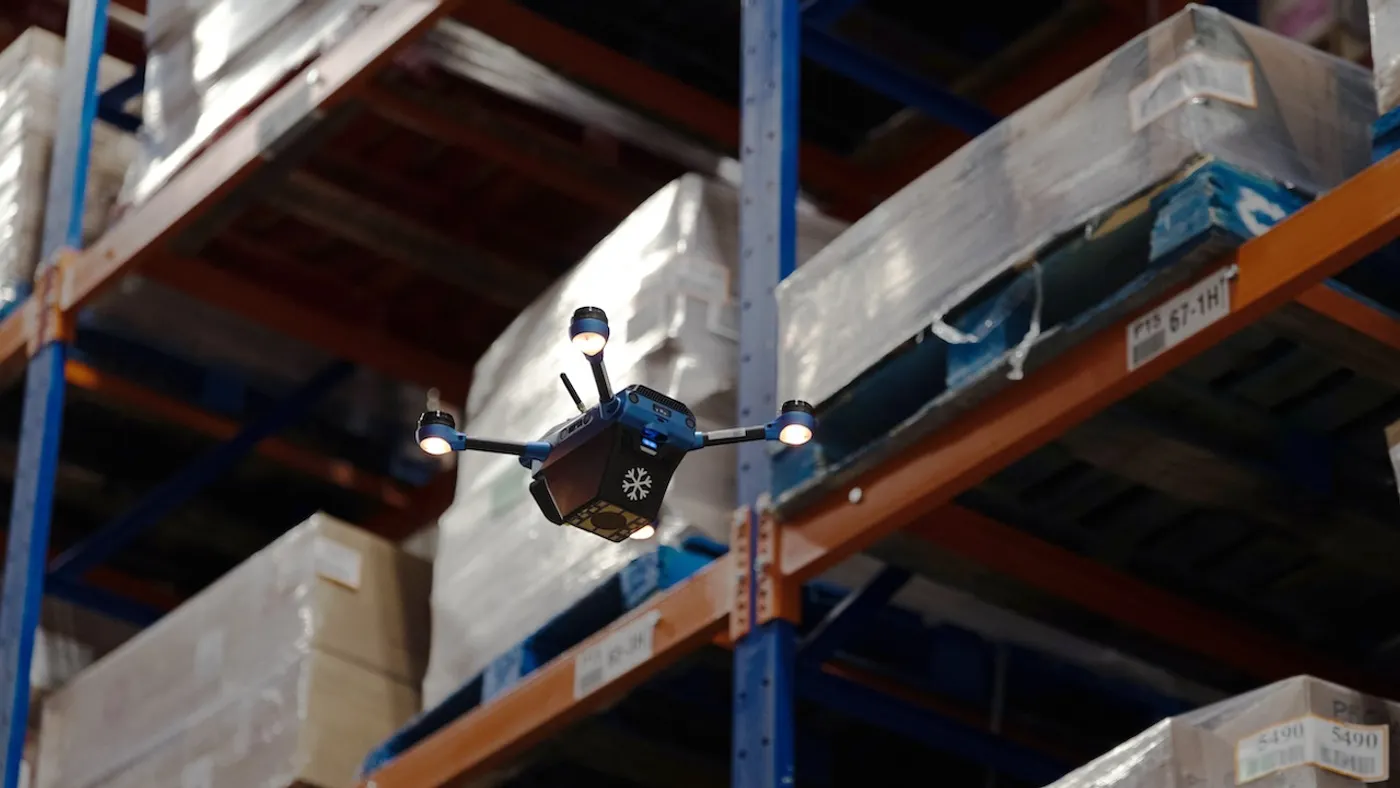
Stereolabs is the latest hardware vendor to license Honeywell's SwiftDecoder software. In March, the multinational conglomerate said Corvus Robotics would use the software in self-flying drones to conduct inventory audits in distribution centers with very high shelves, hard-to-reach racks or products, and low-light conditions that make traditional scanning difficult.
Article top image credit: Courtesy of Honeywell
Staples conducts fulfillment operations overhaul
The office supplies retailer is implementing a new warehouse management system across its network to support next-day delivery efficiency.
By: Philip Neuffer• Published May 21, 2025
Dive Brief:
Staples rolled out a new warehouse management system at nine of its 36 fulfillment centers over the last 18 months, according to a May 7 press release.
The office supplies retailer aims to streamline warehouse processes, reduce errors, and improve order and inventory management using Manhattan Active Warehouse Management, per the release.
By the end of 2026, Staples will implement the cloud-native platform from Manhattan Associates at the rest of its distribution centers.
Dive Insight:
Staples is leaning on the new WMS to upgrade its ability to deliver products to consumers and businesses more efficiently while optimizing the operator experience, per Chief Supply Chain Officer Ryan Hanson.
In addition to its 36 fulfillment centers, the company operates 220 delivery locations and 12 million square feet of warehouse space, per the release. Through this network, Staples provides next-day delivery to nearly 98% of the U.S. while shipping 2.5 million units per day.
“As we are currently shipping a significant portion of our network volume on Manhattan Active WM and have customers in mission-critical medical, government and private industry verticals, we place a high premium on system performance and uptime reliability to exceed customer expectations,” Hanson said.
Staples also expects the system to adapt to its changing business needs, he added.
“The biggest advantage of using Manhattan Active is that it is a cloud-based system, and it will continue to receive automatic updates quarterly, for years to come, like a smartphone,” Hanson told Supply Chain Dive. “That makes it more scalable vs. a non-cloud based WM.”
Staples joins several other retailers who have recently introduced new WMS technology to improve supply chain performance.
Grocery retailer Giant Eagle plans to complete the transition to Manhattan Active Warehouse Management across its distribution center fleet by August. Meanwhile, Advance Auto Parts installed a new WMS in 2024 at a Georgia facility as part of a larger supply chain overhaul.
Article top image credit: Permission granted by Staples/Burson
Amazon reveals new warehouse robots in push to trim manual tasks
The e-commerce giant said it plans to deploy the various technologies in the coming years as it works to boost “more high-skilled work.”
The functions and benefits vary by robot, but they largely focus on eliminating or reducing manual employee tasks. Amazon's automated "Tipper" robot, for example, automatically unloads packages from carts brought by employees to conveyor belts.
“We want to create more high-skilled work that is ergonomically sound for everyone at our facilities,” said Nicola Fyfe, VP of Amazon Logistics in Europe, in a news release. “Technology is helping us achieve this vision by creating better, safer work environments inside our delivery stations.”
Amazon's new robots
Robot
Function
Benefit
Deployment
Tipper
Transfers packages from carts to conveyor belts
Eliminates need for manual unloading
Starting in Europe, will eventually deploy globally
Echelon
Manages package flow on conveyor belts
Eliminates need for manual handling
Starting in Europe, will eventually deploy globally
Six-sided scanner
Automatically captures package information from every angle
Eliminates need for manual scanning
Starting in Europe, will eventually deploy globally
Agility and Matrix
Determines optimal package sorting paths
Minimizes need for manual pushing, reaching and handling
Starting in Europe, will eventually deploy globally
ZancaSort
Brings packages and bags to employees at an ergonomic height
Removes need for employees to walk through numerous aisles or reach to stack parcels
Starting in Europe, will eventually deploy globally
Amazon's newest robots aren't taking over its fulfillment centers and last-mile delivery stations just yet, as large-scale deployment will take years. Still, the company said the technologies at its Dortmund, Germany, facility offer a glimpse into what the company expects its network will look like in the future, with machines taking on much of the heavy lifting.
"Since we've been pretty substantially integrating robotics into our fulfillment network over the last many years, we have seen cost-savings and we've seen productivity improvements and we've seen safety improvements," CEO Andy Jassy said on a February earnings call. "And so, we have already gotten a significant amount of value out of our robotics innovations."
The e-commerce giant currently has more than 750,000 robots deployed in its network, all of which play a role in completing over 75% of customer orders, Amazon said in its announcement covering the "Vulcan" robot.
Vulcan has a keen sense of touch, allowing it to carefully and easily manipulate objects within inventory pod compartments, according to Amazon. The robot's capabilities allow it to pick and stow items in the top rows of these pods, removing the need for employees to use step ladders to reach those areas.
"Vulcan does this using an ‘end of arm tooling’ that resembles a ruler stuck onto a hair straightener, plus force feedback sensors that tell it how hard it’s pushing or how firmly it’s holding something, so it can stay below the point at which it risks doing damage," Amazon said.
Article top image credit: Courtesy of Amazon
UPS deploys Verity warehouse drones for inventory tracking
The technology is helping the company’s Velocity facility identify stock discrepancies and reduce “high-reach tasks” for workers.
By: Max Garland• Published Dec. 3, 2024
Dive Brief:
UPS Supply Chain Solutions has teamed up with robotics company Verity to track inventory via autonomous drones, according to a November announcement.
The partnership launched at the UPS Velocity facility in Shepherdsville, Kentucky, in July as "the first of many potential sites," per Verity's website. The distribution location has a 266,000-square-foot storage area and manages over 930,000 inventory movements annually.
The number of hours spent on inventory processes is already down by half at the UPS site, according to Verity, while “high-reach tasks" have been eliminated for employees.
Dive Insight:
Verity's drones are helping UPS solve the frequent pain point of inventory accuracy, Mary Ann Crawford, an industrial engineering manager at UPS Supply Chain Solutions, said in a video about the collaboration. Inaccurate counts and misplaced items can cascade into order fulfillment disruptions if not handled properly.
"When your inventory is off, you're going to feel it in every different area of the operation," Crawford said. "You'll feel it when you go to put a case away and you can't fit it in the location because the location is full, or you go to pick or replenish a case and the case that you wanted is not there."
To address that challenge, Verity said its drones provide inventory checks daily and full-facility audits twice per month. This helps UPS Supply Chain Solutions identify stock discrepancies while maintaining accurate data on inventory levels.
Verity's drones are particularly useful for the UPS Velocity facility, according to Verity. The location features a "very narrow aisle configuration" that optimizes space but presents hurdles for larger equipment like forklifts.
UPS isn't the only company tapping into Verity's services. In 2023, Maersk announced it was deploying Verity drones at its warehouses for stronger inventory tracking. Sportswear brand On recently revealed its own collaboration with Verity to increase visibility in its fulfillment operations.
Article top image credit: Courtesy of Verity
Advanced Auto Parts swaps out WMS in supply chain overhaul
The auto parts retailer aims to streamline operations by using 14 large distribution centers on a single warehouse management system.
By: Kelly Stroh• Published Sept. 27, 2024
Dive Brief:
Advance Auto Parts recently completed the implementation of a warehouse management system at a distribution center in Thompson, Georgia, as part of a supply chain overhaul, President and CEO Shane O’Kelly said during an Aug. 22 earnings call.
The overhaul aims to boost the auto parts retailer's supply chain efficiency, with its 14th and final distribution center conversion to be completed by the end of 2024, O’Kelly told analysts. The facilities will serve as nationwide replenishment nodes.
Advance Auto Parts is also pushing for increased inventory productivity with the implementation of a new inventory management system, an initiative the company completed in July. More than 300,000 actively managed SKUs are in the system.
Dive Insight:
Advance Auto Parts is moving forward with its plan to consolidate its distribution network to a single operation after years of relying on two distinct ones.
The retailer's bid to streamline its supply chain operations aims to use 14 large distribution centers operating on a single warehouse management system. Previously, Advance Auto Parts had 38 distribution centers acting as replenishment nodes and operating on different systems.
With 14 nationwide replenishment nodes, remaining distribution centers will be closed or converted to market hubs, which is a key part of its supply chain overhaul, O’Kelly said.
“We are gaining critical insights on managing hub inventory along with determining efficient routes and replenishment frequencies,” the CEO told analysts. “We now expect to open at least 17 market hubs by the end of 2024 and believe that this updated schedule will enable us to effectively apply learnings and develop the right operational model for our hub service stores.”
Advance Auto Parts had 10 market hubs in operation as of mid-August, and aims to open 60 by 2026.
Article top image credit: Permission granted by Advance Auto Parts
Academy Sports and Outdoors targets enhanced distribution performance
The retailer’s implementation of a new warehouse management system is a key component of its efforts to bolster its omnichannel capabilities.
By: Philip Neuffer• Published July 16, 2024
Dive Brief:
Academy Sports and Outdoors is utilizing Manhattan Associates’ warehouse management platform at its Jeffersonville, Georgia, distribution center in an effort to improve production, according to its fiscal Q1 2024 earnings call.
CEO Steve Lawrence told investors the implementation of the system is “foundational” to the retailer’s pursuit of store growth and a “more powerful omnichannel” model.
According to CFO Carl Ford, 9% of Academy’s Q1 2024 merchandise sales came via omnichannel avenues, up from 8.2% in the same quarter a year prior.
Dive Insight:
Academy is investing heavily in new stores and its omnichannel capabilities as it combats sales and income declines. The retailer reported a 1.4% year-over-year decrease in net sales in Q1 and an 18.6% dip in net income. In 2023, the company experienced YoY drops of 17% and 4% in net income and net sales, respectively, despite stronger performance in Q4.
A major element of the retailer’s attempt to be more omnichannel-focused is modernizing its supply chain, according to Ford. At the warehouse level, Academy’s Twiggs County facility — one of three distribution centers in the company’s network — had previously been its least productive, according to Ford.
“We're happy with what we're seeing coming out of there in terms of productivity,” Ford said. “And so we think that getting out of, you know, the quarter of implementation, if you will, that there's upside potential associated with DC operations.”
Lawrence said the retailer plans to convert its other two distribution centers in Katy, Texas, and Cookeville, Tennessee, to the Manhattan system as well.
“I would tell you that the Manhattan system within the distribution center space is a lot more methodical than our previous warehouse management system, and we do carry a fair amount of inventory in our distribution centers,” Lawrence told investors.
Improving production at the Georgia distribution center “is one of several supply chain initiatives” underway at Academy as it seeks to improve omnichannel capabilities, according to Lawrence.
“We expect to continue to invest in expanding and enhancing our omnichannel capabilities, including our mobile app, optimizing the web site experience and upgrading our fulfillment capabilities, which will continue to require further investments by us,” Lawrence said.
Academy has also made strides in inventory handling and demand planning via recently deployed systems, according to a May 4 securities filing.
“We have coupled these tools with the data we have been able to collect from our Academy Credit Card program, our customer database and targeted customer surveys, so that we can better estimate future inventory requirements,” the filing said.
The retailer also shaved down its supply chain finance liabilities from $8.9 million at the end of Q1 2023 to $3.2 million at the end of Q1 2024.
Article top image credit: Courtesy of Academy Sports and Outdoors
The latest advances in warehouse automation
Retailers and manufacturers are continuously innovating their supply chain facilities to keep up with the pace of e-commerce. From robotics to mechanized conveyor lines, facilities are making major upgrades to optimize the management of inventory and labor.
included in this trendline
Walmart deploys sensors to boost inventory tracking, AI efforts
UNFI opens robotic distribution center in Florida
Amazon unveils 3 new systems to boost its fulfillment, delivery network
Our Trendlines go deep on the biggest trends. These special reports, produced by our team of award-winning journalists, help business leaders understand how their industries are changing.